
A vast oral repertoire of melodic figures preserved across generations, forming the foundation of Persian classical music.
In UNESCO’s words
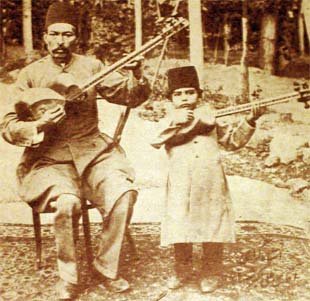
The Radif of Iranian music is the traditional repertoire of the classical music of Iran that forms the essence of Persian musical culture. More than 250 melodic units, called ''gushe,'' are arranged into cycles, with an underlying modal layer providing the backdrop against which a variety of melodic motifs are set. Although the main performance practice of Iranian traditional music unfolds through improvisation according to the mood of the performer and in response to the audience, musicians spend years learning to master the radif as the set of musical tools for their performances and compositions. The radif may be vocal or instrumental, performed on a variety of instruments with different performance techniques including the long- necked lutes ''tār'' and ''setār,'' as well as the ''santur'' hammered zither, ''kamānche'' spike fiddle and ''ney'' reed pipe. Passed from master to disciple through oral instruction, the radif embodies both the aesthetic practice and the philosophy of Persian musical culture. Learning the radif stretches over at least a decade of self devotion during which the students memorize the radif’s repertoire and engage in a process of musical asceticism intended to open the gates of spirituality. This rich treasury lies at the heart of Iranian music and reflects the cultural and national identity of the Iranian people.
Official description, UNESCO Intangible Cultural Heritage List — Radif of Iranian music
At a glance
The radif is the traditional repertoire of Iranian classical music, comprising more than 250 melodic units called gushe arranged into cycles. Each gushe sits within an underlying modal framework that gives structure to the music. The radif exists in both vocal and instrumental forms, performed on instruments including the tār and setār (long-necked lutes), santur (hammered zither), kamānche (spike fiddle), and ney (reed pipe). Rather than a fixed score, the radif lives as an improvised practice: musicians use it as their essential toolkit, responding to the mood of the moment and the audience's presence.
Origins & history
The radif has been passed from master to disciple through oral instruction for generations, forming the backbone of Persian musical culture. This method of transmission embodies both the aesthetic practice and philosophy underlying Iranian music. By learning through ear and voice alone, each generation internalizes the repertoire while interpreting it anew, allowing the tradition to remain both rooted and evolving.
The practice
Learning the radif demands at least a decade of dedicated study, during which students memorize the repertoire through direct instruction from a master. The process involves musical asceticism—a disciplined practice intended to open the gates of spirituality. Musicians master the performance techniques specific to each instrument, developing the skill to improvise within the modal framework according to their artistic judgment and the audience's response.
Cultural significance
The radif reflects the cultural and national identity of the Iranian people and lies at the heart of Persian musical tradition. Its survival depends entirely on the commitment of masters and students to oral transmission across generations. Without this continuous chain of learning and teaching, the foundation of Iranian classical music would be lost.
Key facts
- Country: Iran (Islamic Republic of)
- Inscribed: 2009
- UNESCO list: Representative List of the Intangible Cultural Heritage of Humanity
- UNESCO reference: 00279
- UNESCO vocabulary: Instrumental music; Musical notation; Vocal music
- Map: not shown — UNESCO’s official description of this element names no locality, and a living tradition is practised across a community, not at one address.
Where to experience it
The Radif lives in the communities of musicians and students throughout Iran who preserve it through the master-to-disciple tradition of oral instruction. Aspiring musicians commit a decade or more to learning the repertoire under accomplished teachers, while performances by skilled tar and setār players, vocalists, and instrumentalists on the santur, kamānche, and ney showcase the radif's living practice. Visitors can encounter this musical heritage through performances and private instruction, where the spiritual and aesthetic dimensions of Persian musical culture continue to unfold.
Sources & resources
- UNESCO — official element page: Radif of Iranian music
- UNESCO — open data record: Intangible Heritage List, reference 00279
- UNESCO — official video: UNESCO film on this element — embedded on this page
- UNESCO — official photograph: Photograph of this element — House of Music — House of Music of Iran
- Reference — Wikipedia (secondary): Radif (music) — consulted as a secondary reference, not as confirmation
- Cultural Heritage Online: Our archive and city guides

Sources
- S1 — During, Jean, and Zia Mirabdolbaghi. The Art of Persian Music. Mage Publishers, 1991. ISBN 978-0-934211-22-2.
- S2 — Farhat, Hormoz. The Dastgah Concept in Persian Music. Cambridge University Press, 1990. ISBN 978-0-521-54206-7.
Spotted an error? Write to editorial@culturalheritageonline.com and we correct it the same day.