

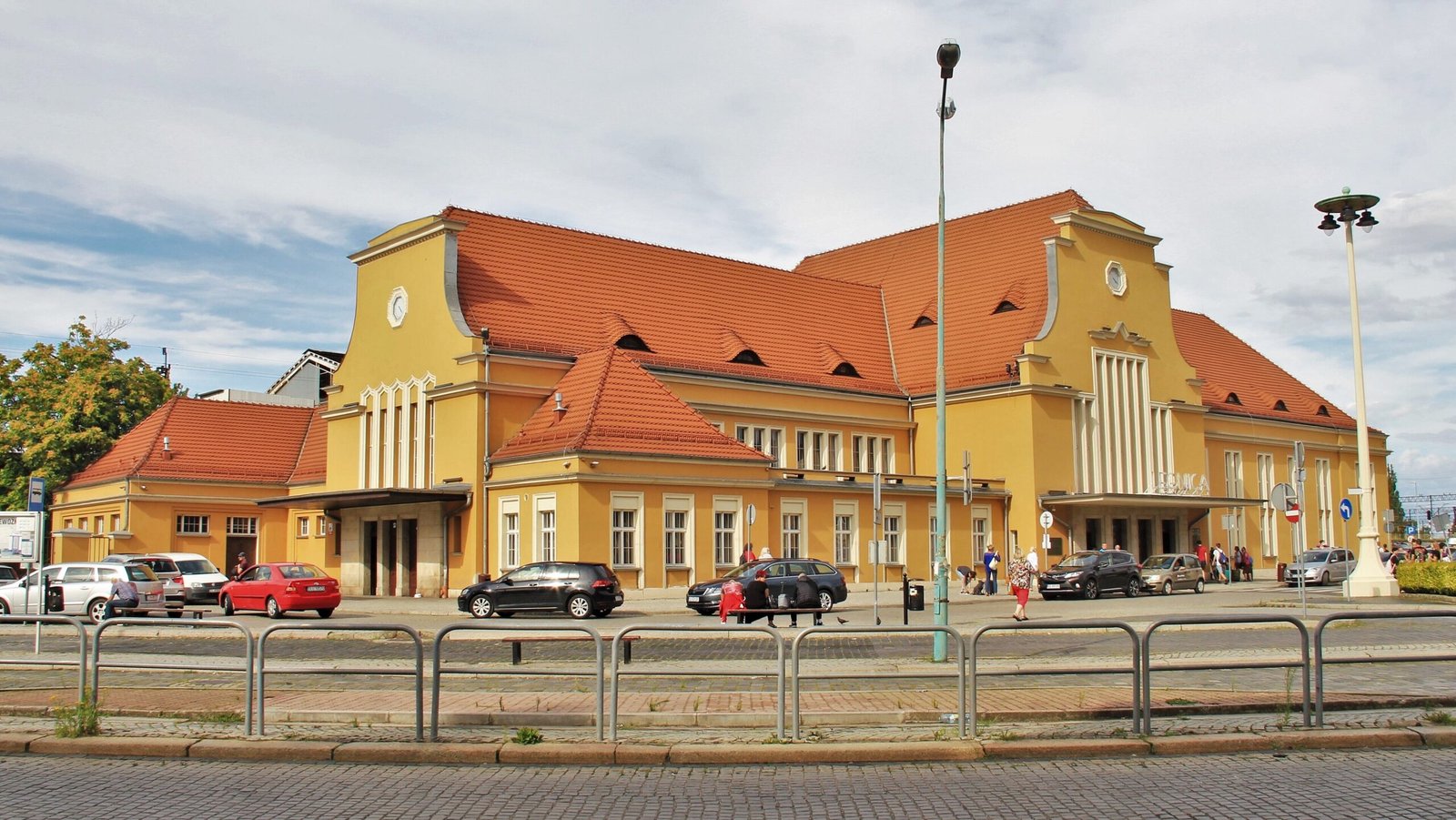
A modernist transport hub distinguished by its steel-and-glass hall, this 1920s station exemplifies Art Deco design in Polish industrial architecture.
At a glance
Legnica railway station opened to the public in 1927, marking a pivotal moment in the town’s infrastructure development. The structure stands as a notable example of Art Deco railway architecture in Central Europe, with a commanding steel-glass hall that remains distinctive among Polish stations of its era.
History
The current building was completed and opened in 1927, a period when Polish cities were modernizing their transport networks following independence. The station’s design reflected contemporary European trends in station architecture, balancing functional requirements with aesthetic innovation.
What you see
The station embodies Art Deco principles through its clean lines, geometric forms, and materials. Its most striking feature is the expansive steel-and-glass hall, a rare architectural element among Polish railway stations of the period. The combination of these materials creates an interior of light and spatial elegance characteristic of 1920s modernism.
Cultural significance
Legnica station represents an important moment in twentieth-century Polish architecture when international modernist styles reached provincial towns. The station’s design demonstrates how Art Deco principles were adapted for functional transport buildings, influencing later station designs across the region.
Key facts
- Country: Poland
- City: Legnica, Lower Silesia
- Opened: 1927
- Architectural style: Art Deco
- Coordinates: 51.2139°N, 16.1692°E
Practical information & getting there
Legnica railway station remains in active use as a transport hub serving the town of Legnica. For current travel information and schedules, consult Polish National Railways (PKP) or local transport websites.
Sources & resources
Find it on the map
See this place and what’s around it →📷 Become a Cultural Heritage Online photographer
Share your photos of places: they stay published under your name as the author. The more they're seen, the more you get noticed — and soon a contest will reward the most appreciated photos.
Log in or sign up free to add a photoIs this page about you?
This page is read by travellers and heritage enthusiasts who find it on Google. Tell us how you are connected to this place and we will take it from there.