

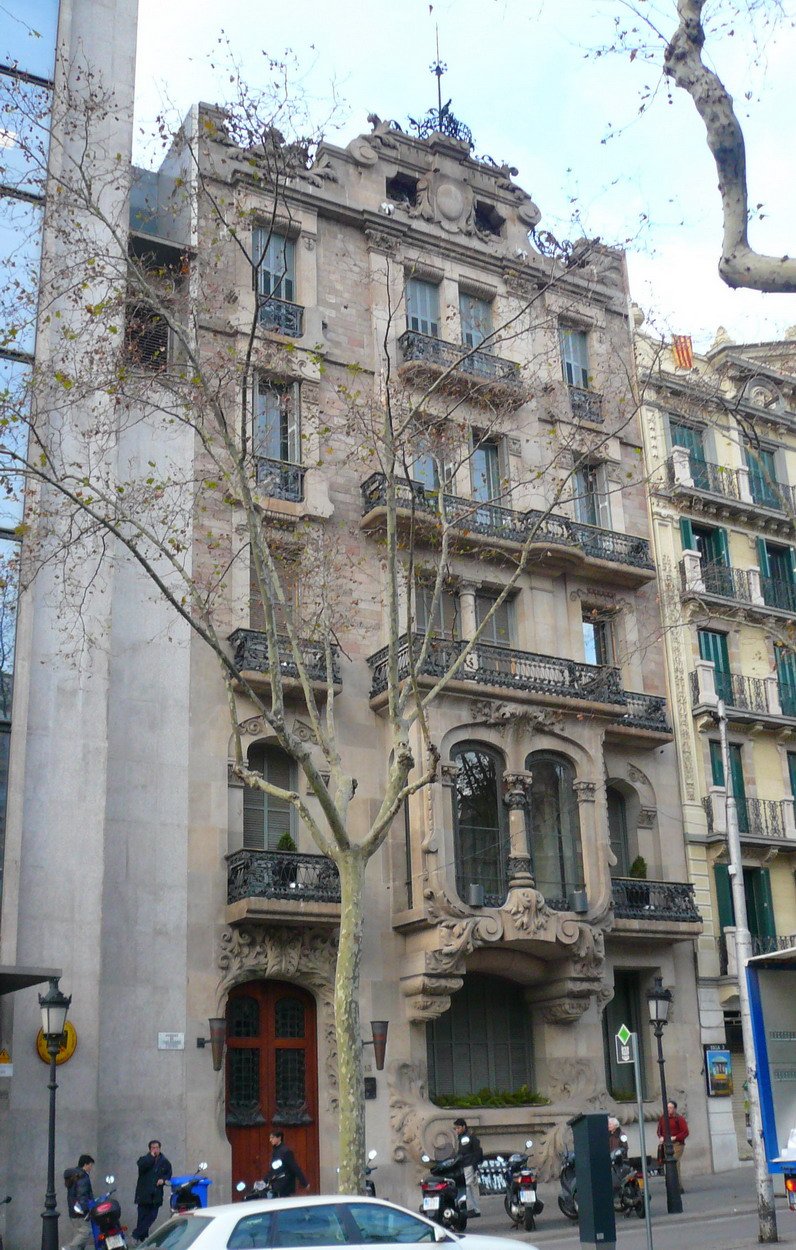
A jewel of Catalan Modernisme on Passeig de Gràcia, this intimate palace captivates visitors with its architectural refinement and Art Nouveau elegance.
At a glance
Casa Bonaventura Ferrer stands at Passeig de Gràcia 113, with its rear facade opening onto Riera de Sant Miquel. Locals affectionately call it “El Palauet”—the little palace—for its extraordinary beauty and compact proportions. Today it operates as a luxury boutique hotel.
History
Designed by architect Pere Falqués i Urpí and completed in 1906, the building embodies the height of Catalan Modernisme during the city’s golden age. In 1979, it received official recognition as a historical and artistic heritage site. A comprehensive remodeling in 2010 transformed it into a boutique hotel while preserving its character.
What you see
The building exemplifies Art Nouveau design principles through refined ornamental details and harmonious proportions. Its modest footprint belies an interior of considerable sophistication. The facade composition and fenestration reveal Falqués’s mastery of the Modernisme aesthetic, balancing decorative richness with architectural restraint.
Cultural significance
Casa Bonaventura Ferrer represents the refined, intimate side of Catalan Modernisme—distinct from the monumental works dominating Passeig de Gràcia. Its protected status underscores its importance to Barcelona’s architectural heritage and its enduring appeal as a symbol of early 20th-century elegance.
Key facts
- Country: Spain
- City: Barcelona
- Architect: Pere Falqués i Urpí
- Year completed: 1906
- Style: Catalan Modernisme / Art Nouveau
- Coordinates: 41.39665, 2.1581
- Heritage status: Protected since 1979
Practical information & getting there
The building is located on Passeig de Gràcia, Barcelona’s most iconic avenue, easily accessible by metro. Now operating as El Palauet boutique hotel, it remains a landmark on one of Europe’s most celebrated urban corridors.
Sources & resources
Find it on the map
See this place and what’s around it →📷 Become a Cultural Heritage Online photographer
Share your photos of places: they stay published under your name as the author. The more they're seen, the more you get noticed — and soon a contest will reward the most appreciated photos.
Log in or sign up free to add a photoIs this page about you?
This page is read by travellers and heritage enthusiasts who find it on Google. Tell us how you are connected to this place and we will take it from there.