

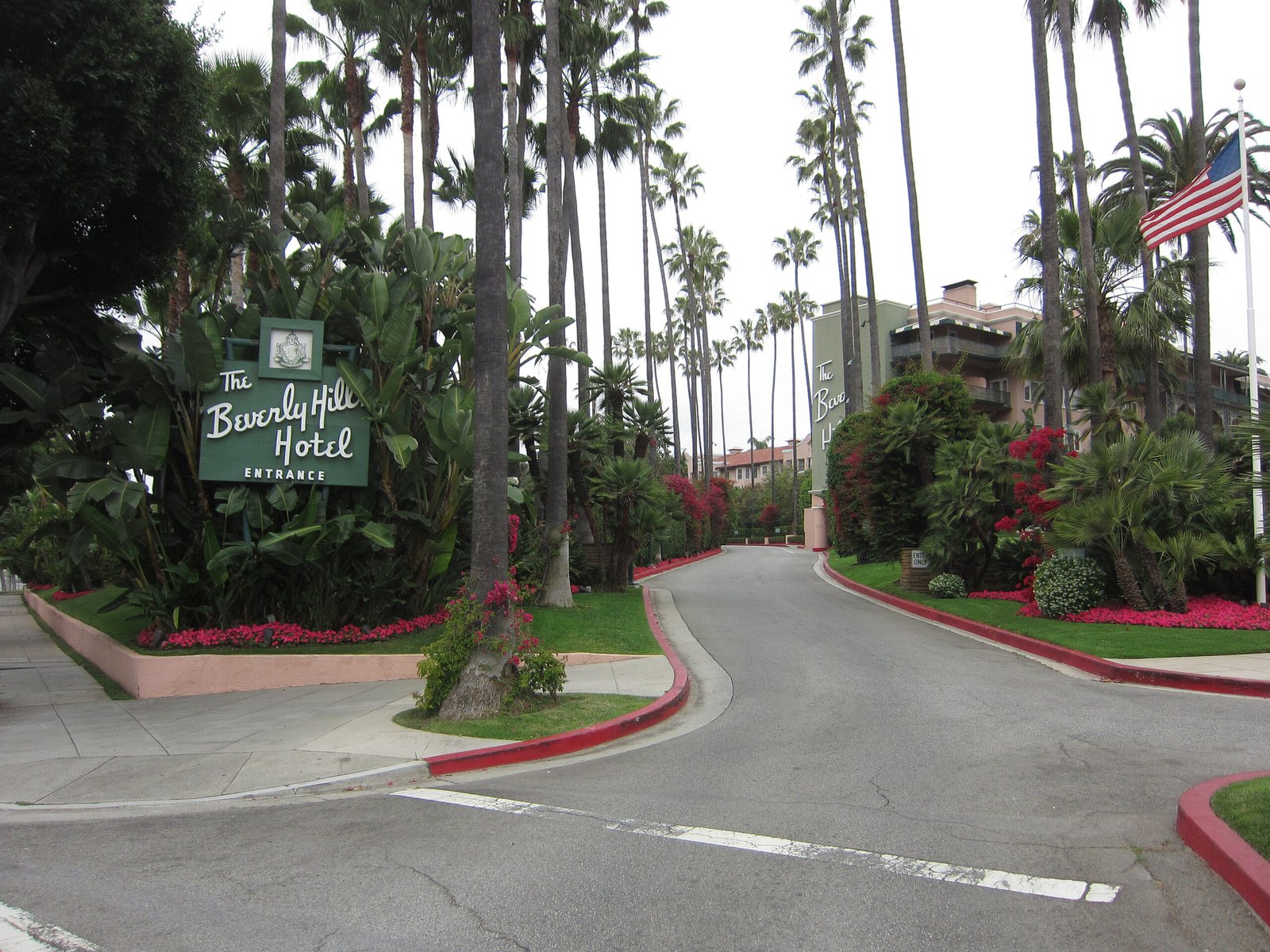
An iconic pink and green landmark on Sunset Boulevard, the Beverly Hills Hotel has hosted generations of Hollywood’s most celebrated figures since its establishment in 1912—a year before Beverly Hills itself was incorporated.
At a glance
The Beverly Hills Hotel comprises 210 guest rooms and suites alongside 23 bungalows, all distinguished by the hotel’s signature pink and green exterior. Its Polo Lounge remains one of Los Angeles’s premier dining destinations, legendary for its roster of celebrity patrons.
History
Margaret J. Anderson, a wealthy widow, and her son Stanley S. Anderson founded the hotel in May 1912. Stanley had previously managed the Hollywood Hotel and brought that experience to the venture. Pasadena architect Elmer Grey designed the original structure in Mediterranean Revival style.
Ownership shifted to the Interstate Company from 1928 to 1932. In 1941, Hernando Courtright, a Bank of America vice president, acquired the hotel alongside friends including actors Irene Dunne and Loretta Young, and producer Harry Warner. Courtright’s tenure proved transformative: he established the Polo Lounge, which would welcome everyone from the Rat Pack to Humphrey Bogart and Marlene Dietrich.
The famous pink hue arrived during a 1948 renovation, reflecting contemporary country club aesthetics. The following year, architect Paul Williams designed the Crescent Wing. Ben L. Silberstein, a Detroit real estate magnate, owned and ran the hotel as a resident proprietor from 1958 until his death in 1979. Marvin Davis purchased it in 1986, then sold it to the Sultan of Brunei within months. A comprehensive restoration closed the hotel from December 1992 to June 1995. Since 1996, the Dorchester Collection has operated the property. In 2012, it became Beverly Hills’s first designated historic landmark, with two new Presidential Bungalows added that year.
What you see
Elmer Grey’s Mediterranean Revival design established the hotel’s graceful proportions and classical detailing. The signature pink and green color scheme—applied during the 1948 renovation and now instantly recognizable—creates an unmistakable visual identity on Sunset Boulevard. Paul Williams’s 1949 Crescent Wing adds Art Deco refinement to the complex.
The bungalows, particularly the Presidential suites added in 2012, offer intimate luxury distinct from the main building. Throughout, the design balances formal elegance with the relaxed glamour Hollywood expects.
Cultural significance
Few hotels worldwide command such powerful association with celebrity culture. The Beverly Hills Hotel transcended hospitality to become a symbol of mid-century Hollywood prestige. Its Polo Lounge evolved into a de facto power hub where entertainment industry figures conducted business and celebrated triumphs.
The Eagles’ 1976 album “Hotel California” drew slight inspiration from the hotel’s folklore, with the album cover itself featuring a photograph of the building. This artistic reference cemented the hotel’s place in popular culture beyond the entertainment industry itself.
Key facts
- Location: Sunset Boulevard, Beverly Hills, California, United States
- Coordinates: 34.0814, −118.4137
- Established: May 1912
- Architect: Elmer Grey (original); Paul Williams (1949 Crescent Wing)
- Accommodations: 210 rooms and suites plus 23 bungalows
- Designated Beverly Hills’s first historic landmark: 2012
- Current operator: Dorchester Collection (since 1996)
Practical information & getting there
The Beverly Hills Hotel occupies a prominent location on Sunset Boulevard in the heart of Beverly Hills. You can reach it by car via Los Angeles’s extensive road network or by taxi and ride-share services. The nearest major airport is Los Angeles International (LAX), approximately 20 miles away. Contact the hotel directly for current rates, room availability, and dining reservations at the Polo Lounge.
Sources & resources
- The Beverly Hills Hotel – Wikipedia
- Cultural Heritage Online
Find it on the map
See this place and what’s around it →📷 Become a Cultural Heritage Online photographer
Share your photos of places: they stay published under your name as the author. The more they're seen, the more you get noticed — and soon a contest will reward the most appreciated photos.
Log in or sign up free to add a photoIs this page about you?
This page is read by travellers and heritage enthusiasts who find it on Google. Tell us how you are connected to this place and we will take it from there.