

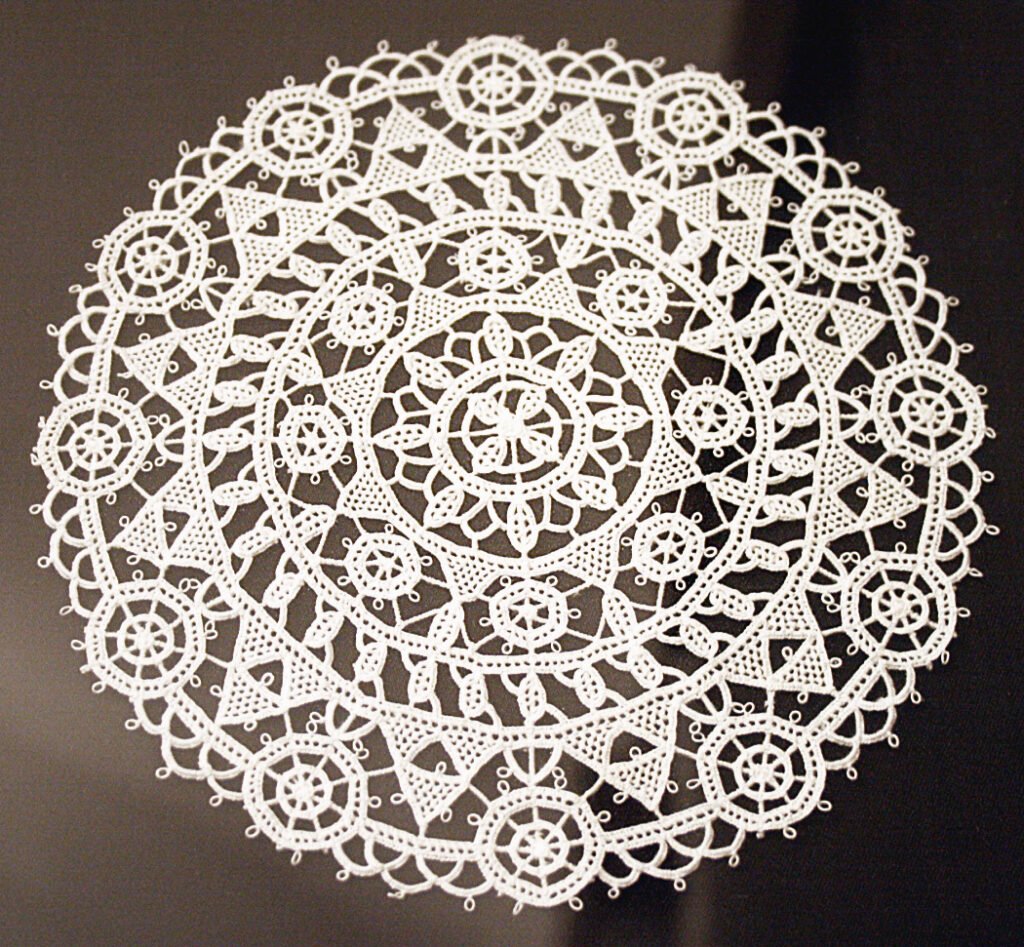
A centuries-old tradition of intricate hand-crafted lace, distinguished by unique patterns and designs that reflect the maritime and continental heritage of the Croatian coast and interior.
In UNESCO’s words
At least three distinct traditions of Lacemaking in Croatia persist today, centred on the towns of Pag on the Adriatic, Lepoglava in northern Croatia and Hvar on the Dalmatian island of the same name. Pag needle-point lace was originally used to make ecclesiastical garments, tablecloths and ornaments for clothing. The process involves embellishing a spider web pattern with geometrical motifs and is transmitted today by older women who offer year-long courses. Lepoglava bobbin lace is made by braiding thread wound on spindles, or bobbins; it is often used to make lace ribbons for folk costumes or is sold at village fairs. An International Lace Festival in Lepoglava celebrates the art every year. Aloe lace is made in Croatia only by Benedictine nuns in the town of Hvar. Thin, white threads are obtained from the core of fresh aloe leaves and woven into a net or other pattern on a cardboard background. The resulting pieces are a symbol of Hvar. Each variety of lace has long been created by rural women as a source of additional income and has left a permanent mark on the culture of its region. The craft both produces an important component of traditional clothes and is itself testimony to a living cultural tradition.
Official description, UNESCO Intangible Cultural Heritage List — Lacemaking in Croatia
At a glance
Croatian lacemaking exists in three distinct regional traditions, each with its own technique and purpose. Pag needle-point lace involves embellishing spider web patterns with geometrical motifs. Lepoglava bobbin lace is made by braiding thread wound on spindles, often for folk costume ribbons. Aloe lace, unique to Hvar, is created by weaving thin white threads extracted from fresh aloe leaves into patterns on a cardboard background. All three varieties represent living crafts practised today across their respective communities.
Origins & history
Pag needle-point lace was originally made for ecclesiastical garments, tablecloths, and clothing ornaments. Lepoglava bobbin lace and Hvar's aloe lace have similarly deep roots in their regions. Each variety of lace has long served as a source of additional income for rural women and has left a permanent mark on the culture of its region. The specific origins and timeline of how these traditions developed are not documented in available sources.
The practice
In Pag, older women offer year-long courses to transmit needle-point lace skills. Lepoglava bobbin lace is created by braiding threads wound on spindles and is often made into lace ribbons. Hvar's aloe lace is made exclusively by Benedictine nuns, who extract thin white threads from fresh aloe leaves and weave them into nets or patterns on cardboard backgrounds. The craft produces components of traditional clothing and continues to be practised through direct transmission from experienced practitioners to learners.
Cultural significance
Each lace variety has been created by rural women as a source of additional income and has left a permanent mark on the culture of its region. The craft produces an important component of traditional clothes while serving as testimony to a living cultural tradition. An International Lace Festival in Lepoglava celebrates the art annually, affirming its importance to the community. The lace pieces, particularly those from Hvar, are symbols of their regions.
Key facts
- Country: Croatia
- Inscribed: 2009
- UNESCO list: Representative List of the Intangible Cultural Heritage of Humanity
- UNESCO reference: 00245
- UNESCO vocabulary: Lace; Textile arts
- Map: Pag — the locality named in UNESCO’s official description of this element
- Related World Heritage site: Stari Grad Plain (a different UNESCO designation, not the place of the tradition)
Where to experience it
Croatian lacemaking thrives in three distinct centres: Pag on the Adriatic, where needle-point lace embellishes spider web patterns with geometrical motifs; Lepoglava in northern Croatia, where bobbin lace is braided from thread wound on spindles; and Hvar on the Dalmatian island, where Benedictine nuns create aloe lace from threads extracted from fresh aloe leaves. Visitors can observe lacemakers at work in their communities, purchase finished pieces, and attend the International Lace Festival held annually in Lepoglava to celebrate this enduring craft.
Sources & resources
- UNESCO — official element page: Lacemaking in Croatia
- UNESCO — open data record: Intangible Heritage List, reference 00245
- UNESCO — official video: UNESCO film on this element — embedded on this page
- UNESCO — official photograph: Photograph of this element — Vidoslav Barac — 2008 by Ministry of Culture
- Reference — Wikipedia (secondary): Lacemaking in Croatia — consulted as a secondary reference, not as confirmation
- Cultural Heritage Online: Our archive and city guides

Find it on the map
See this place and what’s around it →📷 Become a Cultural Heritage Online photographer
Share your photos of places: they stay published under your name as the author. The more they're seen, the more you get noticed — and soon a contest will reward the most appreciated photos.
Log in or sign up free to add a photo