
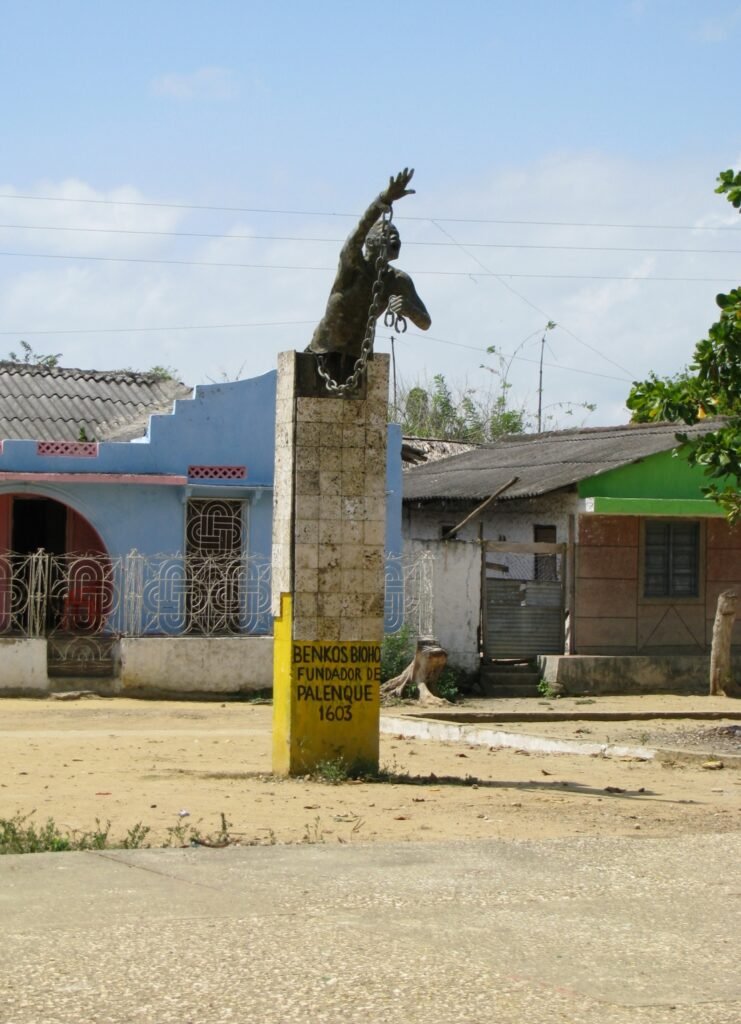
In a remote village fifty kilometres inland from Cartagena, the descendants of formerly enslaved Africans sustain a living cultural world—music, language, ritual, and memory—built by those who escaped bondage to create the Americas’ first free African settlement.
At a glance
Palenque de San Basilio is a working community where oral tradition, ceremony, and speech pattern form an inseparable whole. The village itself—its layout, social bonds, and collective practices—constitutes the heritage. Residents speak Palenquero, a creole language blending Spanish, Kikongo, Yoruba, and other African languages, alongside Spanish. Music, dance, and seasonal celebrations bind the community and transmit ancestral knowledge across generations.
Origins & history
Palenque was founded as a refuge by Africans who escaped slavery in the Spanish colonial Caribbean. It became the first free African town in the Americas, its founding reflecting centuries of resistance and self-determination. The village’s cultural practices—language, ritual, music, and social organization—carry the memory of that liberation and the synthesis of African and New World experience that followed.
The practice
Palenque’s cultural life unfolds in houses, streets, and ceremonial spaces where elders teach the young. Palenquero speech—distinct in rhythm, vocabulary, and grammar—flows through daily conversation and storytelling. Music and dance are woven into work, celebration, and ritual. Seasonal festivals and rites of passage bring the community together; funeral rites and life ceremonies affirm continuity with ancestors. Knowledge is transmitted orally: craft, medicinal plant use, history, and moral teaching pass through demonstration and word of mouth rather than written text.
Cultural significance
Palenque represents a unique cultural achievement: the survival and flourishing of African diaspora identity in the Americas through collective practice and linguistic distinctiveness. The cultural space—not a building but the inhabited village itself—preserves an African-rooted worldview adapted to Caribbean colonial reality. It stands as testimony to resistance, creativity, and the power of community to maintain identity across centuries of displacement.
Key facts
- Location: San Basilio de Palenque, Mahates Municipality, Bolívar Department, northern Colombia
- Coordinates: 10.10833, -75.20224
- Distance from Cartagena: approximately 50 kilometres
- UNESCO inscription: 2005 (Reference 00102)
- Status: First free African town in the Americas
Where to experience it
San Basilio de Palenque itself is the heartland and venue for this living practice. The village—its houses, streets, and gathering spaces—is where Palenquero is spoken, where music and ceremony occur, and where knowledge passes between generations. Visitors encounter the cultural space by engaging respectfully with the community and its members.
Sources & resources
- San Basilio de Palenque – Wikipedia
- Cultural Space of Palenque de San Basilio – UNESCO Intangible Cultural Heritage
- Cultural Heritage Online
Find it on the map
See this place and what’s around it →📷 Become a Cultural Heritage Online photographer
Share your photos of places: they stay published under your name as the author. The more they're seen, the more you get noticed — and soon a contest will reward the most appreciated photos.
Log in or sign up free to add a photo