
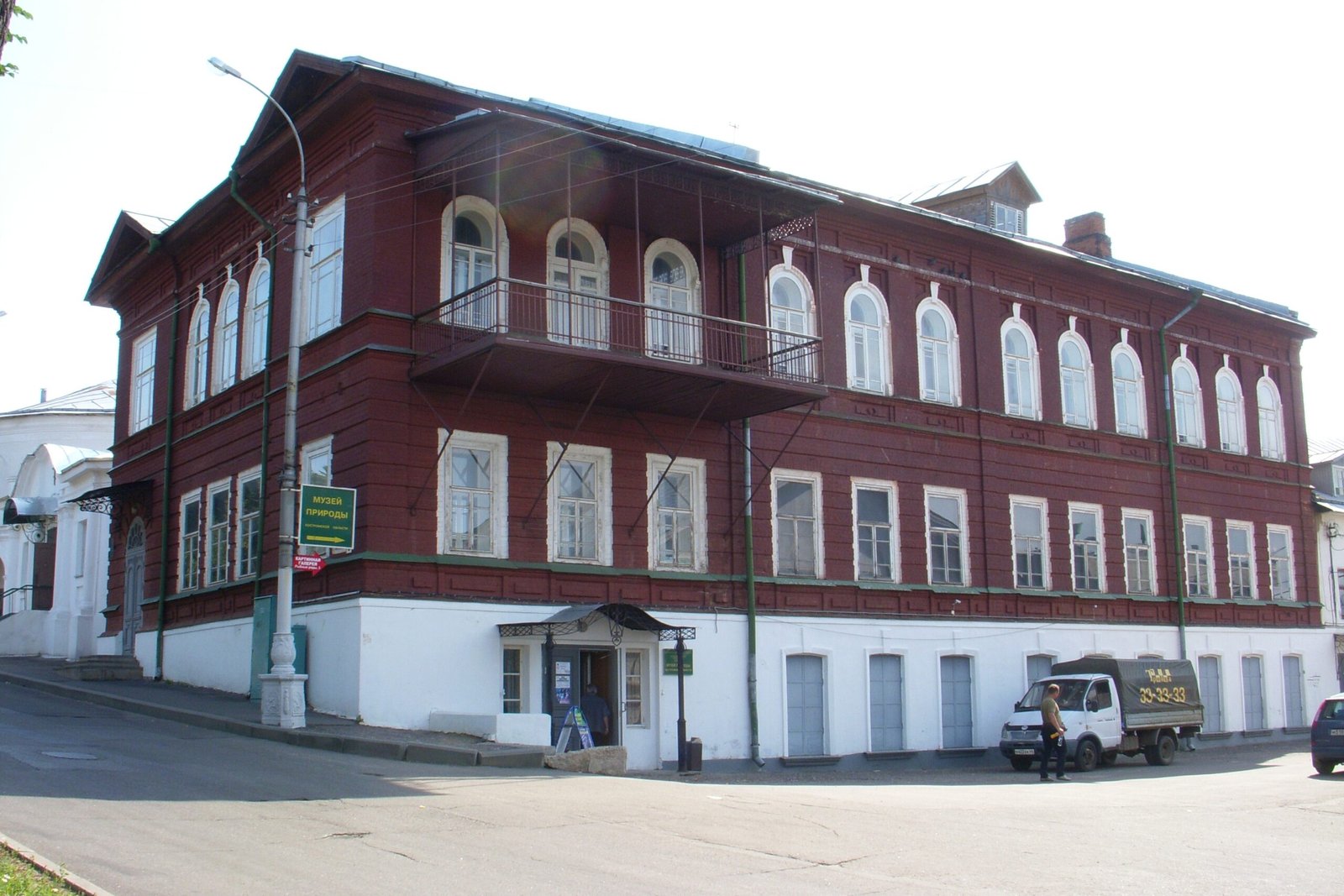
A modest natural history museum built around dioramas of seasons, insects, and the animals of the Kostroma region, its collections have survived fire, relocation, and decades of local hands shaping what visitors see.
At a glance
Founded in 1958 as a department of the Kostroma State Historical and Architectural Museum, the institution became fully independent in 2001. It now occupies a separate building in the city centre, presenting dioramas, taxidermy, fossils, and one of the region’s notable insect collections.
History
The museum’s earliest exhibits came from Maria Orehova, its first director, working alongside taxidermist Vladimir Tyak. Local artists and hunters helped build and refine the dioramas over subsequent years. Fire struck in the early 1960s, destroying the displays “Wolves attack the elk” and “Snowy owl”; both were rebuilt between 1964 and 1965. The four-season “Flora and Fauna” exhibition followed, and by 1965 the nature department had become the museum’s most popular section. A year later, in 1966, it began showing Ivan Rubinsky’s collection of over 4,500 insects gathered across the Russian Empire. The department gained independence in 2001, moving to its own premises. That move came at a cost: part of the exhibition was damaged in transit, and a number of exhibits were lost for good.
What you see
Visitors move through dioramas built around the changing seasons: “Spring”, “Early winter”, “Root winter”. Cases of mounted birds and mammals native to the Kostroma region sit alongside displays of local fish. Fossils add a deeper timescale. The insect collection remains a centerpiece, its specimens drawn from across the former Russian Empire. Nothing here is grand in scale. The rooms feel handmade, assembled by taxidermists and volunteers rather than institutional planners.
Cultural significance
The museum documents a regional ecology through decades of amateur and professional collecting. Its dioramas, rebuilt after fire and reassembled after relocation, reflect a persistence rare in smaller provincial museums. The Rubinsky insect collection gives it a scholarly weight beyond its size. For Kostroma, the museum offers a rare public record of the area’s flora, fauna, and natural history, maintained largely through local effort rather than state investment.
Key facts
- Founded 1958 as a department of the Kostroma State Historical and Architectural Museum
- Independent institution since 2001
- Insect collection of over 4,500 specimens, added 1966
- Dioramas rebuilt after a fire in the early 1960s
- Located in central Kostroma, Russia
Practical information & getting there
The museum sits in the central part of Kostroma, a city roughly 340 kilometres northeast of Moscow along the Volga. You can reach it on foot from most points in the historic centre. Excursions, themed hall tours, interactive programs for children and adults, master classes, and competitions run regularly; check the official website for current schedules before visiting.
Sources & resources
Find it on the map
See this place and what’s around it →📷 Become a Cultural Heritage Online photographer
Share your photos of places: they stay published under your name as the author. The more they're seen, the more you get noticed — and soon a contest will reward the most appreciated photos.
Log in or sign up free to add a photoIs this page about you?
This page is read by travellers and heritage enthusiasts who find it on Google. Tell us how you are connected to this place and we will take it from there.