
Overview & Significance
Stretching across five protected areas from Saraburi Province to the Cambodian border, the Dong Phayayen–Khao Yai Forest Complex forms one of Southeast Asia’s largest continuous forest blocks — 615,500 hectares of evergreen tropical and subtropical forest, seasonal dry forest, and montane grassland. Its significance lies not only in the richness of individual protected areas but in the connectivity between them, which allows large mammals including elephant and tiger to move across seasonal ranges and maintain genetically viable populations.
Historical Background
Khao Yai National Park, established in 1962, was Thailand’s first national park and remains the anchor of the complex. Its creation was driven by concern over rapid deforestation and hunting pressure on central Thailand’s remaining wildlife. The broader Dong Phayayen complex — named for the forest corridor linking Khao Yai to the Eastern Forest Complex along the Cambodian border — was progressively gazetted through the 1970s and 1980s as park authorities recognised that no single protected area was large enough to sustain viable tiger and elephant populations on its own. UNESCO inscribed the serial property in 2005.
Key Features & Nature
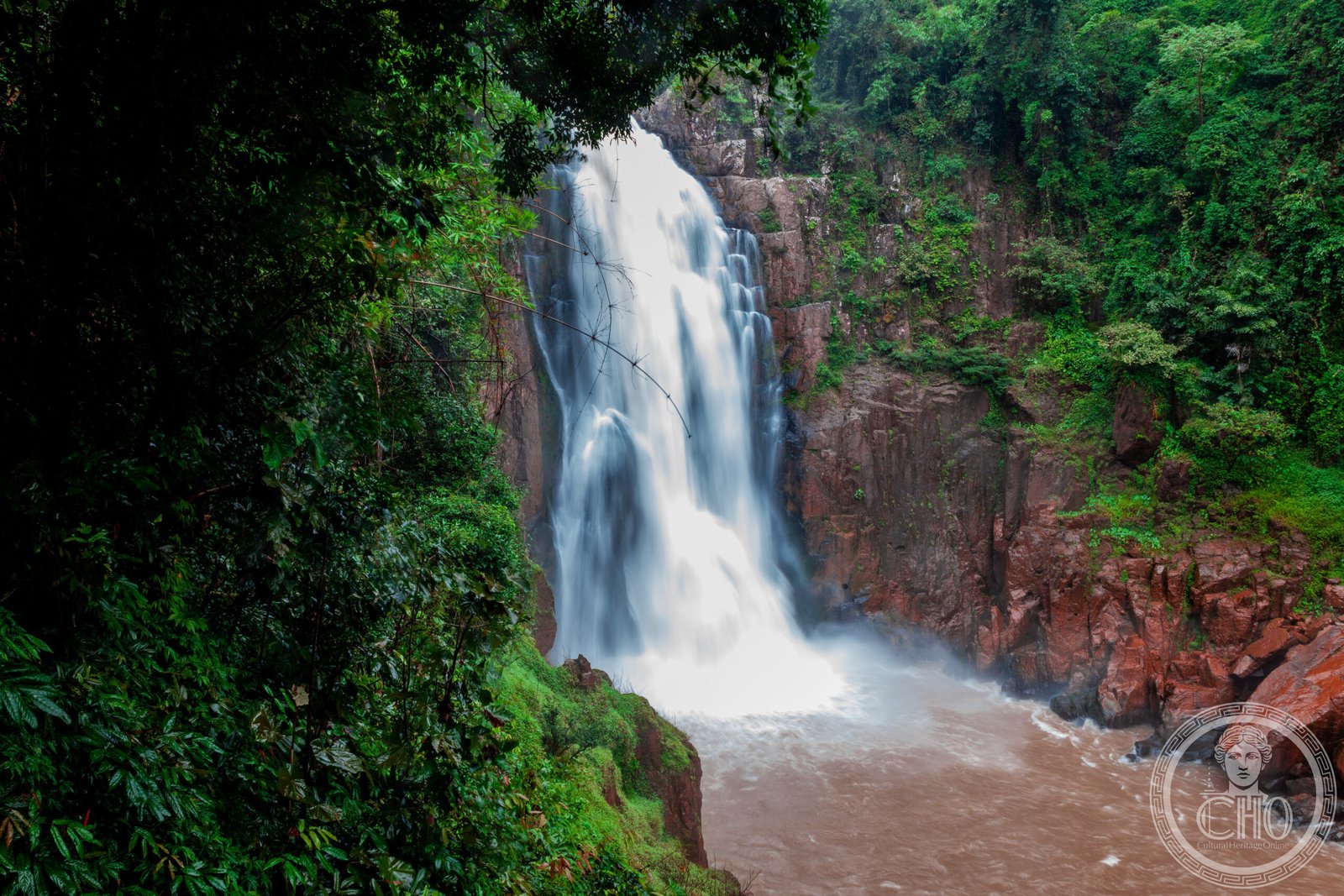
Khao Yai’s most celebrated natural features are its waterfalls, particularly the four-tiered Haew Narok cascade (150 metres), which serves as a key nesting site for oriental pied hornbills. The park’s grasslands — maintained partly by elephant grazing and periodic burning — create open habitats essential for gaur, sambar deer, and the raptors that hunt them. Three species of gibbon inhabit the canopy. The lesser-visited eastern parks (Thap Lan, Pang Sida, Ta Phraya) hold significant tiger populations and rare dry dipterocarp forest habitats that complement Khao Yai’s wetter forests.
Cultural or Ecological Importance
The Dong Phayayen–Khao Yai complex lies within the upper watersheds of rivers that supply water to Bangkok and central Thailand’s agricultural heartland, making it a critical piece of national water infrastructure. Its forests moderate rainfall, prevent soil erosion, and buffer the downstream population of over 10 million people against flood and drought. Ecologically, the complex functions as one of the last viable habitats for the Indochinese tiger (Panthera tigris corbetti) in central Thailand, with cross-border connectivity to Cambodian forests through Dong Yai Wildlife Sanctuary.
UNESCO Inscription Criteria
The Dong Phayayen–Khao Yai Forest Complex was inscribed under natural criteria (ix) and (x), recognising its outstanding importance as a centre of ongoing ecological and evolutionary processes and as critical habitat for biodiversity conservation in mainland Southeast Asia. UNESCO specifically noted the connectivity of the five protected areas and the role of the forest corridor in sustaining populations of globally threatened species — a criterion that underscores the landscape-scale thinking behind the serial inscription.
Visitor Experience
Khao Yai is the most visitor-friendly entry point and offers one of Asia’s most rewarding wildlife experiences within easy reach of a capital city. Night safari drives yield sightings of Asian elephant, sambar, barking deer, civets, and — with luck — leopard. Dawn birding walks at the park’s grassland edges can produce great hornbill, crested serpent eagle, and Asian paradise flycatcher in a single morning. The Haew Narok waterfall trail is the park’s most iconic walk (approximately 8 km return). Guided wildlife tours from Pak Chong are well organised and cater to all experience levels.
Getting There & Practical Info
Pak Chong is the gateway town, reachable from Bangkok’s Hua Lamphong station by train (about 2.5 hours) or by bus from Mo Chit terminal (about 2 hours). From Pak Chong, songthaews (shared pick-up trucks) run to the park entrance. Private cars and organised tours are also available. A national park entrance fee applies (higher rate for foreigners). Accommodation inside the park is limited — book well in advance for weekends. Resorts and guesthouses in Pak Chong and along Route 2090 offer easy access. The best wildlife season is November–February (cool dry season).
Nearby Attractions & Context
The broader Isaan region east of Khao Yai offers cultural depth. Nakhon Ratchasima (Korat) city, 60 km northeast, is the gateway to the Khmer heritage sites of the Khorat Plateau: Phimai Historical Park (the largest Khmer complex in Thailand) and the Phanom Rung Historical Park are within two hours’ drive. The wine country around Khao Yai — Thailand’s coolest viticulture region — has produced several internationally recognised wineries that offer a surprising contrast to the jungle experience. The three eastern parks of the complex (Thap Lan, Pang Sida, Ta Phraya) are off the tourist trail and recommended for experienced wildlife watchers seeking solitude.
Find it on the map
See this place and what’s around it →📷 Become a Cultural Heritage Online photographer
Share your photos of places: they stay published under your name as the author. The more they're seen, the more you get noticed — and soon a contest will reward the most appreciated photos.
Log in or sign up free to add a photo