

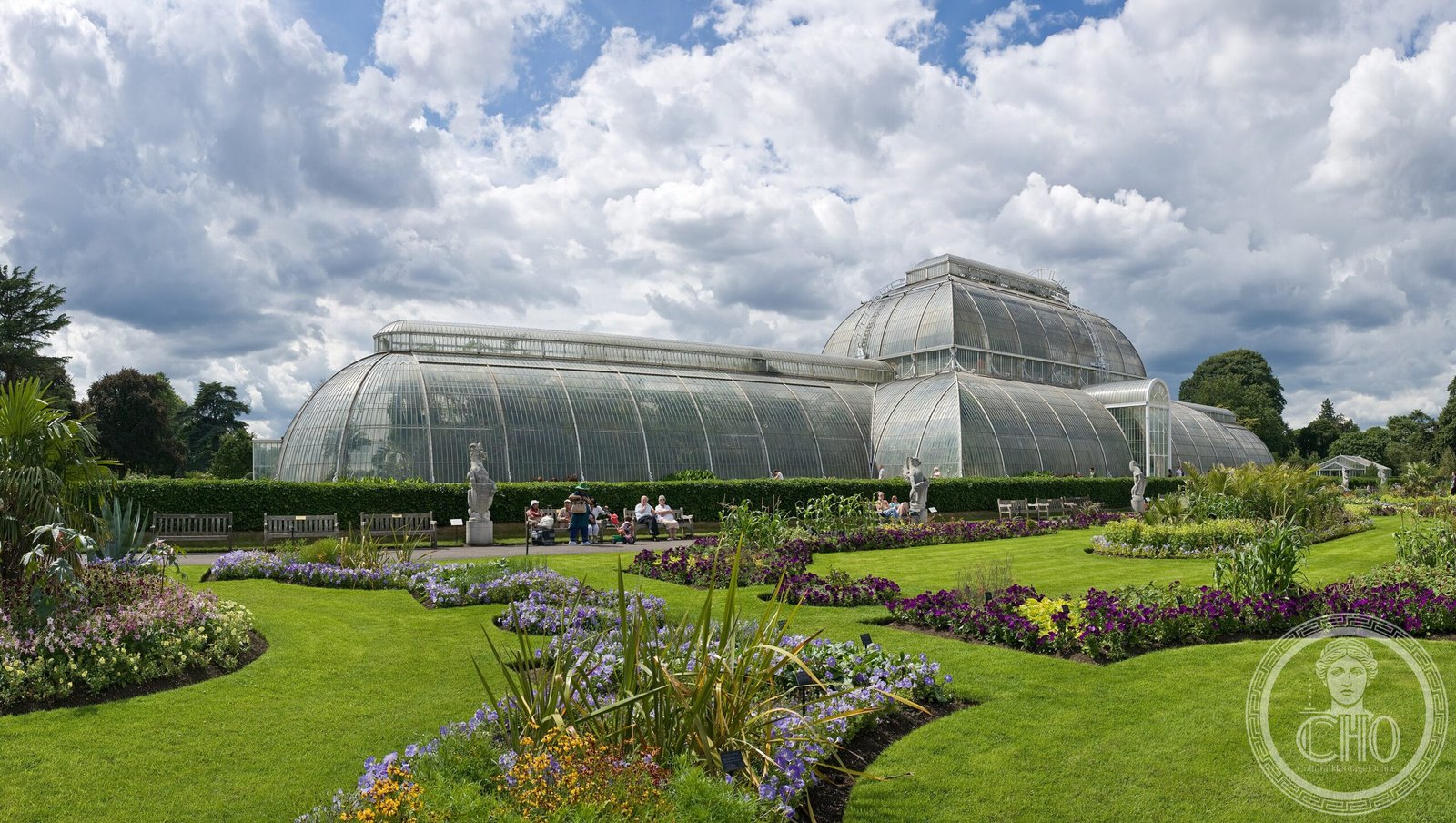
One of the world’s most important botanical institutions, Kew Gardens houses unparalleled collections of living plants, preserved specimens, and botanical knowledge spanning centuries of scientific discovery.
At a glance
Kew Gardens occupies 132 hectares of southwest London, containing the largest and most diverse botanical and mycological collections in the world. The site comprises ornamental gardens, glasshouses, historic buildings, and research facilities that together form a landscape of international significance.
History
The gardens trace their origins to an exotic garden at Kew Park, formed by Henry, Lord Capell of Tewkesbury. The botanic gardens formally began in 1759, developing into a major center for plant science and horticulture. Today, Royal Botanic Gardens, Kew manages both Kew Gardens and the companion botanic gardens at Wakehurst in Sussex, employing over 1,100 staff as an internationally recognized research and education institution.
What you see
The 330-acre site features four Grade I listed buildings and 36 Grade II listed structures, including celebrated botanical glasshouses that showcase plants from diverse climates. The landscape itself holds Grade I status on the Register of Historic Parks and Gardens, reflecting centuries of horticultural design and stewardship.
Cultural significance
Kew Gardens represents an extraordinary repository of botanical knowledge. The herbarium contains over 8.5 million preserved plant and fungal specimens—one of the world’s largest. The library holds more than 750,000 volumes, while the illustrations collection encompasses over 175,000 prints and drawings of plants, documenting botanical science across generations.
The living collections include approximately 27,000 taxa, advancing research in plant conservation and taxonomy. As a UNESCO World Heritage Site and one of London’s most visited attractions, Kew Gardens combines scientific rigor with public education and horticultural beauty.
Key facts
- Location: London, United Kingdom
- Coordinates: 51.4789, -0.2936
- Founded: 1759
- Size: 132 hectares (330 acres)
- UNESCO World Heritage Site: Yes
- Herbarium specimens: Over 8.5 million
- Library volumes: More than 750,000
- Living taxa: Approximately 27,000
- Kew Constabulary operational: Since 1845
Practical information & getting there
Kew Gardens welcomes visitors year-round. The gardens are accessible from central London by public transport. Check opening hours and admission fees on the official Royal Botanic Gardens website. Kew maintains its own police force, established in 1845, ensuring the safety and security of this historic site.
Sources & resources
Find it on the map
See this place and what’s around it →
📷 Become a Cultural Heritage Online photographer
Share your photos of places: they stay published under your name as the author. The more they're seen, the more you get noticed — and soon a contest will reward the most appreciated photos.
Log in or sign up free to add a photo