
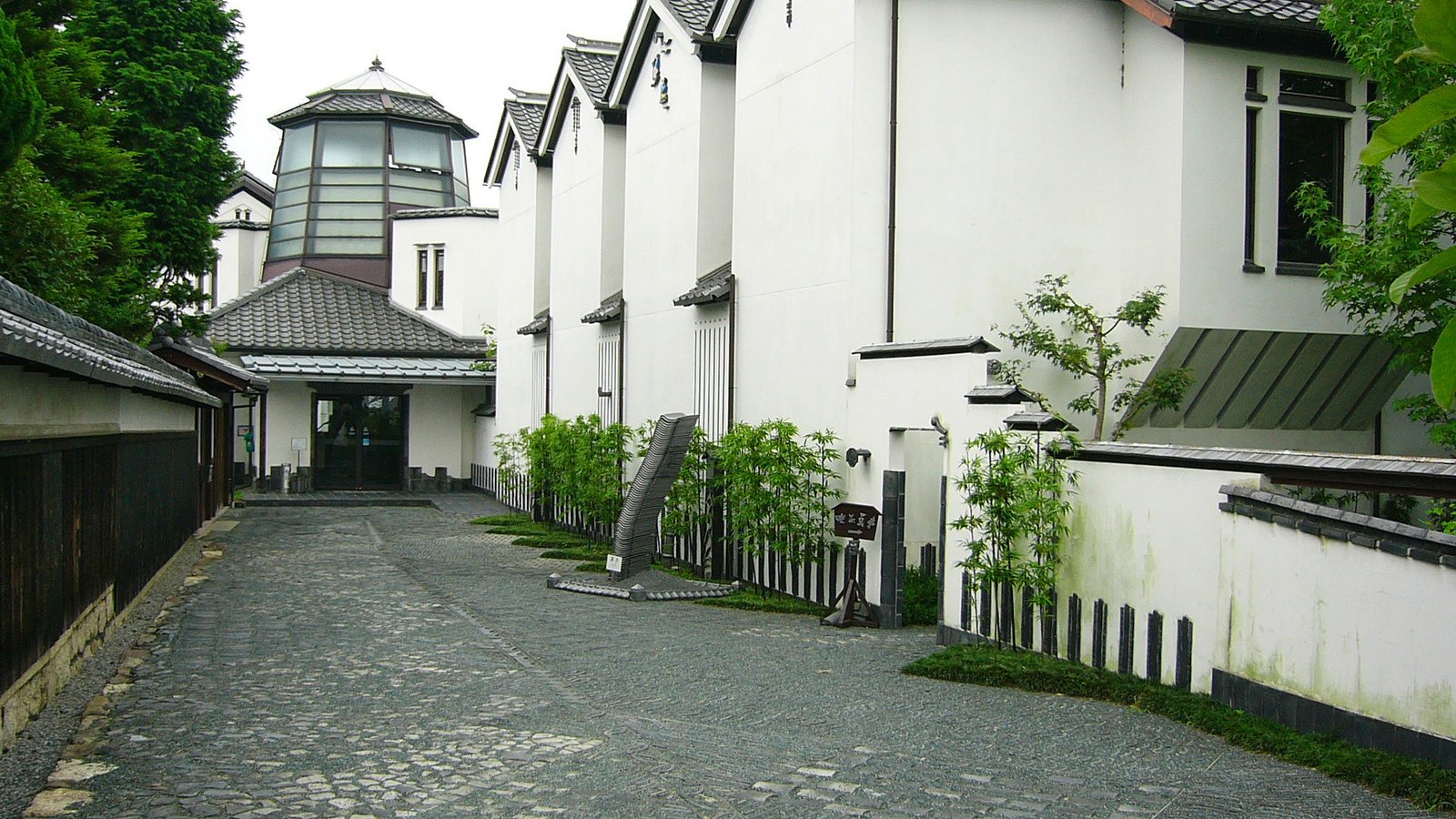
A museum built from the very material it studies, tracing the craft of Japanese roof tiles in the lakeside town that helped perfect it.
At a glance
The Kawara Museum, or Omihachiman City Rooftile Museum, sits in Ōmihachiman, Shiga Prefecture. Designed by architect Kan Izue and completed in 1995, it is dedicated entirely to kawara, the traditional clay roof tiles that shape the look of Japanese towns. It is a small museum. Its subject is large: an entire visual language of roofs.
History
Ōmihachiman has long been associated with tile production, its craftsmen supplying roofs for houses and temples across the region. The museum opened in 1995 to preserve and explain this local industry. Rather than isolating the collection in a single hall, Izue distributed it across ten linked buildings, each roofed in tile. The result reads less like a conventional museum and more like a small tiled village built to honor its own trade.
What you see
Ten pavilions, joined into one complex, form the museum’s structure. New tiles were deliberately blackened before installation. The aim was continuity, not novelty, so the roofs would sit comfortably beside the older tiled houses nearby. Inside, the permanent exhibition room on the first floor lays out the history of Omihachiman tilemaking alongside the stages of production, from raw clay to finished roof piece. Photographs of the city greet visitors at the entrance. Deepest in the exhibition space is a large three-dimensional photograph reproducing the tiled roofscape of Shinmachi street, a way of bringing the town’s own architecture inside the building that studies it.
Cultural significance
Roof tiles are easy to overlook. This museum insists otherwise. By treating kawara as both craft object and architectural material, it connects industrial history to the everyday appearance of Ōmihachiman’s streets. The building’s own blackened tiles make the argument physically: new construction can still belong to an old streetscape. For a subject this modest, the museum’s ambition is notable.
Key facts
- Location: Ōmihachiman, Shiga Prefecture, Japan
- Architect: Kan Izue
- Completed: 1995
- Subject: history and manufacture of Japanese roof tiles (kawara)
- Structure: ten interconnected tiled pavilions
- Coordinates: 35.1406° N, 136.0919° E
Practical information & getting there
The museum is located in Ōmihachiman, a town on the shore of Lake Biwa in Shiga Prefecture, reachable from Kyoto and Osaka by train. Check the official website for current hours and admission before visiting, as these are not fixed here. Once inside, allow time to walk the full sequence of ten pavilions rather than rushing to a single exhibition hall.
Sources & resources
Find it on the map
See this place and what’s around it →📷 Become a Cultural Heritage Online photographer
Share your photos of places: they stay published under your name as the author. The more they're seen, the more you get noticed — and soon a contest will reward the most appreciated photos.
Log in or sign up free to add a photoIs this page about you?
This page is read by travellers and heritage enthusiasts who find it on Google. Tell us how you are connected to this place and we will take it from there.