
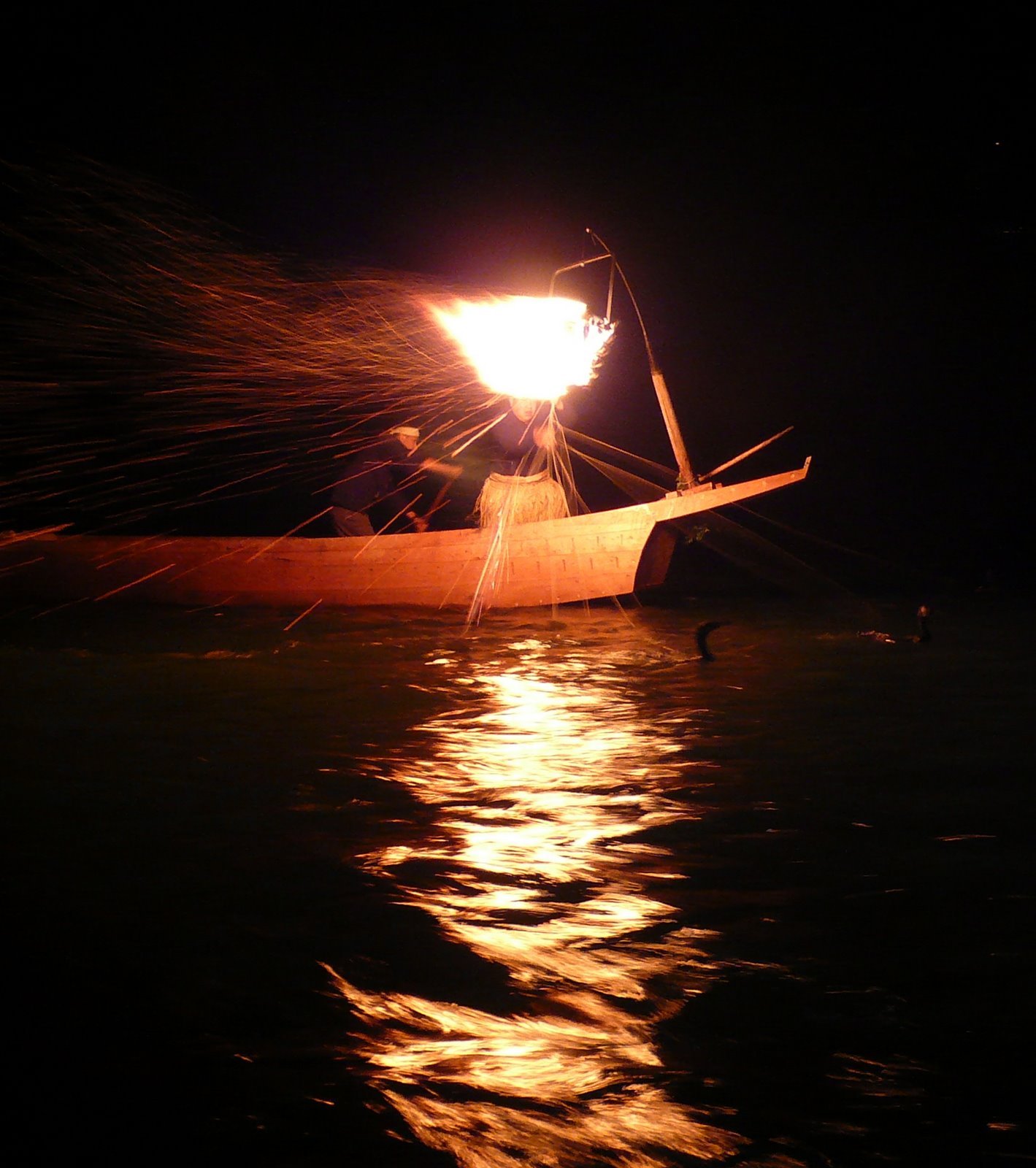
A small riverside museum in Gifu keeps alive the tools, records and living birds behind one of Japan’s oldest fishing traditions.
At a glance
The Cormorant Fishing House, known in Japanese as Ukai Shiryō-en, sits beside the Nagara River in Gifu Prefecture. It opened in 1976 as a dedicated repository for the history and practice of cormorant fishing, or ukai. Unlike a conventional history museum, it also houses the cormorants themselves, offering a rare chance to see the birds up close between fishing seasons.
History
Cormorant fishing on the Nagara has a long lineage, tied closely to the imperial household. The museum was established to preserve that heritage as living practice rather than static artifact. Since 1976 it has been run not by municipal curators but by the cormorant fishing masters themselves. These masters hold formal status as Imperial Agents of the Imperial Household Agency, a designation that underscores the ceremonial weight still attached to the craft. Their direct stewardship of the museum keeps the institution unusually close to its subject.
What you see
Inside, cases hold equipment used across generations of fishing masters: nets, cords, torches and the specialized gear that connects handler to bird. Photographs and documents trace the practice’s development over time. Outside, or in adjoining enclosures, visitors can watch the cormorants that perform the fishing on the river below. It is a modest, functional space. The emphasis falls on continuity, not spectacle.
Cultural significance
Cormorant fishing on the Nagara River is among the most storied fishing traditions in Japan, long associated with imperial patronage. The museum gives that tradition a fixed point of interpretation for the public, separate from the nighttime fishing displays on the river itself. By placing the birds themselves within the visitor experience, the museum treats ukai as a living skill passed between people and animals, not merely a historical curiosity.
Key facts
- Location: Nagara district, Gifu, Gifu Prefecture, Japan
- Opened: 1976
- Subject: History and practice of cormorant fishing (ukai) on the Nagara River
- Run by: Cormorant fishing masters, Imperial Agents of the Imperial Household Agency
- Entrance fee: Free
Practical information & getting there
The museum opens daily from 8:30am to 5:00pm, with closures on the second and fourth Sundays, on Mondays (shifting to Tuesday if Monday is a holiday), and from December 31 to January 4. Entry is free. From JR Gifu Station, board any Gifu Bus bound for Nagara at Bus Platform 11; from Meitetsu Gifu Station, use Bus Platform 4. Get off at the “Ukai-ya” stop, about fifteen minutes from either station, then walk roughly 300 metres upriver to reach the entrance.
Sources & resources
Find it on the map
See this place and what’s around it →📷 Become a Cultural Heritage Online photographer
Share your photos of places: they stay published under your name as the author. The more they're seen, the more you get noticed — and soon a contest will reward the most appreciated photos.
Log in or sign up free to add a photoIs this page about you?
This page is read by travellers and heritage enthusiasts who find it on Google. Tell us how you are connected to this place and we will take it from there.