
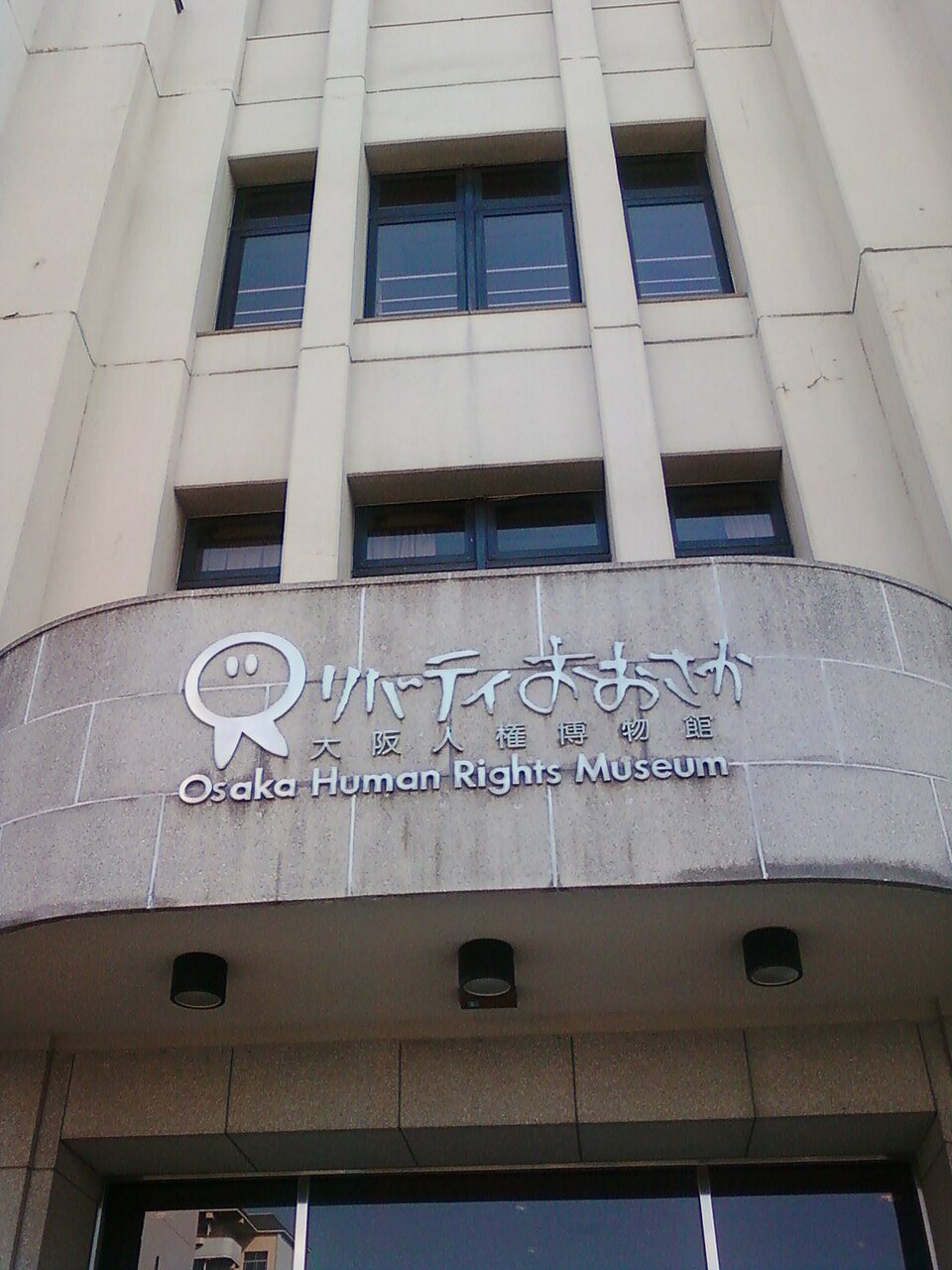
Japan’s first general museum devoted to human rights stood for thirty-five years in Naniwa-ku, telling the histories of discrimination that official narratives preferred to skip.
At a glance
Liberty Osaka, formerly known as the Osaka Human Rights Museum, opened in December 1985 as a record of the city’s human rights movement. It was relaunched a decade later, in December 1995, under its Japanese name Osaka Jinken Hakubutsu-kan. The institution closed permanently on 31 May 2020.
History
The museum began small, founded to document Osaka’s own history of activism. Its 1995 relaunch broadened the mission considerably. From that point the permanent exhibits centred on the Burakumin, historically Japan’s outcaste communities, alongside the Ainu of Hokkaidō, the Ryukyuans of Okinawa, and resident Korean and Chinese populations. Later galleries expanded further still. Women’s rights, LGBT issues, disability, and the hibakusha survivors of Hiroshima and Nagasaki all found space here. Osaka city authorities eventually reclaimed the leased land, citing unprofitability and falling visitor numbers. A relocation was floated for 2022. That plan was quietly abandoned.
What you see
The article gives no detail of the building’s design or architect. What is documented is the visitor experience: bilingual audio guides in Japanese and English, and a program of rotating special exhibits shown alongside the permanent displays. No image of the structure survives in the record used here.
Cultural significance
Liberty Osaka mattered because it named things plainly. Discrimination against Burakumin communities remains a sensitive, often unspoken subject in Japan. By placing it in a public museum, alongside the experiences of ethnic minorities, disabled visitors, and sexual minorities, the institution built a rare, integrated record of marginalisation across Japanese society. Its closure did not end that record. In March 2023 the museum’s holdings, some 30,000 items, were donated to Osaka Metropolitan University for continued use in human rights education and research. The collection survives even where the building did not.
Key facts
- Location: Naniwa-ku, Osaka City, Japan
- Founded: December 1985; relaunched December 1995
- Closed: 31 May 2020
- Nearest stations: Ashiharabashi and Imamiya (Osaka Loop Line)
- Legacy: c. 30,000 items donated to Osaka Metropolitan University, March 2023
Practical information & getting there
The museum no longer operates and the site cannot be visited as it once was. When open, admission ran ¥250 for adults and ¥150 for students, with higher fees for special exhibits; entry was free during Human Rights Week each December and for elementary pupils, seniors, and disabled visitors. If researching the collection today, contact Osaka Metropolitan University, which now holds the donated materials. The former building sat near Ashiharabashi and Imamiya stations on the Osaka Loop Line.
Sources & resources
Find it on the map
See this place and what’s around it →📷 Become a Cultural Heritage Online photographer
Share your photos of places: they stay published under your name as the author. The more they're seen, the more you get noticed — and soon a contest will reward the most appreciated photos.
Log in or sign up free to add a photoIs this page about you?
This page is read by travellers and heritage enthusiasts who find it on Google. Tell us how you are connected to this place and we will take it from there.