
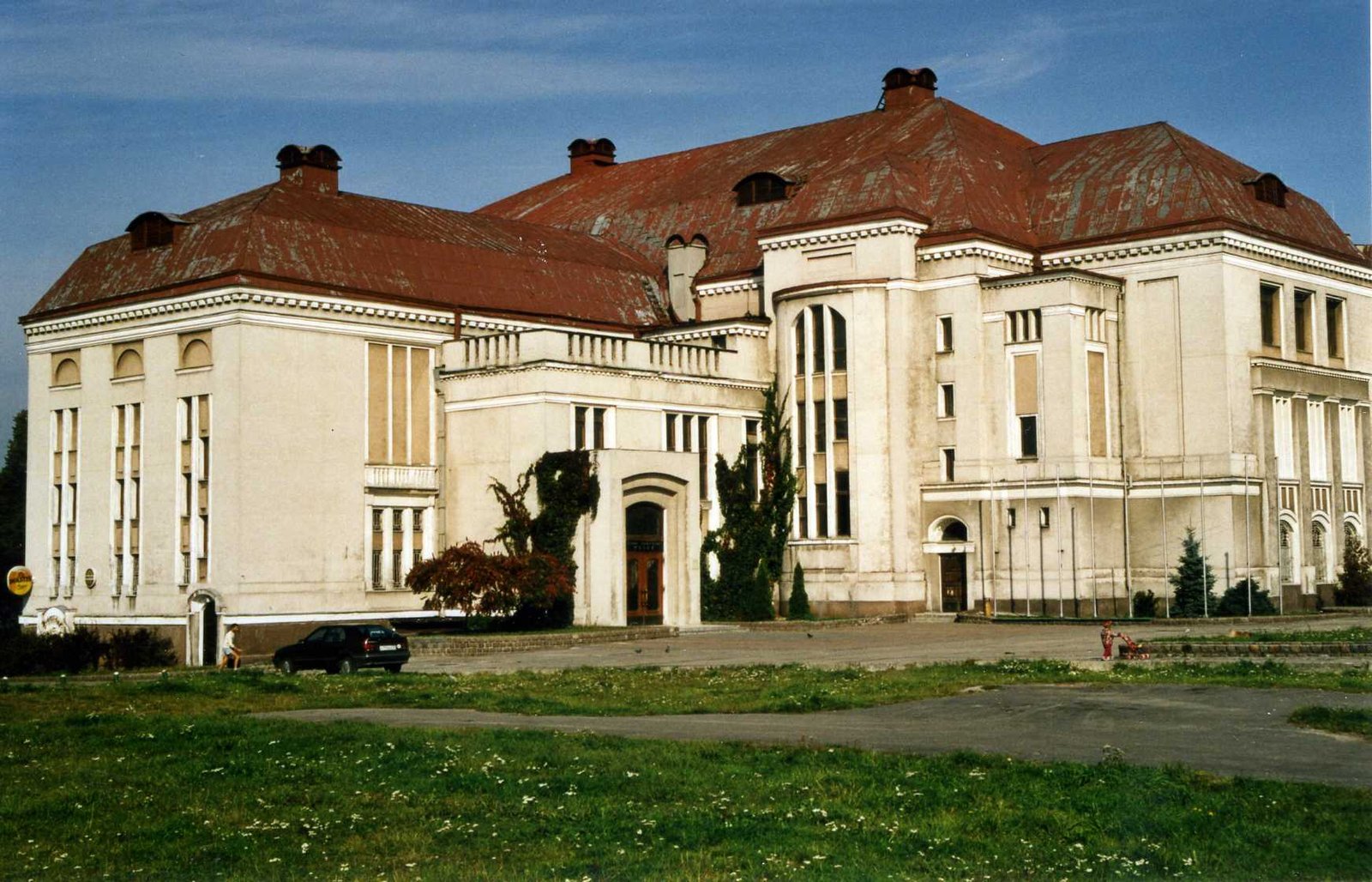
A former concert hall on the shore of the Lower Pond, the building has passed from Prussian civic pride through wartime ruin to Soviet restoration, and now holds the region’s layered past under one roof.
At a glance
Built in 1912 as the Stadthalle of Königsberg, the structure served as a concert venue and public hall before becoming, since 1991, home to the Kaliningrad Regional Museum of History and Arts, founded in 1946. It sits directly beside the castle pond, in what was once the Vorder-Roßgarten district.
History
Oberbürgermeister Siegfried Körte proposed the Stadthalle in 1907. It opened in 1912, designed by the Berlin architect named in sources as Richard Seel. Three concert halls bore the names of the men who backed the project: Körte, Theodor Krohne, and Carl Julius Gebauhr. The 1,600-seat hall regularly hosted the Königsberger Philharmonie. During World War I it served as a military hospital. Then came 26 August 1944. Allied bombing gutted the building that night, and postwar Kaliningrad inherited a ruin. Restoration did not begin until 1981, running through 1986. Five years later the museum, itself founded in 1946 and previously scattered across several city sites, moved in.
What you see
The building retains its civic-hall bearing, its footprint shaped by the pond it faces. Inside, five thematic halls now occupy the restored spaces once filled with orchestral sound. A Nature Hall gathers minerals and specimens from the Baltic coast, the Curonian Lagoon, and the region’s forests and bogs. An Archaeological Hall traces settlement from the late Paleolithic through the Iron Age, including Viking-era finds from Cranz. Many of these objects survived through the Prussian Museum’s collection, thought lost, later recovered. A Regional History Hall spans the Teutonic Order’s 13th-century conquest to 1945, showing old weapons and household furniture. The War Hall includes a diorama of the storming of Königsberg. A final hall, “Memory Horizons,” follows the first postwar Soviet residents and Kaliningrad’s early industry, down to dismantled Lenin monuments.
Cultural significance
Few buildings in Kaliningrad carry so much of the city’s double identity. The Stadthalle once symbolized Königsberg’s German civic and musical life. Its postwar reuse as a Soviet regional museum turned the same walls toward a different narrative, one of conquest, war, and resettlement. The recovered Prussian Museum artifacts give the archaeological displays particular weight, bridging a collection presumed destroyed with the region’s deeper prehistory.
Key facts
- Location: beside the Lower Pond (Schlossteich), Kaliningrad, Russia
- Built: 1912, as the Königsberg Stadthalle
- Architect: Richard Seel (Berlin)
- Original use: concert and civic hall, 1,600 seats
- Damaged: 26 August 1944, Bombing of Königsberg
- Restored: 1981–1986
- Museum founded: 1946; occupying this building since 1991
- Five permanent halls: Nature, Archaeology, Regional History, War, Memory Horizons
Practical information & getting there
The museum stands in central Kaliningrad, close to the Lower Pond, making it walkable from much of the historic core. Check the official website before visiting, as exhibition access and hours can vary by season. Allow time for all five halls, since the collections range from natural history to 20th-century political memory.
Sources & resources
Find it on the map
See this place and what’s around it →📷 Become a Cultural Heritage Online photographer
Share your photos of places: they stay published under your name as the author. The more they're seen, the more you get noticed — and soon a contest will reward the most appreciated photos.
Log in or sign up free to add a photoIs this page about you?
This page is read by travellers and heritage enthusiasts who find it on Google. Tell us how you are connected to this place and we will take it from there.