
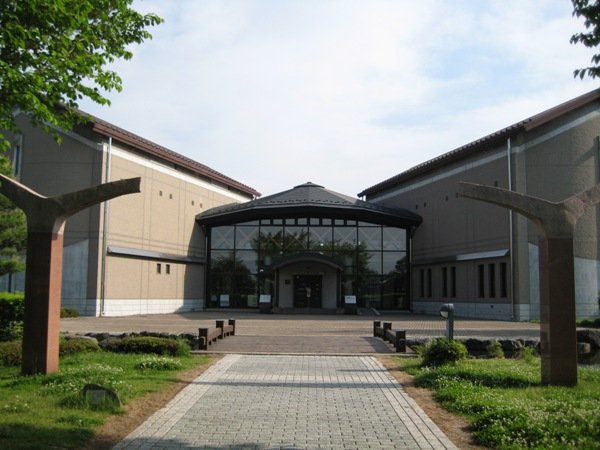
A museum built to remember twenty-eight farmers executed in 1686 for demanding relief from an impossible tax, and to keep their appeal for basic human dignity legible to the present day.
At a glance
The museum stands in Azumino, on the former site of Nakagaya village, once part of the Matsumoto Domain. It opened in 1992, three centuries after the events it commemorates. Across the street sits Jōkyō Gimin-sha, the shrine built for the executed farmers and the Mizuno clan who ruled them.
History
In 1686, the third year of the Jōkyō era, farmers of the Azumidaira area faced a tax increase layered on top of crop failure. Tada Kasuke, headman of Nakagaya, led a peasant appeal now known as the Jōkyō Uprising or Kasuke Uprising. The farmers presented a five-article letter of grievance. Domain executives responded with a signed document that turned out to be a delaying tactic. Twenty-eight farmers, Kasuke among them, were executed. Among them was Oshun, a sixteen-year-old girl who had carried messages to secret meetings at a local Kumano Shrine. She was the only woman put to death. Local memory of the uprising persisted through generations. After its 300th anniversary, residents decided to build a permanent institution to preserve records and honor the dead, choosing the very ground where Kasuke once served as headman.
What you see
Two wings extend outward from the building’s center, spread like open arms. They are meant to evoke Kasuke and the other farmers at the moment of their execution. A central hall links the wings beneath a conical roof, shaped after the hats worn by uprising participants as part of their improvised uniform. In front runs an artificial stream. Its clear water stands for the purity of the farmers’ cause. It also recalls a harsher truth: water scarcity was one root of their suffering, in the era before the Jikka-segi irrigation network transformed the region.
Cultural significance
Two plaques flank the entrance. One bears Articles 11 and 12 of the Constitution of Japan. The other carries the first article of the Universal Declaration of Human Rights. The pairing is deliberate. The museum frames a local 17th-century peasant revolt as an early assertion of rights later codified in international law. A seventeen-minute performance at the on-site theater, Yume-dōjō, retells the uprising through Oshun’s voice, tracing the tax rise, the appeal, the domain’s deception, and the executions.
Key facts
- Location: Azumino, Nagano Prefecture, Japan
- Opened: 1992, marking the aftermath of the uprising’s 300th anniversary
- Commemorates: the Jōkyō Uprising of 1686 and its 28 executed leaders
- Adjacent site: Jōkyō Gimin-sha shrine and the former Tada family homestead
- Theater performance: “The Jōkyō Gimin Story,” approximately 17 minutes
- Exhibits include the original five-article letter of appeal and the domain’s evasive response document
Practical information & getting there
The museum sits at coordinates roughly 36.274°N, 137.897°E, in the Azumidaira area of Nagano Prefecture. You can reach the site near the former village of Nakagaya, directly opposite the Jōkyō Gimin-sha shrine. Check the official website before visiting for current opening hours and theater performance times, since these are not fixed by the historical record.
Sources & resources
Find it on the map
See this place and what’s around it →📷 Become a Cultural Heritage Online photographer
Share your photos of places: they stay published under your name as the author. The more they're seen, the more you get noticed — and soon a contest will reward the most appreciated photos.
Log in or sign up free to add a photoIs this page about you?
This page is read by travellers and heritage enthusiasts who find it on Google. Tell us how you are connected to this place and we will take it from there.