
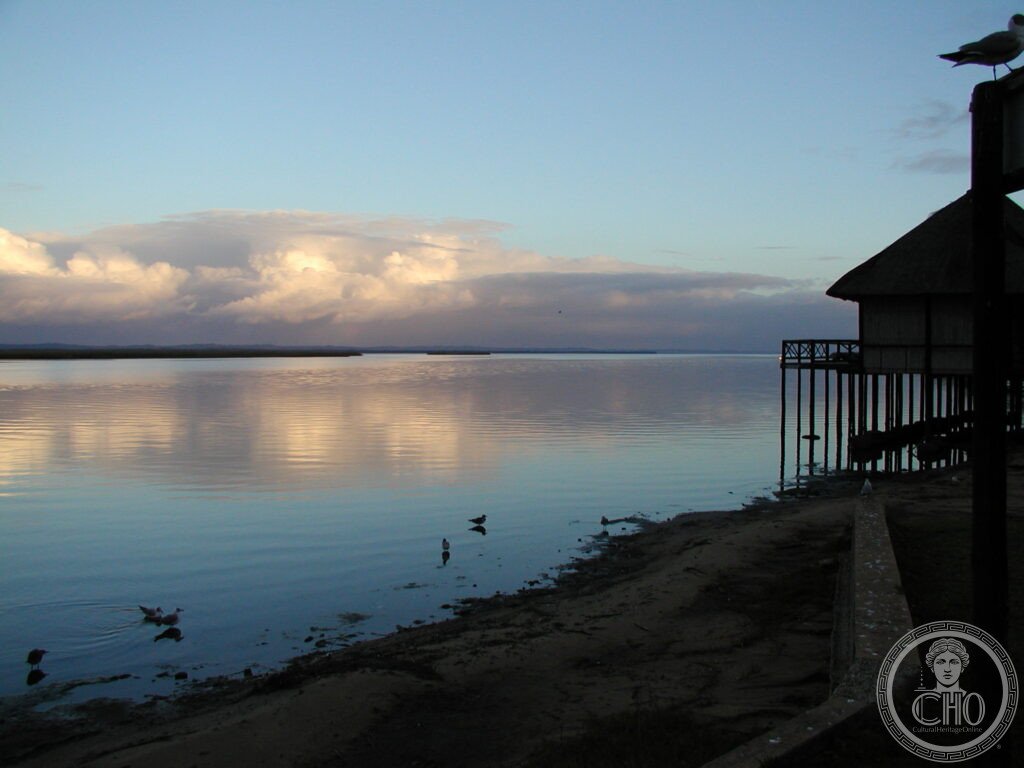
iSimangaliso Wetland Park brings together an estuarine lake, mangrove forest, coral reef and forested dune into one protected stretch of South Africa’s northern coast. It shelters the continent’s southernmost hippopotamus and Nile crocodile populations and some of Africa’s most important sea turtle nesting beaches, and was the first place in South Africa to be inscribed as a UNESCO World Heritage Site.
At a glance
iSimangaliso, a Zulu word meaning miracle and wonder, was formerly known as the Greater St. Lucia Wetland Park. It stretches along the KwaZulu-Natal coastline in northeastern South Africa and covers an area of roughly 3,280 square kilometres, including 328 kilometres of coastline. Within its boundaries the park brings together five distinct ecosystems: the estuarine system of Lake St. Lucia, extensive mangrove forest, coastal wetland and reed bed, the Indian Ocean shoreline with its coral reefs, and a belt of high forested dunes.
Lake St. Lucia itself is the largest estuarine lake in Africa, fed by five rivers and linked to the ocean through the St. Lucia Estuary. Its salinity shifts dramatically with rainfall, running fresh in wet years and turning hypersaline during drought.
Key facts
- Location: KwaZulu-Natal Province, northeastern South Africa
- Area: approximately 3,280 km², with 328 km of coastline
- Ecosystems: estuarine lake, mangrove forest, coastal wetland, coral reef, forested dune
- Wildlife: around 800 hippopotamus and 1,200 Nile crocodiles in Lake St. Lucia, described as Africa’s southernmost populations of both species
- Turtle nesting: loggerhead and leatherback turtles nest on the northern beaches between November and January
- Recognition: inscribed as a UNESCO World Heritage Site in 1999, the first in South Africa
History
The land now within the park was traditionally the territory of Zulu-speaking communities. Formal protection began in 1895 with the establishment of the St. Lucia Game Reserve, one of the earliest protected areas anywhere in Africa. Under apartheid, communities living in and around the park, including in the Dukuduku area, were subject to forced removals, displacing a large number of people from land later absorbed into the reserve.
Following the end of apartheid, South Africa’s new democratic government set up the iSimangaliso Wetland Park Authority in 1999, the same year the park was inscribed by UNESCO, and opened negotiations with displaced communities over land claims and co-management. The Dukuduku land claim, one of the more complex disputes between conservation authorities and local communities in South Africa, was eventually settled through negotiation.
What you see
Most visitors enter the park through the town of St. Lucia, on the southern shore of the estuary. From here, boat tours run out onto the estuary for close views of hippos and crocodiles, watching territorial displays among the bulls and calves moving through the shallows. The town’s own beachfront lawn is grazed by wild hippos after dark, and visitors are reminded that these are dangerous wild animals rather than a managed attraction.
Further north, Cape Vidal offers snorkelling and diving on the fringing coral reef, along with a seasonal aggregation of whale sharks. Licensed operators run night tours during the turtle nesting season around Bhanga Nek, taking small groups to watch nesting females and, later in the season, hatchlings making their way to the sea.
Practical information
- Best time to visit: the dry season from May to September brings cooler weather, concentrated hippo sightings and good birdwatching; turtle nesting runs November to January and whale sharks are seen roughly from October through the southern summer.
- Accommodation: the town of St. Lucia offers self-catering cottages, guesthouses and lodges; Ezemvelo KZN Wildlife also runs camps inside the park at Cape Vidal, Charters Creek and Fanies Island.
- Turtle tours: only licensed operators are permitted on the nesting beaches; advance booking is recommended.
- Wildlife safety: hippos regularly graze in and around St. Lucia town after dark and should be treated as wild, dangerous animals.
Getting there
King Shaka International Airport near Durban is the main gateway, with connections from Johannesburg, Cape Town and international routes. From Durban, the park is reached by road north along the N2 highway, past the sugar cane and banana plantations of the KwaZulu-Natal north coast, or by intercity bus with a connection through Richards Bay. Boat tours and further exploration within the park begin from St. Lucia town itself.
Nearby
- Hluhluwe-iMfolozi Park — about 50 km west; one of Africa’s oldest proclaimed game reserves, established the same year as St. Lucia, and the base for the conservation programme that rebuilt the world’s white rhinoceros population from a small surviving herd in the twentieth century.
- uPhongolo Game Reserve — about 120 km northwest; a lesser-known private reserve on the Phongolo River system, notable for its bird diversity, elephant population and as one of the few places in KwaZulu-Natal where African painted dogs can be seen.
Sources
- Wikipedia, iSimangaliso Wetland Park
- Wikipedia, Lake St. Lucia
- Wikipedia, Sea turtle
- UNESCO, iSimangaliso Wetland Park, WHS reference 914
Find it on the map
See this place and what’s around it →📷 Become a Cultural Heritage Online photographer
Share your photos of places: they stay published under your name as the author. The more they're seen, the more you get noticed — and soon a contest will reward the most appreciated photos.
Log in or sign up free to add a photo