
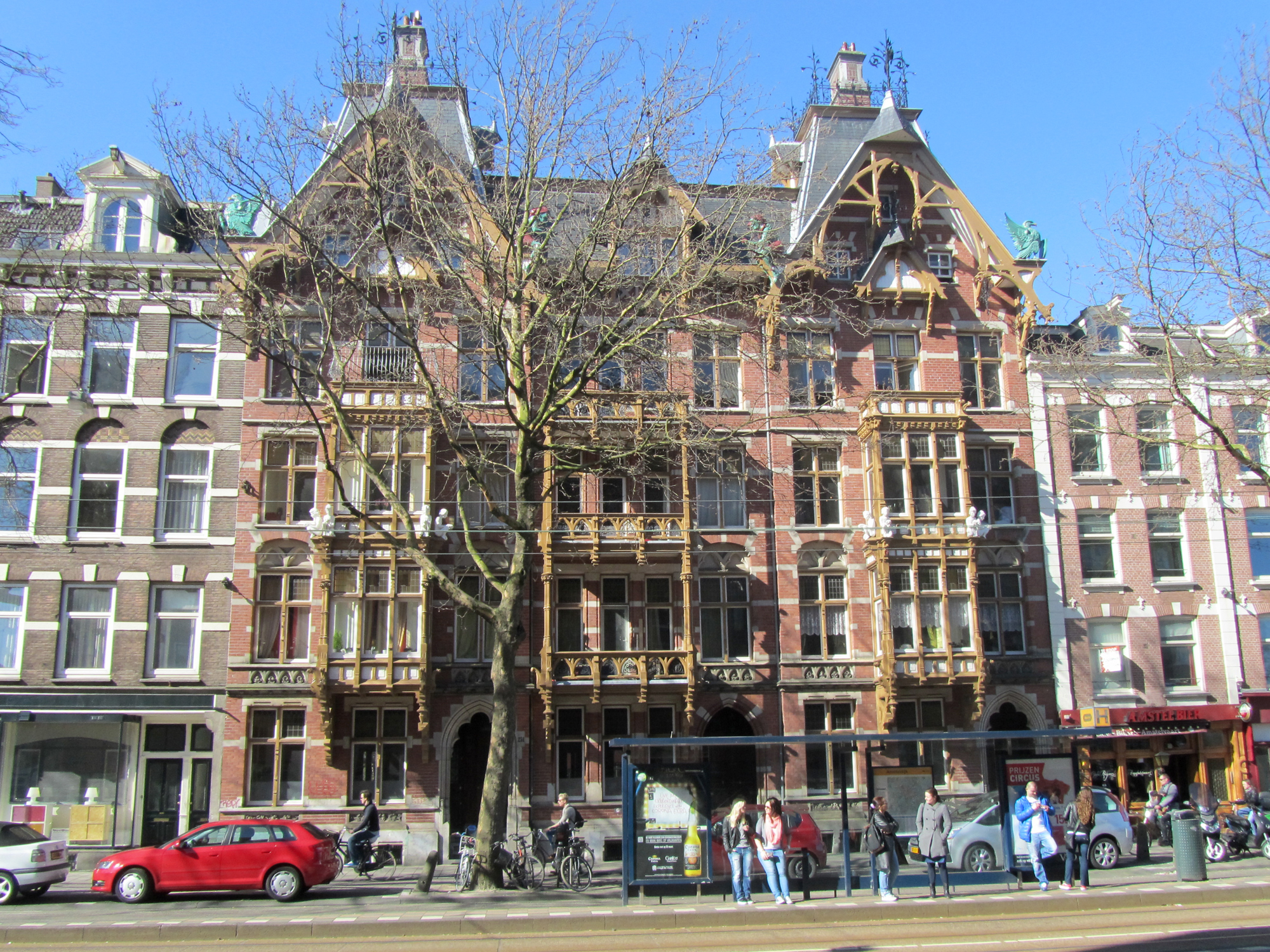
A whimsical 19th-century Amsterdam townhouse adorned with two oversized gnomes that, according to local lore, toss an invisible ball between them at midnight.
At a glance
This ornate building in the De Pijp district combines Gothic Revival, Renaissance Revival, and Swiss chalet architectural styles. Three wooden bay windows punctuate its brick-and-sandstone facade, which bristles with carved ornaments: gnomes, putti, and eagles. The two gnomes crowning the roofline, each standing 2.5 metres tall, have inspired generations of Amsterdam folklore.
History
Designed by A.C. Boerma and completed in 1884, the Huis met de Kabouters consists of three adjoining townhouses adapted into twelve apartments. The building earned rijksmonument (national monument) status in 1984. Local legend surrounds the gnomes: they may represent two contractors who collaborated on construction, or they might honour the building’s commissioner, whose surname Van Ballegooijen literally translates to “ball toss.”
What you see
The building measures 27 metres wide, 13 metres deep, and 17 metres high. Each of its three sections contains a ground floor, three residential storeys, and an attic. Gothic Revival lancet windows and gargoyles sit alongside Renaissance Revival kruiskozijn windows (divided into four sections by crossing beams) and stone detailing. Swiss chalet influence appears in the abundant wooden carvings throughout.
The gnomes dominate the composition. According to neighbourhood tradition, they exchange a ball at midnight each night—though other versions claim this magical exchange occurs only on New Year’s Eve or on 29 February in leap years.
Cultural significance
The Huis met de Kabouters exemplifies late 19th-century Amsterdam eclecticism, blending northern European architectural traditions into a single, exuberant composition. The gnomes have become beloved local emblems, their purpose and symbolism remaining pleasantly mysterious even after more than a century.
Key facts
- Location: Ceintuurbaan 251–255, De Pijp district, Amsterdam
- Country: Netherlands
- Year completed: 1884
- Architect: A.C. Boerma
- Status: Rijksmonument since 1984
- Coordinates: 52.356°N, 4.904°E
Practical information & getting there
The building stands near the Nieuwe Amstelbrug bridge, which crosses the river Amstel in the De Pijp neighbourhood. It is a private residential building; exterior viewing is available from the street. The gnomes are best appreciated from ground level on Ceintuurbaan.
Sources & resources
- Huis met de Kabouters – Wikipedia
- Cultural Heritage Online
Find it on the map
See this place and what’s around it →📷 Become a Cultural Heritage Online photographer
Share your photos of places: they stay published under your name as the author. The more they're seen, the more you get noticed — and soon a contest will reward the most appreciated photos.
Log in or sign up free to add a photoIs this page about you?
This page is read by travellers and heritage enthusiasts who find it on Google. Tell us how you are connected to this place and we will take it from there.