
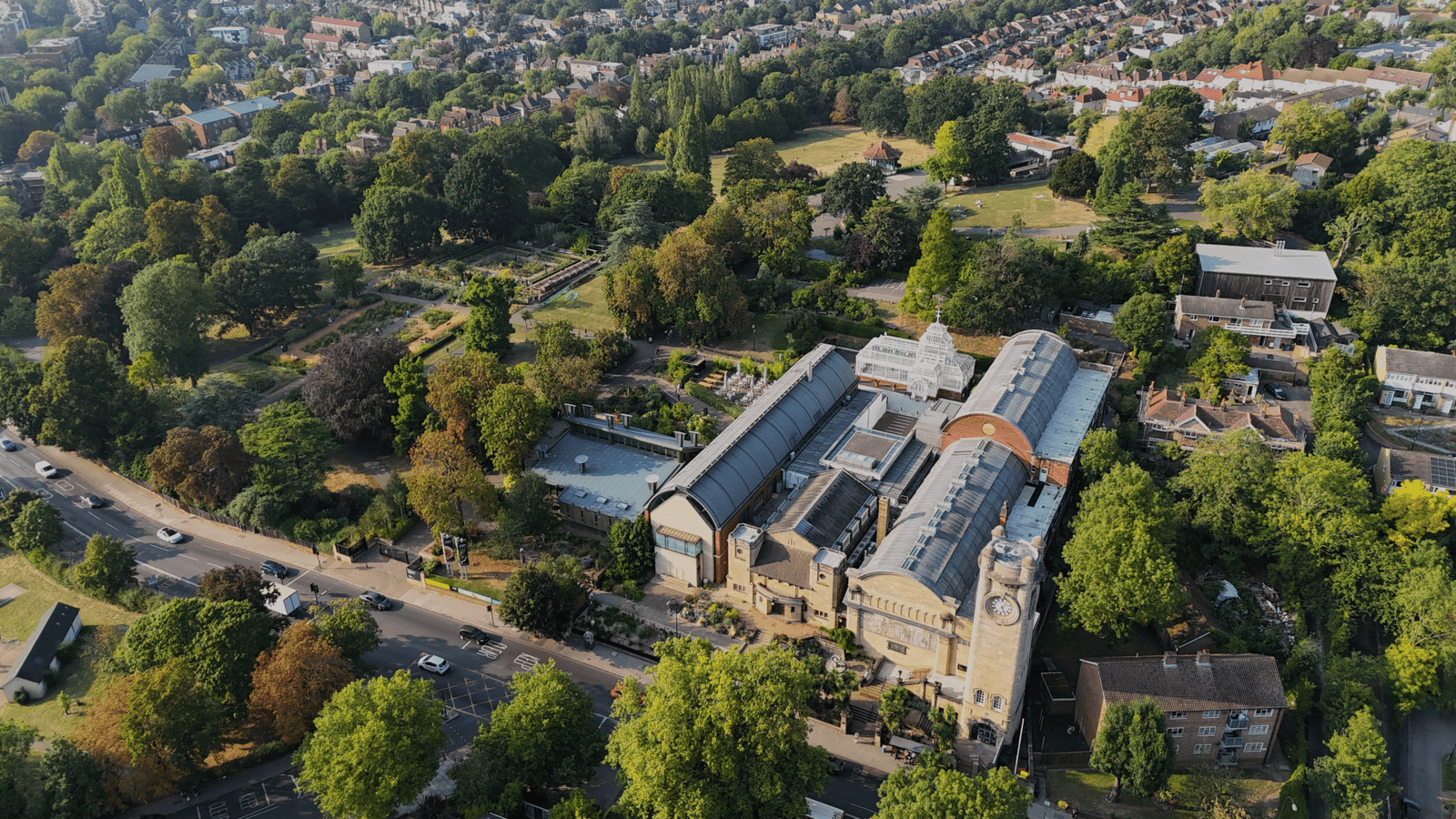
A pioneering museum of anthropology, natural history and musical instruments, housed in a Grade II* listed building designed in the Modern Style.
At a glance
The Horniman Museum combines an architecturally distinctive early-20th-century building with renowned collections spanning ethnography, zoology and world music. Its extensive taxidermied animal displays remain among its most distinctive features.
History
Commissioned in 1898, the museum opened its doors in 1901 in Forest Hill, south London. It was designed by Charles Harrison Townsend, a leading architect of the Modern Style movement. The institution operates as a non-departmental public body under the Department for Culture, Media and Sport, constituted as both a company and registered charity. In 2022, it received the Art Fund’s Museum of the Year award.
What you see
Townsend’s design exemplifies the Modern Style aesthetic that emerged in Britain at the turn of the 20th century. The building’s Grade II* listing recognises its architectural significance. The adjoining gardens provide a landscape setting that complements the structure’s character.
Cultural significance
The museum’s collections reflect global cultures and natural diversity through anthropological artefacts, zoological specimens and musical instruments from across the world. Its award-winning status underlines its importance as a cultural institution serving London and beyond.
Key facts
- Location: Forest Hill, London Borough of Lewisham, United Kingdom
- Coordinates: 51.4406, −0.0608
- Opened: 1901
- Architect: Charles Harrison Townsend
- Architectural style: Modern Style
- Heritage designation: Grade II* listed
- Award: Art Fund Museum of the Year (2022)
Practical information & getting there
The museum and gardens are located in the London Borough of Lewisham. For current opening hours, admission charges and visitor information, consult the museum’s website or contact them directly.
Sources & resources
Find it on the map
See this place and what’s around it →📷 Become a Cultural Heritage Online photographer
Share your photos of places: they stay published under your name as the author. The more they're seen, the more you get noticed — and soon a contest will reward the most appreciated photos.
Log in or sign up free to add a photoIs this page about you?
This page is read by travellers and heritage enthusiasts who find it on Google. Tell us how you are connected to this place and we will take it from there.