
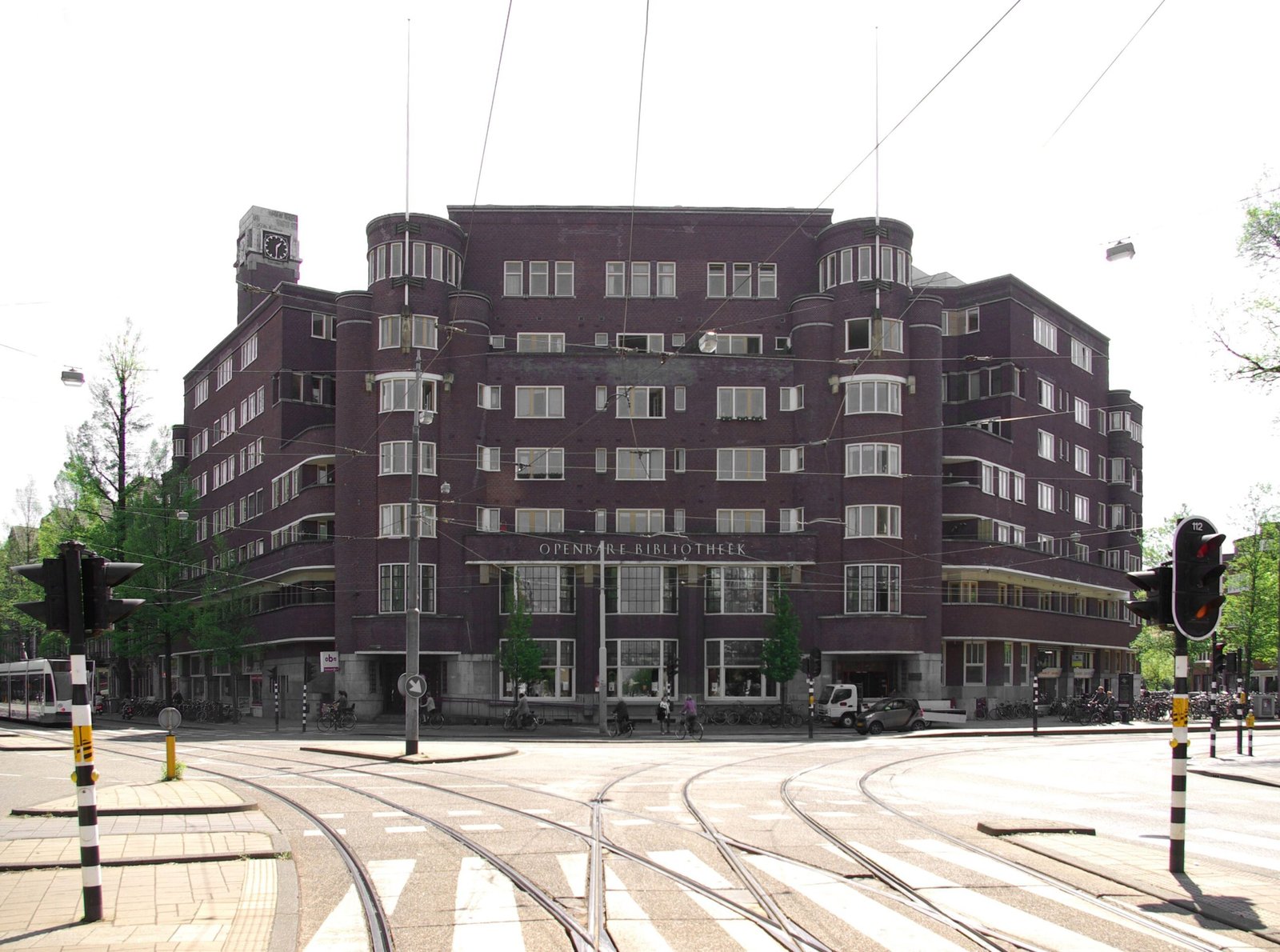
An American-style apartment building designed for wealthy bachelors, Het Nieuwe Huis stands as a distinctive landmark of 1920s Amsterdam housing innovation near the city’s museum quarter.
At a glance
Het Nieuwe Huis is a 188-unit residential building at Roelof Hartplein, designed by architect Barend van den Nieuwen Amstel. Its curved facade and staircase windows reflect Amsterdam School influences. A public library branch operates beneath the building.
History
Completed in 1928, the building addressed a specific social need: housing for single men of means who faced difficulty finding suitable accommodation. This purpose remains largely unchanged nearly a century later. In 1974, writer and poet Jan Arends died after jumping from his apartment window on the day his collection Lunch Poems was published. Since 2004, the building has held protected monument status in the Netherlands.
What you see
The playful facade demonstrates the Amsterdam School’s characteristic vocabulary of curves and decorative staircase windows. Interior spaces include a central courtyard and a fifth-floor shared terrace overlooking the Amsterdam Business Center Zuid. A gatehouse marks the entrance at the head of Van Baerlestraat.
Cultural significance
Het Nieuwe Huis represents an important chapter in early 20th-century urban housing. It pioneered affordable communal living for single residents during a period when such accommodation was scarce. The building remains home to residents spanning ages 21 to 99, sustaining its original social mission.
Key facts
- Built: 1928
- Architect: Barend van den Nieuwen Amstel
- Apartments: 188 small to medium-sized units
- Location: Roelof Hartplein, Van Baerlestraat, Amsterdam Oud-Zuid
- Coordinates: 52.3525°N, 4.8822°E
- Protected monument status: since 2004
Practical information & getting there
Het Nieuwe Huis is within five minutes’ walk of Amsterdam’s museum quarter. The building remains a private residence; exterior viewing and the public library branch are accessible. Check opening hours for the library before visiting.
Sources & resources
Find it on the map
See this place and what’s around it →📷 Become a Cultural Heritage Online photographer
Share your photos of places: they stay published under your name as the author. The more they're seen, the more you get noticed — and soon a contest will reward the most appreciated photos.
Log in or sign up free to add a photoIs this page about you?
This page is read by travellers and heritage enthusiasts who find it on Google. Tell us how you are connected to this place and we will take it from there.