

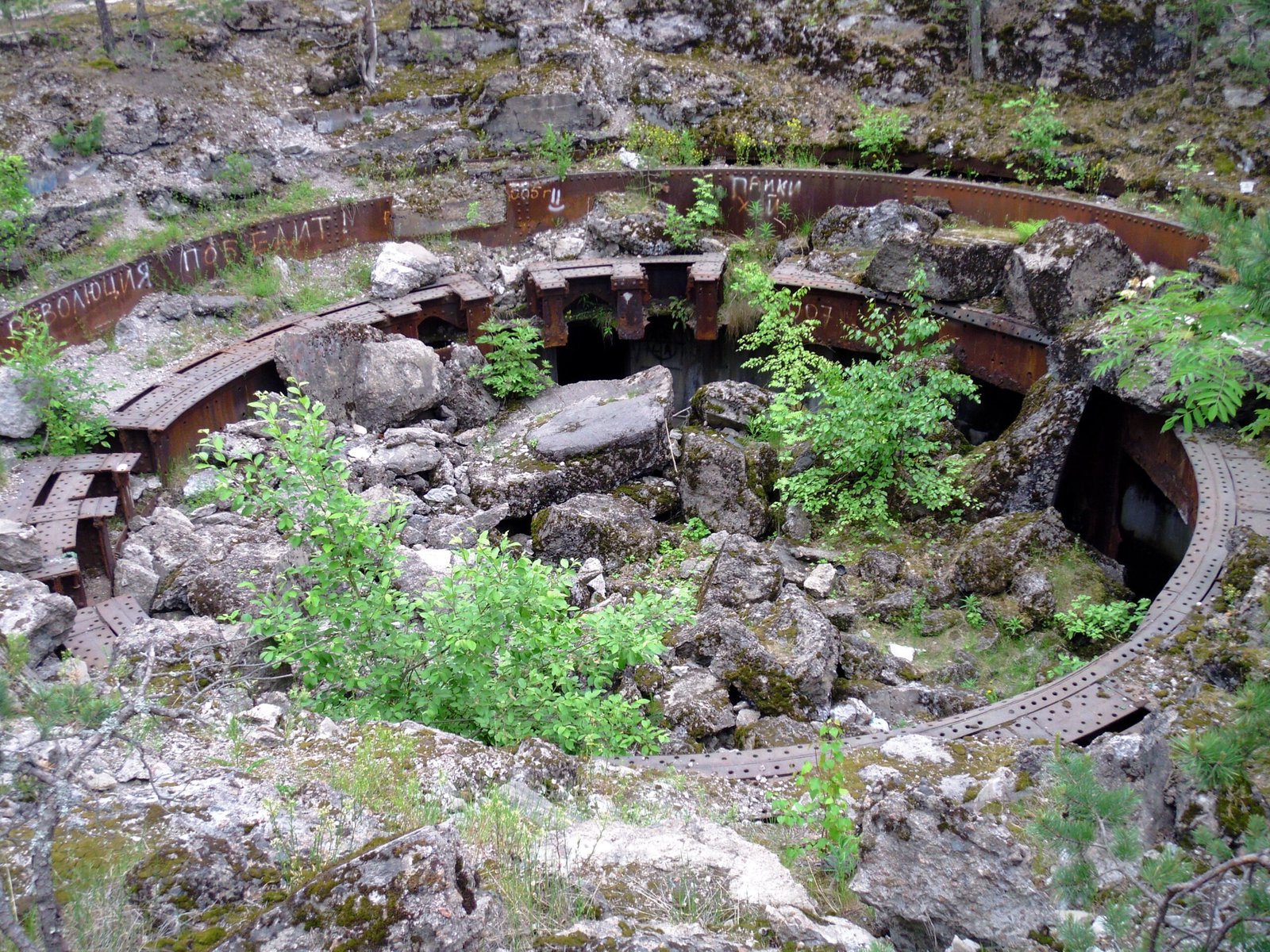
An abandoned Russian coastal fortification guarding Neva Bay, Fort Ino stands as a relic of early-20th-century Baltic military engineering, its tunnel system now open to intrepid visitors.
At a glance
Fort Ino (also known as Fort Nikolaevsky) occupies the northern shore of Neva Bay in the Gulf of Finland, positioned strategically opposite the Krasnaya Gorka fort. Built in Russia’s final imperial era, the structure remains under Russian control despite decades of abandonment.
History
Constructed in the early 20th century, Fort Ino formed part of Russia’s coastal defense network protecting the approaches to St. Petersburg via the Gulf of Finland. The fort was built near the settlement then known as Ino, which was renamed Privetninskoye in 1946 under Soviet administration.
What you see
The fort comprises extensive ruins featuring an intricate system of tunnels that once connected defensive positions across the fortification. Visitors today encounter crumbling masonry and partially preserved bunker structures that reveal the engineering ambitions of Imperial Russian military planners.
Cultural significance
Fort Ino represents the final phase of Russian fortress construction before the revolution. The site documents both military strategy and engineering practice of the era, while its tunnels offer rare physical evidence of subterranean fortification design in the Baltic region.
Key facts
- Location: Privetninskoye, Vyborgsky District, Leningrad Oblast, Russia
- Coordinates: 60.16°N, 29.41°E
- Built: Early 20th century
- Status: Abandoned; partially accessible to the public
- Notable feature: Extensive tunnel network
Practical information & getting there
Fort Ino is located in Leningrad Oblast near the village of Privetninskoye. Access is partially available, though visitors should note the site’s deteriorated condition and take appropriate safety precautions. Specific visiting hours and access restrictions should be verified locally before traveling, as conditions may vary seasonally.
Sources & resources
Find it on the map
See this place and what’s around it →📷 Become a Cultural Heritage Online photographer
Share your photos of places: they stay published under your name as the author. The more they're seen, the more you get noticed — and soon a contest will reward the most appreciated photos.
Log in or sign up free to add a photoIs this page about you?
This page is read by travellers and heritage enthusiasts who find it on Google. Tell us how you are connected to this place and we will take it from there.