

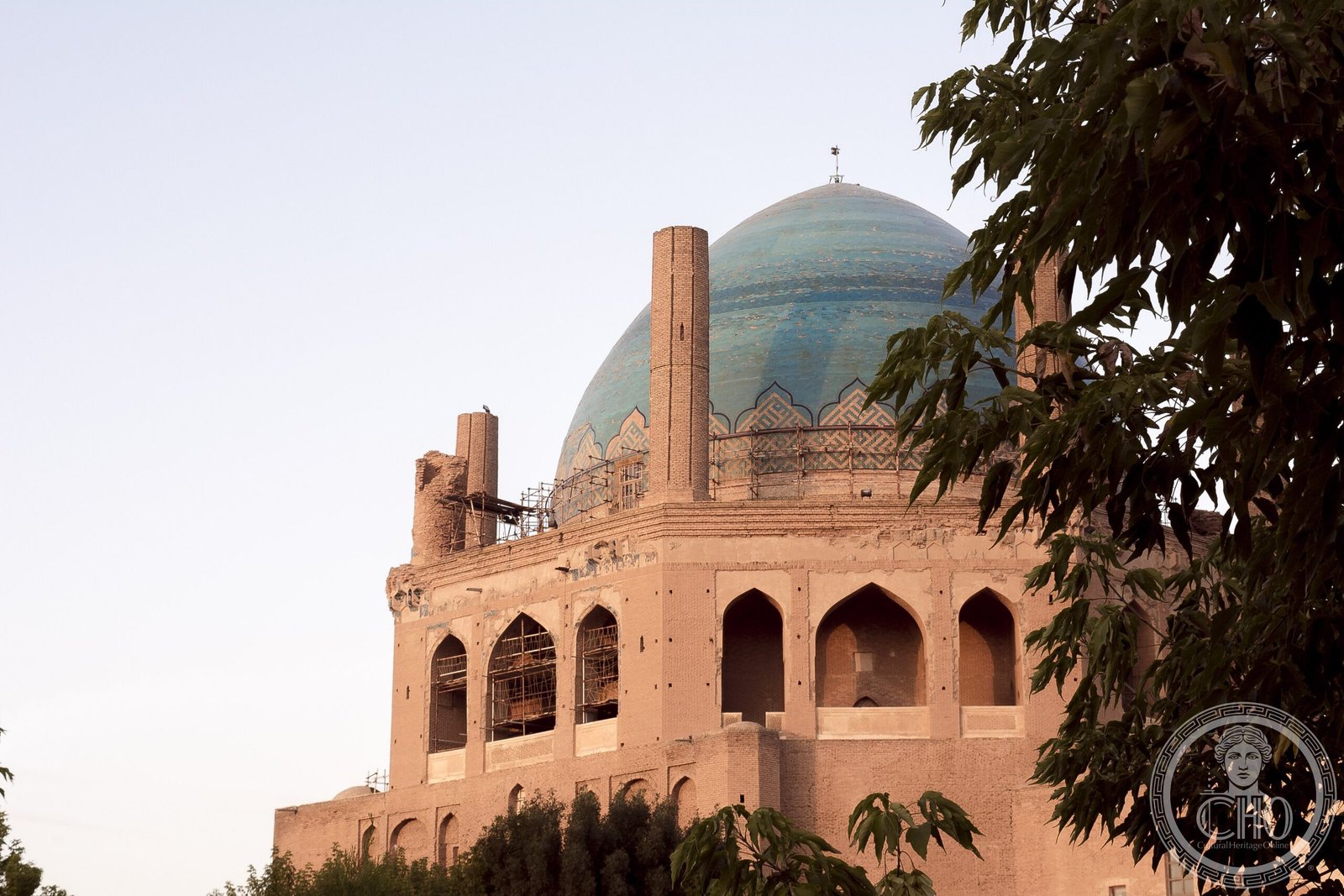
A revolutionary brick dome of colossal scale, built as the mausoleum of an Ilkhanid ruler, that reshaped Islamic and Persian architecture across centuries.
At a glance
The Dome of Soltaniyeh stands in northwestern Iran as one of the world’s largest brick domes, commanding the ruins of what was once a sprawling palatial complex. Built between 1307 and 1313 for the Mongol ruler Öljaitü (Muhammad Khodabandeh), it originally anchored a settlement of mosques, residences, and administrative buildings—most now lost to time.
History
Öljaitü commissioned this mausoleum during the zenith of Ilkhanid power, when Persia was ruled by descendants of Genghis Khan. The structure was conceived as both a tomb and a monument to dynastic grandeur. Its double-shelled dome marked a decisive turning point in architectural ambition across the Islamic world, inspiring generations of builders to attempt equally audacious cupolas.
What you see
The mausoleum’s most striking feature is its double-shelled brick dome, measuring nearly 25 metres in diameter and rising approximately 50 metres high. Its engineering was revolutionary for its era, employing advanced masonry techniques to achieve both structural integrity and graceful proportions. Though much exterior decoration has eroded, the interior preserves exceptional mosaics, faience tilework, and murals that speak to the patron’s wealth and taste.
Cultural significance
The Dome of Soltaniyeh fundamentally altered the trajectory of Persian and Persianate architecture. Its precedent enabled later masterpieces—the Mausoleum of Khoja Ahmed Yasavi and the Taj Mahal among them. In Islamic architecture, its influence rivals that of Brunelleschi’s dome in Florence for Christian building tradition. The structure demonstrates the synthesis of Mongol ambition with Islamic and Persian aesthetic refinement.
Key facts
- Country: Iran
- Location: Soltaniyeh, Zanjan Province
- Coordinates: 36.43°N, 48.79°E
- Construction: 1307–1313 CE
- Ruler: Öljaitü (Muhammad Khodabandeh), Ilkhanid Mongol
- Main dome diameter: ~25 metres (82 ft)
- Main dome height: ~50 metres (160 ft)
- Iran National Heritage List: 6 January 1932
- UNESCO World Heritage Site: 2005
Practical information & getting there
The site is administered by Iran’s Cultural Heritage, Handicrafts and Tourism Organization. The complex is currently undergoing extensive renovation. For current access details and visiting hours, contact the heritage organization or check locally, as restoration work may affect visitor access.
Sources & resources
Find it on the map
See this place and what’s around it →📷 Become a Cultural Heritage Online photographer
Share your photos of places: they stay published under your name as the author. The more they're seen, the more you get noticed — and soon a contest will reward the most appreciated photos.
Log in or sign up free to add a photoIs this page about you?
This page is read by travellers and heritage enthusiasts who find it on Google. Tell us how you are connected to this place and we will take it from there.