
On February 3 each year, Dubrovnik honors its patron saint with a celebration rooted in legend and civic identity, unbroken since 972 AD.
In UNESCO’s words
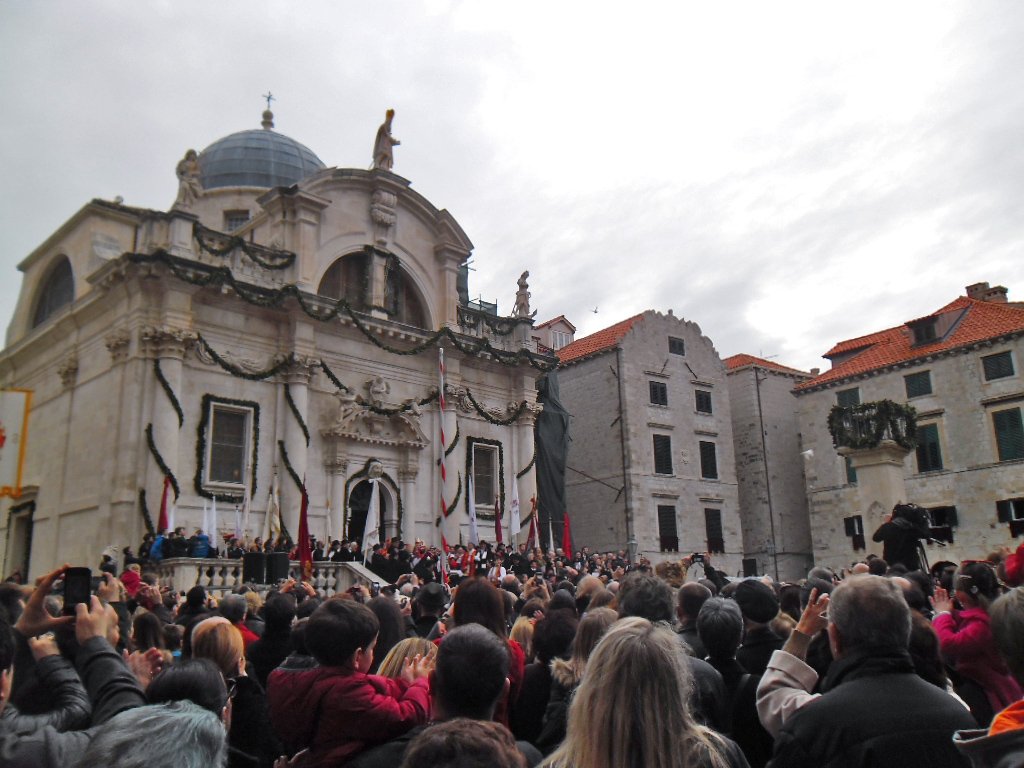
The evening before the festivity of Saint Blaise in Dubrovnik, Croatia, as all the church bells in the city ring and white doves are released as symbols of peace, worshippers gather for a ritual healing of the throat to preserve them against illness. On the third of February, the official day of both saint and city, parish banner bearers flow into the city in folk costume for the centrepiece of the festival, a procession attended by bishops, ambassadors, civic leaders, visiting notables and the people of Dubrovnik. The festivity embodies many aspects of human creativity, from rituals to folk songs, from performance to traditional crafts (including the making of the historical weapons fired in celebration). The ritual dates back in some form to at least 1190 and has reinforced a close identification of Dubrovnik’s residents with the city’s patron, Saint Blaise. Over time, the festivity has evolved as Dubrovnik and the world have changed. Each generation adapts it slightly, inspired by its own ideas and needs to make the ritual its own. On Saint Blaise’s day, Dubrovnik gathers not only its residents, but all those who pay respect to tradition and the right to one’s freedom and peace.
Official description, UNESCO Intangible Cultural Heritage List — Festivity of Saint Blaise, the patron of Dubrovnik
At a glance
The Festivity of Saint Blaise takes place on February 3rd in Dubrovnik, combining spiritual ritual with civic ceremony. The evening before, church bells ring and white doves are released as symbols of peace, while worshippers gather for a ritual throat healing. On the official day, parish banner bearers in folk costume lead a procession attended by bishops, ambassadors, civic leaders and residents. The festivity draws together many forms of human creativity: rituals, folk songs, performances and traditional crafts, including the making of historical weapons fired in celebration.
Origins & history
The festivity dates back at least to 1190 and has evolved continuously as Dubrovnik and the world have changed. Each generation has adapted it slightly, drawing on its own ideas and needs. Over centuries, it has reinforced a close identification between Dubrovnik's residents and their patron, Saint Blaise. Rather than remaining fixed, the tradition has transformed while maintaining its core purpose of bringing the city together.
The practice
On the evening before Saint Blaise's day, church bells ring throughout the city and white doves are released. Worshippers gather for a ritual healing of the throat to protect against illness. The following day, the procession forms with parish banner bearers in folk costume, accompanied by bishops, ambassadors, civic leaders and the people of Dubrovnik. Traditional crafts play a role, notably the making of historical weapons that are fired as part of the celebration.
Cultural significance
The festivity embodies the community's deep connection to their patron saint and their city. It gathers not only Dubrovnik's residents but all who respect tradition and the values of freedom and peace. For the people of Dubrovnik, the celebration reinforces their shared identity and collective memory, making it central to how they understand themselves as a community.
Key facts
- Country: Croatia
- Inscribed: 2009
- UNESCO list: Representative List of the Intangible Cultural Heritage of Humanity
- UNESCO reference: 00232
- UNESCO vocabulary: Festivals; Religious practice; Saints
- Map: Dubrovnik — the locality named in UNESCO’s official description of this element
- Related World Heritage site: Old City of Dubrovnik (a different UNESCO designation, not the place of the tradition)
Where to experience it
The festivity unfolds throughout Dubrovnik on February 3 each year, drawing visitors alongside local residents, clergy, and civic leaders. The evening before, church bells ring across the city as worshippers gather for throat blessings. On Saint Blaise's day itself, processions flow through the streets in folk costume, accompanied by traditional music and ceremonies that blend ritual, performance, and craft. For current details on specific venues, times, and events, consult local tourism boards or official sources.
Sources & resources
- UNESCO — official element page: Festivity of Saint Blaise, the patron of Dubrovnik
- UNESCO — open data record: Intangible Heritage List, reference 00232
- UNESCO — official video: UNESCO film on this element — embedded on this page
- UNESCO — official photograph: Photograph of this element — Željko Tutnjević — Ministry of Culture of Croatia, 2008
- Reference — Wikipedia (secondary): Festivity of Saint Blaise%2C the patron of Dubrovnik — consulted as a secondary reference, not as confirmation
- Cultural Heritage Online: Our archive and city guides

Find it on the map
See this place and what’s around it →📷 Become a Cultural Heritage Online photographer
Share your photos of places: they stay published under your name as the author. The more they're seen, the more you get noticed — and soon a contest will reward the most appreciated photos.
Log in or sign up free to add a photo