
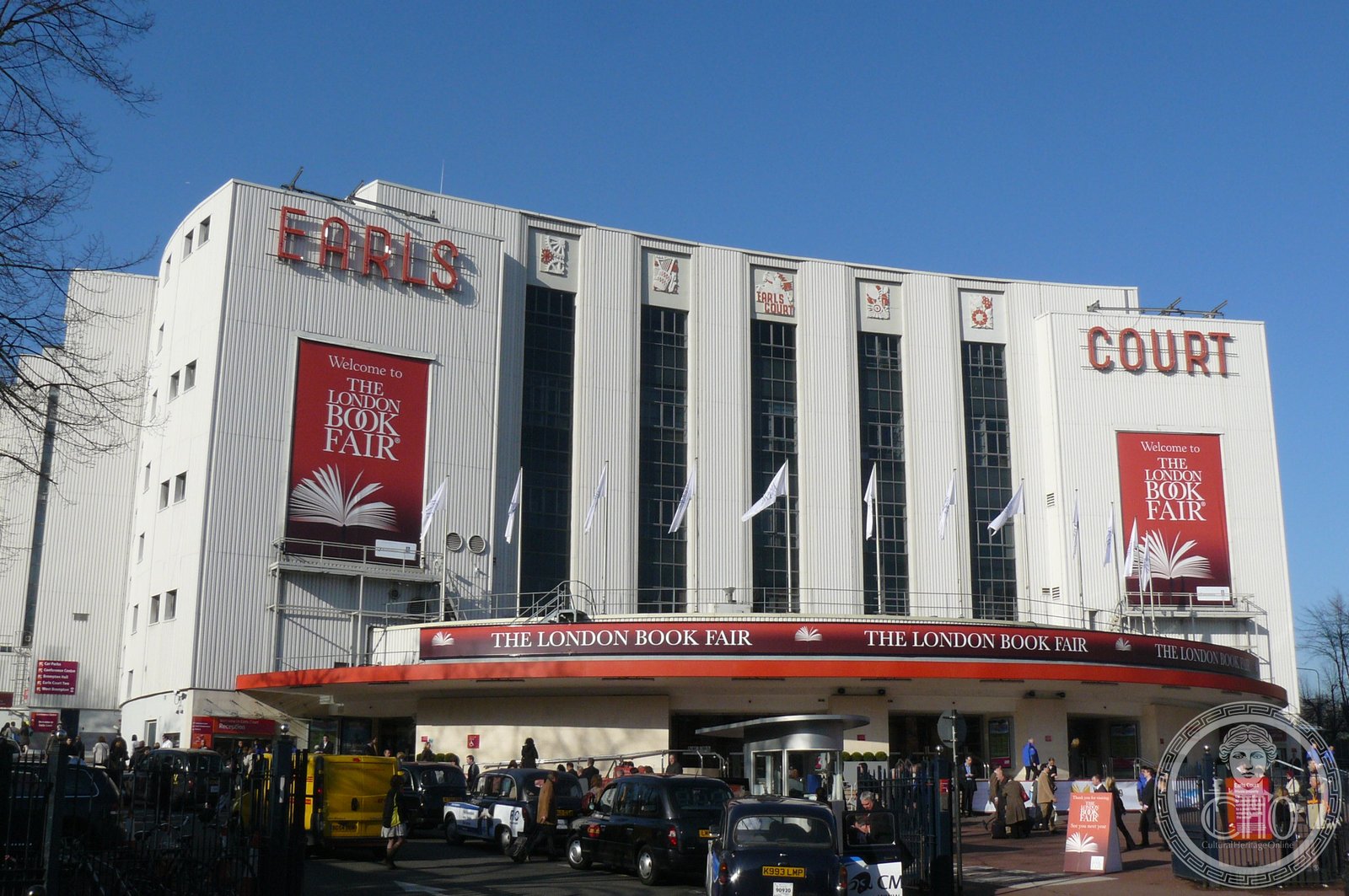
A landmark international exhibition venue that defined London’s cultural and commercial calendar for nearly a century before its demolition in 2017.
At a glance
Earls Court was London’s premier exhibition and events venue, straddling the boundary between Kensington and Chelsea and Hammersmith and Fulham. At its peak, it generated an estimated £2 billion annual turnover for the economy. The art moderne structure—designed by American architect C. Howard Crane—was built between 1935 and 1937 on grounds that dated back to 1887.
History
The site originated as exhibition and entertainment grounds founded by Leeds entrepreneur John R. Whitley. Its inaugural attraction featured Buffalo Bill Cody’s American Show, attended by Queen Victoria and members of the Royal Household. Early exhibitions showcased nations including Canada, France and India.
The 1935–1937 rebuild transformed the venue into a modern international centre. For decades it hosted the Royal Smithfield Show, Royal Tournament, British International Motor Show, London Boat Show and Ideal Home Show. It welcomed Billy Graham rallies, the Brit Awards, Crufts and major opera and pop concerts alongside hundreds of trade shows.
The venue served as an Olympic venue in both 1948 and 2012. In 2008, after acquisition by developers, English Heritage granted a Certificate of Immunity from Listing. Demolition was completed in 2017.
What you see
The building embodied art moderne design principles characteristic of 1930s modernism. C. Howard Crane, a specialist in exhibition architecture, created a structure suited to large-scale public gatherings. Earl’s Court tube station featured a specially adapted tunnel for show visitors and, in later years, a direct link to Heathrow Airport.
Cultural significance
Earls Court defined London’s exhibition culture from the mid-twentieth century onward. It hosted some of Britain’s most prestigious annual events and served as a barometer of the nation’s cultural priorities—from motorsports to literature, pets to faith.
Key facts
- Location: London, United Kingdom (51.48°N, 0.19°W)
- Architect: C. Howard Crane (American specialist)
- Built: 1935–1937
- Demolished: 2017
- Original grounds: opened 1887
- Olympic host: 1948, 2012
Practical information & getting there
The venue is no longer in operation. The site was accessible via Earl’s Court tube station on the District, Piccadilly and Circle lines. Historical information and archival material remain available through cultural institutions and the London Library.
Sources & resources
Find it on the map
See this place and what’s around it →📷 Become a Cultural Heritage Online photographer
Share your photos of places: they stay published under your name as the author. The more they're seen, the more you get noticed — and soon a contest will reward the most appreciated photos.
Log in or sign up free to add a photoIs this page about you?
This page is read by travellers and heritage enthusiasts who find it on Google. Tell us how you are connected to this place and we will take it from there.