
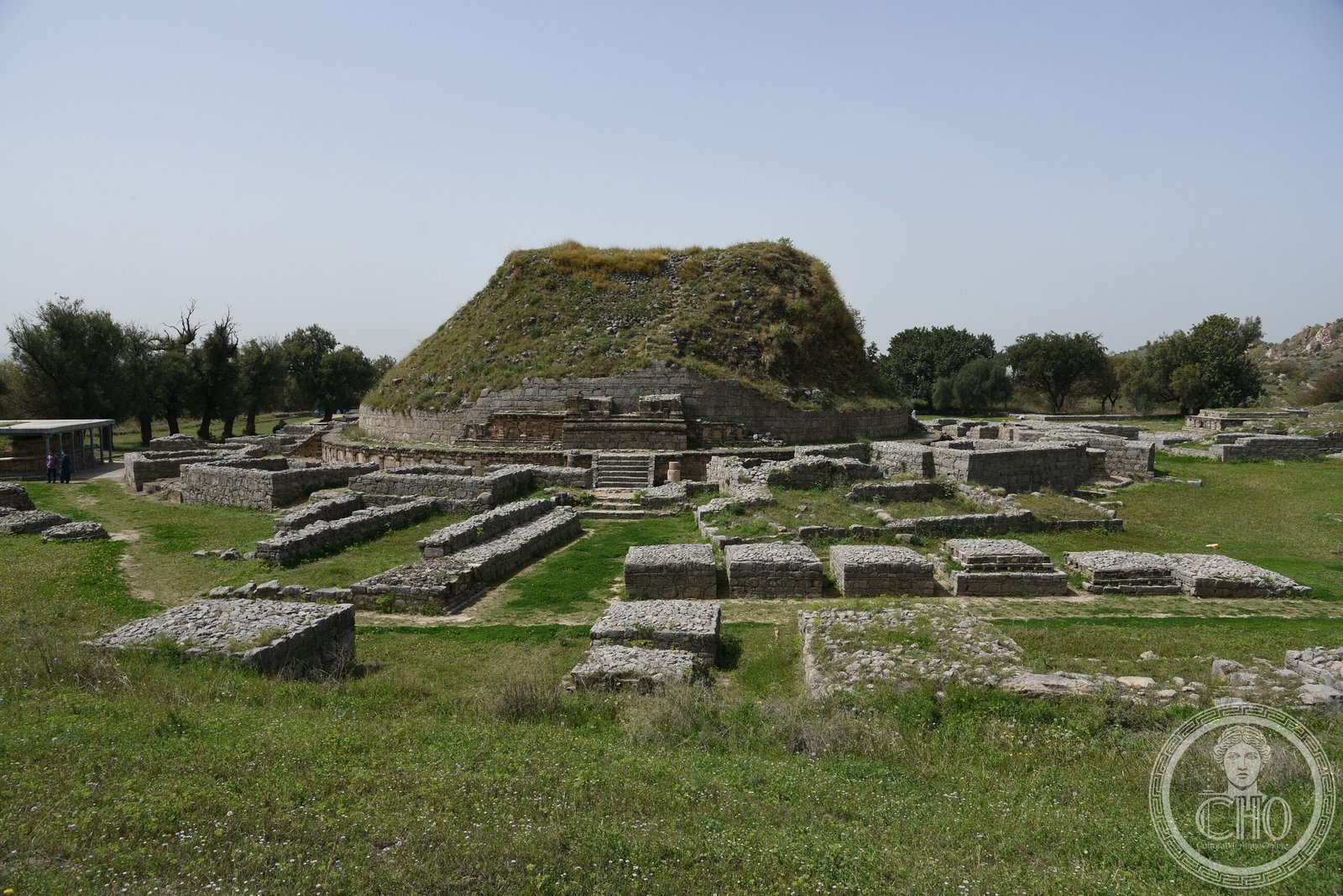
Emperor Ashoka built this monumental Buddhist stupa over the relics of the Buddha in the 3rd century BCE. The Great Stupa of Taxila anchors one of antiquity’s most significant pilgrimage centers and monastic complexes.
At a glance
A 3rd-century BCE Buddhist stupa commissioned by Emperor Ashoka of Magadha to enshrine relics of the Buddha. Over centuries, a substantial monastic complex developed around it, transforming the site into a major center of Buddhist learning and devotion. Today it stands among the Ruins of Taxila, a UNESCO World Heritage Site since 1980.
History
Emperor Ashoka commissioned the Dharmarajika Stupa in the 3rd century BCE as a monument to the Buddha and a repository for his relics. The construction reflected Ashoka’s profound commitment to Buddhism and his imperial patronage of Buddhist architecture across his vast empire.
The stupa did not stand alone for long. A large monastic complex gradually developed around it, transforming the site into a thriving center of Buddhist scholarship, meditation, and pilgrimage. This expansion turned Taxila into one of the most important Buddhist destinations in the ancient world.
What you see
The stupa’s form—a mound-shaped structure topped with a spire—follows the traditional Buddhist architectural design for relic shrines. The monument’s scale and setting within the broader monastic complex reveal the ambitions of Ashoka’s reign and the sustained investment of later Buddhist communities in this sacred landscape.
Cultural significance
The Dharmarajika Stupa represents a defining moment in Buddhist material culture—the imperial sponsorship of monumental architecture by one of history’s most powerful rulers. Its enduring presence at Taxila testifies to the site’s spiritual and intellectual importance across centuries of Buddhist civilization in South Asia.
Key facts
- Country: Pakistan
- City: Taxila
- Coordinates: 33.73°N, 72.78°E
- Founded: 3rd century BCE
- Commissioned by: Emperor Ashoka of Magadha
- UNESCO World Heritage Site: Ruins of Taxila (inscribed 1980)
Practical information & getting there
The stupa is located near Taxila, approximately 30 kilometers northwest of Islamabad. The site is accessible by road and forms part of the broader Ruins of Taxila complex. Visit the Taxila Museum for interpretive context and artifacts related to the stupa and its monastic community.
Sources & resources
Find it on the map
See this place and what’s around it →📷 Become a Cultural Heritage Online photographer
Share your photos of places: they stay published under your name as the author. The more they're seen, the more you get noticed — and soon a contest will reward the most appreciated photos.
Log in or sign up free to add a photoIs this page about you?
This page is read by travellers and heritage enthusiasts who find it on Google. Tell us how you are connected to this place and we will take it from there.