
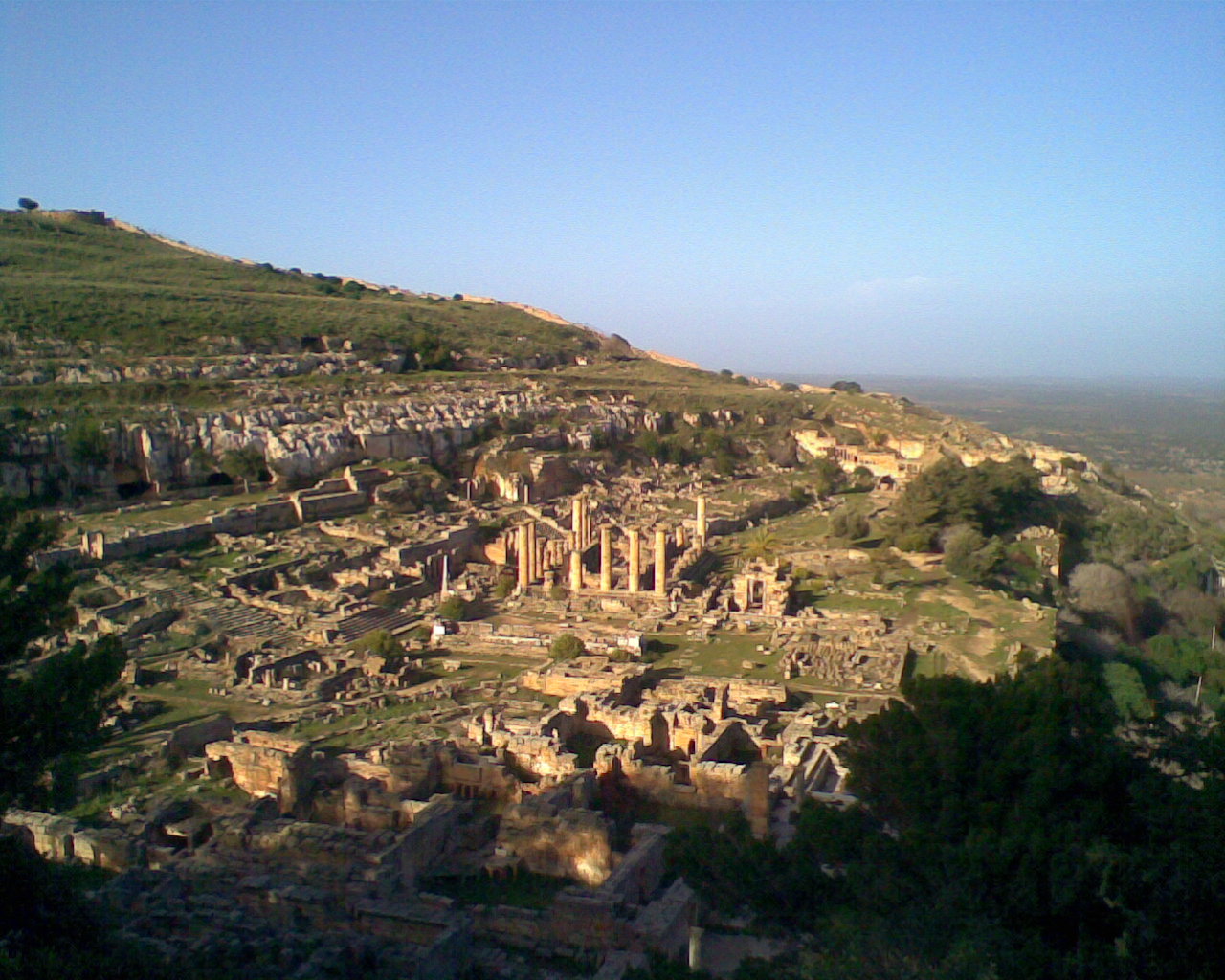
One of the most important cities of the ancient Greek world, Cyrene rose from a modest colonial settlement to a prosperous metropolis that anchored the Pentapolis of Cyrenaica. Its temples, theatres, and necropolis remain among the finest archaeological remains in North Africa.
At a glance
Cyrene sits on a ridge of the Jebel Akhdar uplands in northeastern Libya, roughly 16 kilometres inland from its port at Apollonia. The archaeological zone spans several hectares and encompasses temples, stoas, theatres, bathhouses, churches, palatial residences, and an extensive necropolis. Since 1982, the site has held UNESCO World Heritage status.
History
Greek tradition attributed the city to Apollo and the legendary figure Cyrene, but it was probably colonized by settlers from Thera (modern Santorini) in the late seventh century BC. The Battiads, a dynasty of monarchs, ruled the city and grew wealthy through waves of immigration and the lucrative export of horses and silphium, a prized medicinal plant.
By the fifth century BC, the Battiads had expanded their authority across Cyrenaica’s other cities. The fourth century BC saw the founding of the Cyrenaics, an influential school of philosophy established by Aristippus, a student of Socrates. During the Hellenistic period, Cyrene shifted between Ptolemaic control and independence. It also emerged as a major Jewish center.
In 96 BC, Rome annexed the city as part of the province of Crete and Cyrenaica. The Diaspora Revolt brought devastation in AD 115 when Jewish fighters destroyed much of Cyrene, though rebuilding continued over the subsequent century. Earthquakes in 262 and 365 caused further damage. The city gradually declined through the Byzantine period and the Arab conquest of 642, after which it was abandoned until an Italian military base was established in 1913. Archaeological excavations began then and continue today.
What you see
The site contains several monumental temples of Greek and Roman periods, stoas for commerce and assembly, theatrical structures for performances and gatherings, and bathhouses reflecting both Greek and Roman urban life. Palatial residences testify to the wealth of the city’s elite. The Necropolis of Cyrene, which surrounds the city proper, contains tombs and funerary monuments spanning centuries of occupation.
Cultural significance
Cyrene exemplifies the reach and prosperity of ancient Greek colonization in North Africa. As the leading city of the Pentapolis, it shaped the region’s identity—Cyrenaica itself derives its name from Cyrene. The Cyrenaics school of philosophy contributed significantly to Greek intellectual life. The city’s role as a crossroads of Greek, Roman, Jewish, and later Arab cultures makes it invaluable for understanding Mediterranean and North African history.
Key facts
- Location: Shahhat, northeastern Libya
- Coordinates: 32.825°N, 21.858°E
- Founded: Late seventh century BC (by settlers from Thera)
- UNESCO World Heritage Site: Yes (since 1982)
- Port: Apollonia (Marsa Sousa), 16 km north
Practical information & getting there
The archaeological site is located near Shahhat in the Jebel Akhdar region of northeastern Libya. Access and visiting conditions depend on current local circumstances; check with cultural authorities before planning a visit. The site remains under active archaeological investigation.
Sources & resources
Find it on the map
See this place and what’s around it →📷 Become a Cultural Heritage Online photographer
Share your photos of places: they stay published under your name as the author. The more they're seen, the more you get noticed — and soon a contest will reward the most appreciated photos.
Log in or sign up free to add a photo