

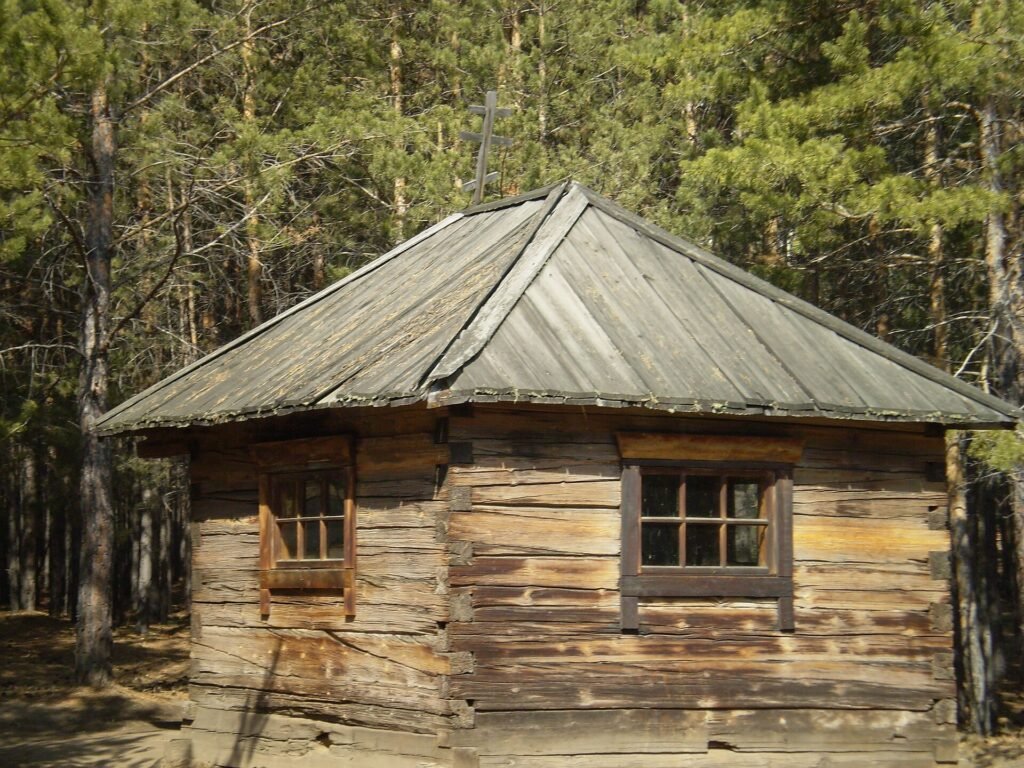
The Semeiskie are an Orthodox Old Believer community whose distinctive rituals, songs, and way of life have flourished in Russia’s Transbaikal region for nearly three centuries, preserving a faith tradition that rejected 17th-century ecclesiastical reforms.
In UNESCO’s words
The Semeiskie communities are formed by a group of so-called “Old Believers”, a confessional community originating from the time of the Instigation of the Russian Orthodox Church in the seventeenth century.Their history is marked by repression and exile. During the reign of Catherine the Great, believers in the “old system” from various regions of Russia had to move to the Transbaikal region in Siberia, where they still live today. In this remote area, they have preserved elements of their respective culture, forming a distinct group identity. The cultural space of the Semeiskie, east of Lake Baikal, represents a remnant of cultural expressions from pre-seventeenth century Russia. The community, totalling around 200,000 persons, speaks a south Russian dialect featuring borrowings from Bielorussian, Ukrainian and Bouryat. The Semeiskie still practised ancient orthodox rituals and perpetuate everyday activities mainly based on the cult of the family – the term Semeskie refers to “those who live as a family” – and strong moral principles. They are also characterized by their traditional dress, handicrafts, dwellings, paintings, ornaments and food as well as their music. Also noteworthy are their polyphonic choirs, which perform traditional songs at family celebrations and popular festivals. These songs are known as “drawl” singing and are rooted in the Russian liturgical music of the Middle Ages. Marginalized until the end of the Soviet period, the communities have had to adapt to the socio-economic transformation, including pressures from new technologies that are tending to standardize a number of elements of this culture. The population of “Old Believers”, regarded as the custodians of the traditions, is in constant decline. However, a real willingness to protect this heritage is shown by various initiatives, in particular the creation of the Semeiskie Cultural Centre in the village of Tarbagatay.
Official description, UNESCO Intangible Cultural Heritage List — Cultural space and oral culture of the Semeiskie
At a glance
The Semeiskie are a community of Old Believers—a confessional group that originated during the seventeenth-century religious upheaval in Russia. Numbering around 200,000 people living east of Lake Baikal in Siberia, they have preserved a distinct way of life centered on family bonds, ancient Orthodox rituals, and traditional practices. Their culture encompasses traditional dress, handicrafts, dwellings, ornaments, and food, alongside distinctive music and polyphonic choir singing rooted in medieval Russian liturgical traditions.
Origins & history
The Semeiskie trace their origins to Old Believers who rejected the Russian Orthodox Church reforms of the seventeenth century. Facing repression, they were exiled to the Transbaikal region during Catherine the Great's reign. This forced relocation to the remote Siberia dispersed believers from various regions of Russia to a single area, where they established themselves and have remained to the present day, forming a community that has preserved pre-seventeenth-century Russian cultural elements.
The practice
The Semeiskie practice their traditions through ancient Orthodox rituals maintained within family and community contexts. They speak a south Russian dialect incorporating borrowings from Bielorussian, Ukrainian, and Bouryat languages. Their cultural expression centers on the family unit—the term itself means 'those who live as a family'—and includes polyphonic choirs that perform traditional songs at family celebrations and popular festivals. These songs, known as 'drawl' singing, draw from medieval Russian liturgical music and remain central to their cultural life.
Cultural significance
The Semeiskie represent a living repository of pre-seventeenth-century Russian cultural and spiritual practices. However, the community faces significant challenges: the population of Old Believers, who serve as tradition-keepers, continues to decline, and pressures from new technologies threaten to standardize cultural elements. Despite marginalization through the Soviet period and ongoing socio-economic transformation, protective initiatives including the creation of the Semeiskie Cultural Centre in Tarbagatay demonstrate the community's commitment to preserving this heritage.
Key facts
- Country: Russian Federation
- Inscribed: 2008
- UNESCO list: Representative List of the Intangible Cultural Heritage of Humanity
- UNESCO reference: 00017
- UNESCO vocabulary: Cultural space; Orthodox Churches
- Map: Tarbagatay — the locality named in UNESCO’s official description of this element
Where to experience it
The Semeiskie communities live in the Transbaikal region east of Lake Baikal in Siberia, where they have preserved their distinctive culture for centuries. Visitors can encounter their traditions at family celebrations and popular festivals featuring polyphonic choirs performing traditional "drawl" songs rooted in medieval Russian liturgical music. The Semeiskie Cultural Centre in the village of Tarbagatay offers opportunities to learn about their heritage, including their traditional dress, handicrafts, dwellings and food. Community worship spaces also remain central to their daily lives and cultural expression.
Sources & resources
- UNESCO — official element page: Cultural space and oral culture of the Semeiskie
- UNESCO — open data record: Intangible Heritage List, reference 00017
- UNESCO — official video: UNESCO film on this element — embedded on this page
- UNESCO — official photograph: Living in the Transbaikal region in Siberia, the Semeiskie communities have preserved ancient orthodox rituals, various handicrafts and traditional songs and dances. Recent initiatives including the creation of the Semeiskie Cultural Centre have contributed to the revitalization of these traditions in the post-Soviet era. — Russian State House of the People Creativity, Ministry of Culture
- Reference — Wikipedia (secondary): Semeiskie — consulted as a secondary reference, not as confirmation
- Cultural Heritage Online: Our archive and city guides

Find it on the map
See this place and what’s around it →📷 Become a Cultural Heritage Online photographer
Share your photos of places: they stay published under your name as the author. The more they're seen, the more you get noticed — and soon a contest will reward the most appreciated photos.
Log in or sign up free to add a photo