

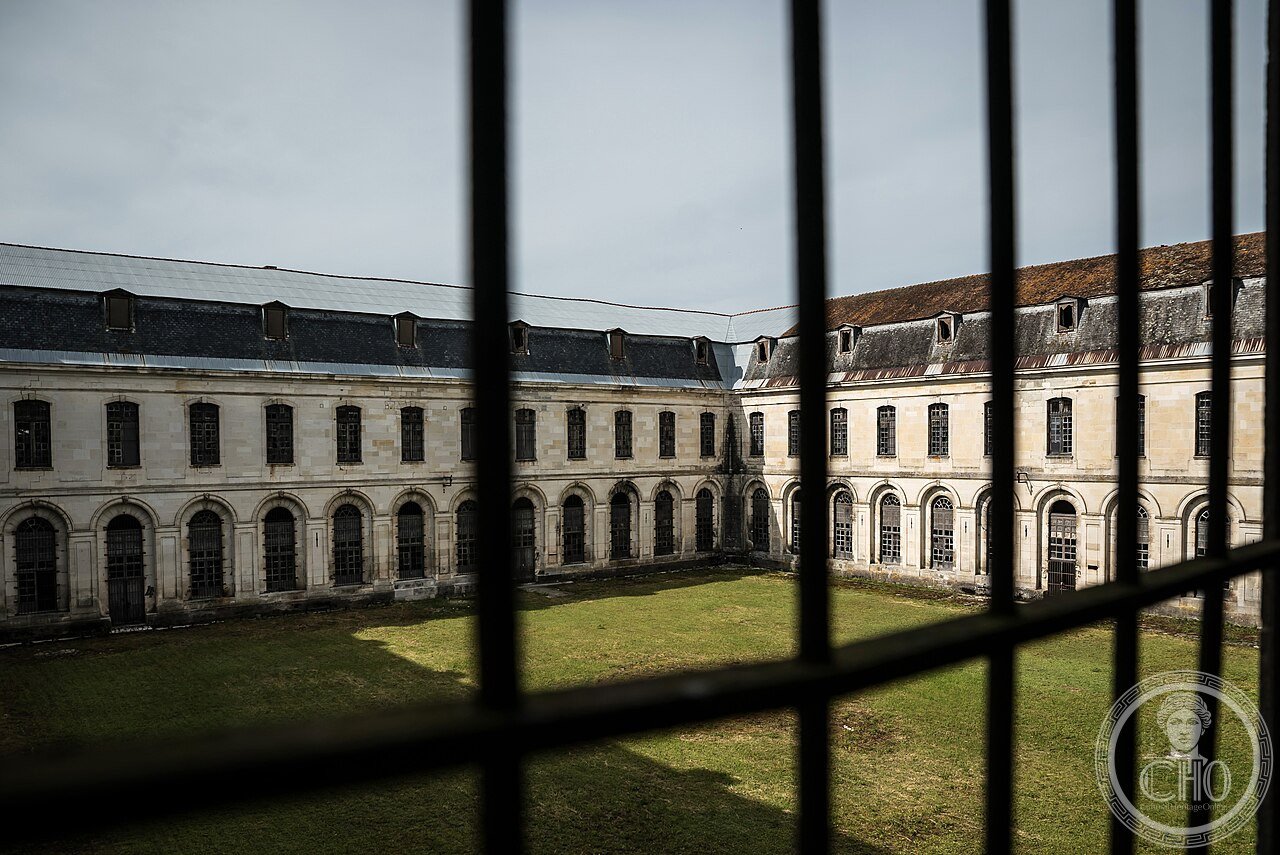
Founded in 1115 by Bernard of Clairvaux, the abbey reached 700 monks, the largest Cistercian community in France, producing during Bernard’s own lifetime more than sixty daughter houses across Europe. Confiscated during the Revolution and turned into a glassworks, then into a prison under Napoleon, Clairvaux remained a maximum-security prison until its final closure in 2023 — with more than two thousand inmates in the nineteenth century, among them five hundred women and five hundred and fifty children.
About Clairvaux Abbey
Clairvaux Abbey, a Cistercian monastery in Ville-sous-la-Ferté, roughly 15 kilometres from Bar-sur-Aube, was founded in 1115 by Bernard of Clairvaux, quickly becoming one of the most significant monasteries within the entire Cistercian order. The community grew rapidly, eventually reaching a peak of around 700 monks belonging to Clairvaux alone — making it the largest single Cistercian abbey in France. During Bernard’s own lifetime, more than sixty monasteries were founded directly from Clairvaux across Europe, reaching as far as Scandinavia. Following the decree of 2 November 1789, the abbey became state property; it was purchased in 1792 and converted into a glassworks, which then went bankrupt in 1804, at which point the state repossessed the site and converted it into a prison — a fate shared by other former French monasteries following Napoleon’s penal reforms, including Fontevraud and Mont-Saint-Michel. Under Napoleon I, Clairvaux became the largest prison in France, holding around 3,000 inmates; during the 19th century, the prison held some 2,700 prisoners at various points, including 500 women and 550 children. The site continued operating as Clairvaux Prison, a high-security correctional facility, until its final closure in 2023. Since 2021, the historic abbey buildings have been undergoing restoration, with the 20th-century correctional additions slated for demolition as the site is converted into a tourist destination.
Key facts
- Foundation: 1115, by Bernard of Clairvaux
- Peak size: c. 700 monks, the largest Cistercian community in France
- Daughter houses: over 60 founded directly from Clairvaux during Bernard’s lifetime, reaching into Scandinavia
- 1789-1792: confiscated as state property, sold, converted into a glassworks
- 1804: glassworks bankruptcy; state converted the site into a prison
- Napoleonic era: became the largest prison in France, c. 3,000 inmates
- 19th century: held up to 2,700 prisoners, including 500 women and 550 children
- 2023: Clairvaux Prison finally closed
- Since 2021: restoration of historic abbey buildings underway, converting the site to tourism
History
Bernard of Clairvaux’s own towering historical significance — as the era’s most influential Cistercian theologian, a key figure in the Second Crusade’s promotion, and advisor to popes and kings alike — gave his personal abbey an outsized institutional prestige that helps explain both its rapid growth to 700 monks and its extraordinary rate of daughter-house foundation, over sixty new monasteries traceable directly to Clairvaux within Bernard’s own lifetime alone. This makes Clairvaux, alongside Cîteaux itself, one of the two most institutionally consequential single sites in the entire history of the Cistercian order’s medieval expansion.
The abbey’s transformation into France’s largest prison under Napoleon, following the same general pattern that befell Fontevraud and Mont-Saint-Michel, reflects a specific and historically significant aspect of post-Revolutionary French penal policy, in which the state systematically repurposed confiscated monastic real estate — already built with the thick walls, enclosed courtyards, and controlled access points characteristic of monastic architecture — into large-scale carceral institutions, a practical architectural reuse that inadvertently preserved these buildings’ physical fabric even as it profoundly transformed their function and public meaning for over two centuries. Clairvaux’s 2023 closure and subsequent conversion to a heritage tourism site marks a rare and recent case of a former monastery-turned-prison completing the full circle back toward public cultural access, its 20th-century correctional infrastructure now being actively removed to recover the site’s earlier medieval character.
What you see
The great cloister, historically used as the prison’s exercise yard during its two-century carceral history, offers visitors a uniquely layered space where medieval monastic architecture and 19th-20th century penal history are physically superimposed. The surviving abbey buildings, now undergoing restoration since 2021, give visitors direct access to the founding site of Bernard of Clairvaux’s own monastic community. The site’s ongoing transformation from prison to heritage destination makes Clairvaux a genuinely current, actively evolving historical site rather than a long-settled museum.
Practical information
- Opening hours: the site is in active restoration and transition to tourism following the 2023 prison closure; check current visitor access before planning a trip
- Address: Rue de l’Abbaye, 10310 Ville-sous-la-Ferté, France
Getting there
Clairvaux Abbey is reachable by car from Bar-sur-Aube (approximately 15 minutes) in the Aube department, Grand Est. GPS: 48.1467° N, 4.7880° E.
Nearby
- Bar-sur-Aube — approximately 15 minutes away; a historic Champagne-region town
- Colombey-les-Deux-Églises — Charles de Gaulle’s home village, within the Aube-Haute-Marne region
- Troyes — the historic capital of the Champagne region, within reach
Sources
- Wikipedia — “Clairvaux Abbey” and “Bernard of Clairvaux” (en.wikipedia.org)
- Encyclopedia.com — “Clairvaux, Abbey of” (encyclopedia.com)
- France Voyage — “Clairvaux Abbey” (france-voyage.com)
Find it on the map
See this place and what’s around it →📷 Become a Cultural Heritage Online photographer
Share your photos of places: they stay published under your name as the author. The more they're seen, the more you get noticed — and soon a contest will reward the most appreciated photos.
Log in or sign up free to add a photo