

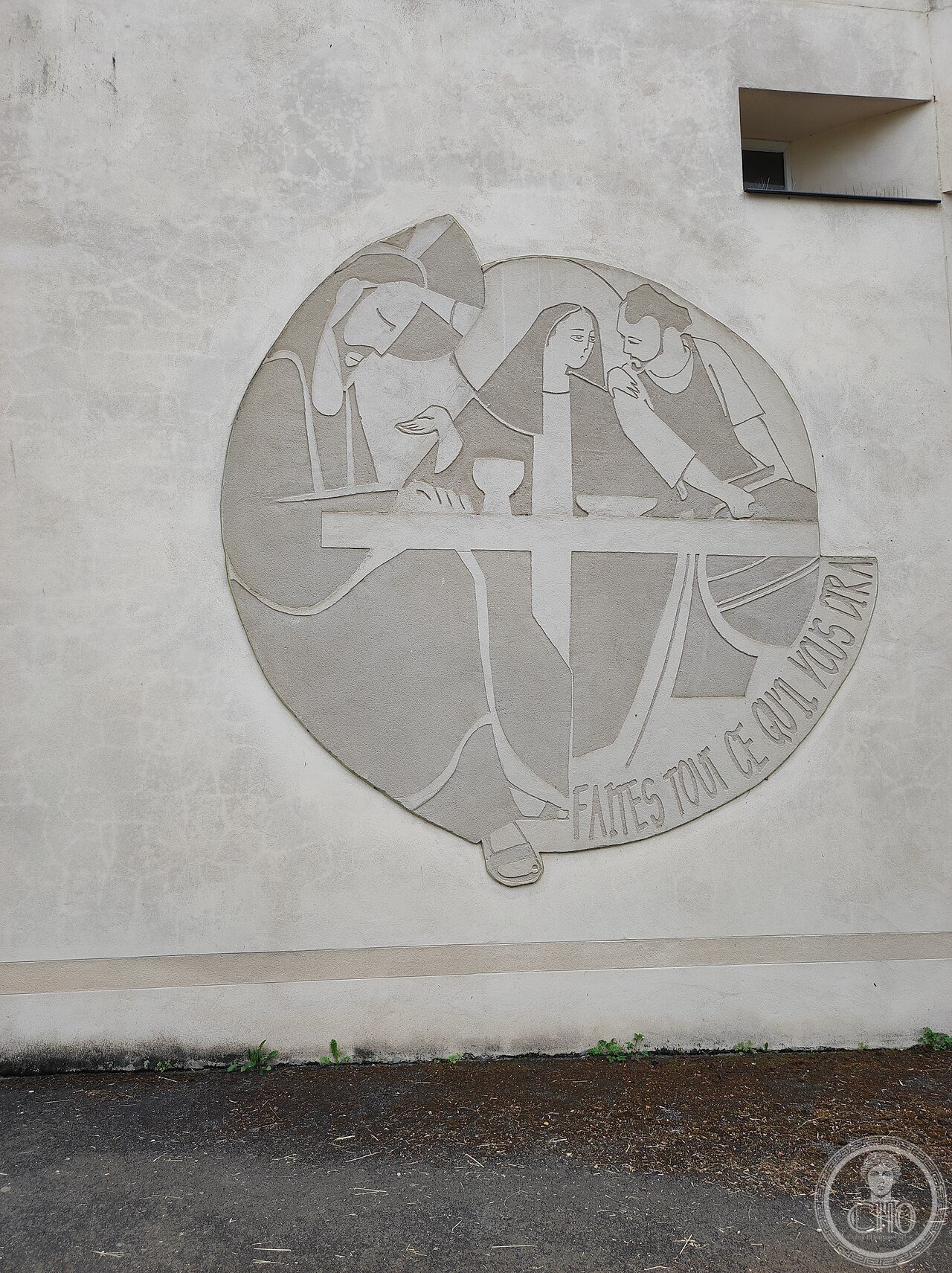
On 21 March 1098, the feast of Saint Benedict, Robert of Molesme and twenty-one companions founded, in an uninhabited marshy place covered with the reeds locally called “cistels”, the monastery that would give rise to the whole Cistercian order. Under the third abbot, Stephen Harding, the abbey quickly produced its first four daughter houses — La Ferté, Pontigny, Clairvaux and Morimond — setting off one of the fastest monastic expansions in medieval history.
About Cîteaux Abbey
Cîteaux Abbey was founded on 21 March 1098 — the feast of Saint Benedict — by Robert, Abbot of Molesme, in a deserted and uninhabited part of the diocese then known as Châlons-sur-Saône, today the Diocese of Dijon, roughly four leagues from the city. A small stream that overflowed its banks had formed a marsh there, covered with rushes and coarse grass locally called “cistels,” which gave the new abbey its name. Robert and his twenty-one companions laid the foundations of what would become the Order of Cîteaux, committing themselves to a strict, literal observance of the Rule of Saint Benedict. Robert himself was required to return to Molesme shortly after the foundation, and as abbot of Cîteaux he was succeeded first by Saint Alberic and then by Saint Stephen Harding — together, these three men are celebrated as the Founders of the Cistercian Order. As the order’s mother abbey, the Abbot of Cîteaux was recognised as head and superior general of the entire Cistercian order. Under Stephen Harding’s leadership, the monastery grew at a remarkable rate, with the first four daughter houses founded in rapid succession: La Ferté (1113), Pontigny (1114), Clairvaux (1115), and Morimond (1115) — a network that would eventually expand to several hundred monasteries across medieval Europe, shaping the spiritual, economic, and social life of the Christian world for more than seven centuries.
Key facts
- Foundation: 21 March 1098, by Robert of Molesme and 21 companion monks
- Name origin: “cistels,” local term for the rushes covering the marshy founding site
- Three founders: Robert of Molesme, Saint Alberic, and Saint Stephen Harding
- Role: mother abbey of the entire Cistercian order; its abbot served as superior general of the order
- First daughter houses: La Ferté (1113), Pontigny (1114), Clairvaux (1115), Morimond (1115)
- Eventual scale: several hundred monasteries across medieval Europe over more than seven centuries
History
Robert of Molesme’s decision to found an entirely new monastery specifically dedicated to a stricter, more literal observance of the Benedictine Rule reflects a broader wave of monastic reform sentiment across late-11th-century Europe, in which numerous religious figures believed existing Benedictine houses — including Molesme itself — had grown too lax, wealthy, or worldly in their practical observance of monastic discipline. The rapid succession of the “first four daughters” between 1113 and 1115, founded within just two years of each other under Stephen Harding’s leadership, demonstrates the extraordinary institutional momentum Cîteaux achieved remarkably quickly after its founding, transforming from a marginal, marsh-sited reform community into the head of a rapidly multiplying monastic network within less than two decades.
Cîteaux’s eventual expansion to several hundred daughter and granddaughter houses across medieval Europe — including documented connections traceable directly or indirectly to sites as geographically dispersed as Heiligenkreuz in Austria, Rein in Styria, and Poblet in Catalonia via Fontfroide — makes it one of the most institutionally consequential single monastic foundations in all of European history, its influence extending across economic development (particularly agricultural and viticultural innovation), architecture, and religious practice for over seven centuries. The order’s continuing use of “Cistercian” as its defining name, derived directly from this single founding site’s marshland vegetation, ensures Cîteaux’s specific geographic and etymological origin remains embedded in the identity of every subsequent house within the order, wherever in Europe it was founded.
What you see
The abbey complex, though substantially rebuilt across its long history following Revolutionary-era disruption, gives visitors direct access to the founding site of the entire Cistercian order. The surrounding Burgundian landscape, including the abbey’s continuing agricultural and cheese-making traditions, connects the site to the broader Cistercian tradition of practical rural self-sufficiency established from the order’s earliest days. The abbey’s continuing active monastic community situates Cîteaux as a living institution rather than a purely historical monument, over nine centuries after its founding.
Practical information
- Opening hours: generally open for guided tours during the visitor season, check current hours before visiting; admission fee
- Address: Chemin du Silence, 21700 Saint-Nicolas-lès-Cîteaux, France
Getting there
Cîteaux Abbey is reachable by car from Dijon (approximately 25 minutes) in the Côte-d’Or department, Burgundy. GPS: 47.1274° N, 5.0932° E.
Nearby
- Dijon — approximately 25 minutes away; Burgundy’s historic capital
- Burgundy vineyards — the surrounding wine region, historically shaped in part by Cistercian viticultural practice
- Fontenay Abbey — another major UNESCO-listed Cistercian abbey in Burgundy
Sources
- Wikipedia — “Cîteaux Abbey” (en.wikipedia.org)
- Catholic Encyclopedia — “Abbey of Cîteaux” (newadvent.org)
- Burgundy Tourism — “Abbaye de Cîteaux” (burgundy-tourism.com)
Find it on the map
See this place and what’s around it →📷 Become a Cultural Heritage Online photographer
Share your photos of places: they stay published under your name as the author. The more they're seen, the more you get noticed — and soon a contest will reward the most appreciated photos.
Log in or sign up free to add a photo