
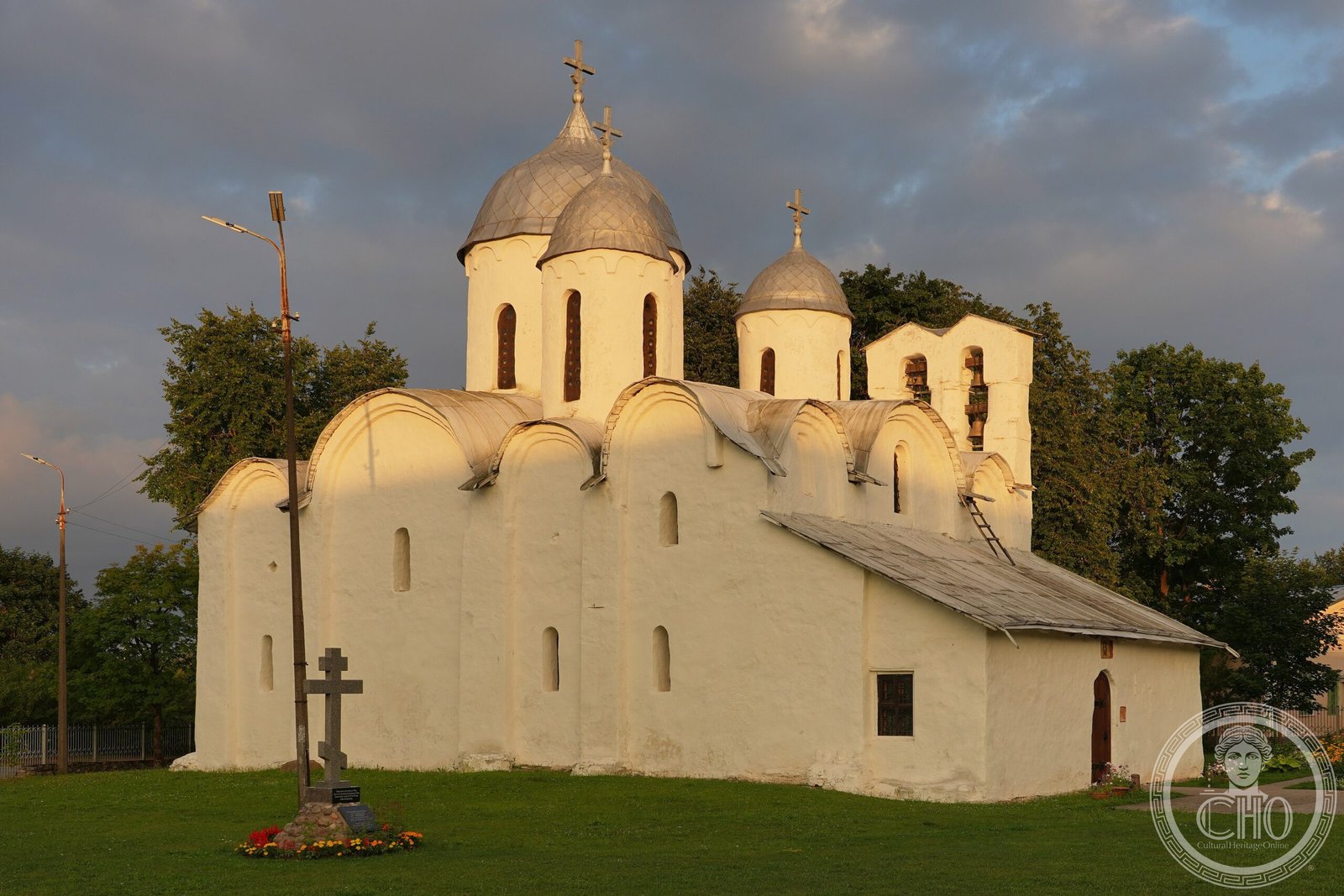
A UNESCO-listed ensemble of ten churches and monasteries that showcase a distinctive regional style, blending Byzantine and Novgorod traditions with local building practices and materials.
At a glance
Ten interconnected sacred buildings scattered across Pskov represent the peak achievement of a local architectural school that flourished from the 12th century onward. The Pskov School synthesized imported influences with vernacular craft, creating a cohesive aesthetic adapted to regional resources and climate.
History
The Pskov School of Architecture emerged over centuries, drawing from Byzantine and Novgorod traditions while absorbing local building knowledge. The style reached its zenith during the 15th and 16th centuries, when Pskov architects gained renown beyond their native city. Masters from Pskov traveled to design monuments in Moscow, Kazan, and Sviyazhsk, spreading their innovations across Russia. The churches were constructed between the 12th and early 17th centuries. In 2019, UNESCO recognized the ensemble as a World Heritage Site, acknowledging its cultural and architectural significance.
What you see
The ten monuments exhibit a unified design language that distinguishes them from other Russian church architecture. Stone construction reflects local material availability; proportions and decorative schemes marry Byzantine formality with Novgorod simplicity. Each building demonstrates how regional builders adapted imported architectural grammar to their own aesthetic and practical needs.
Cultural significance
The Pskov School represents a pivotal moment in Russian architectural history—the moment when a provincial city synthesized foreign influences into something authentically local. The architects’ influence extended far beyond Pskov’s walls, shaping sacred architecture in Moscow and other major centers. The ensemble exemplifies how tradition and innovation coexist within a single place.
Key facts
- Country: Russia
- Region: Pskov
- Coordinates: 57.8072, 28.3286
- UNESCO World Heritage Site: Inscribed 2019
- Comprises: Ten churches and monasteries with related buildings
- Period: 12th–early 17th century; peak 15th–16th century
Practical information & getting there
The ten monuments are distributed across the city of Pskov in northwestern Russia, about 280 kilometers from St. Petersburg. You can visit them independently throughout the year. For current visiting hours, entry conditions, and guided-tour availability, check local tourism resources before your trip.
Sources & resources
Find it on the map
See this place and what’s around it →📷 Become a Cultural Heritage Online photographer
Share your photos of places: they stay published under your name as the author. The more they're seen, the more you get noticed — and soon a contest will reward the most appreciated photos.
Log in or sign up free to add a photoIs this page about you?
This page is read by travellers and heritage enthusiasts who find it on Google. Tell us how you are connected to this place and we will take it from there.