
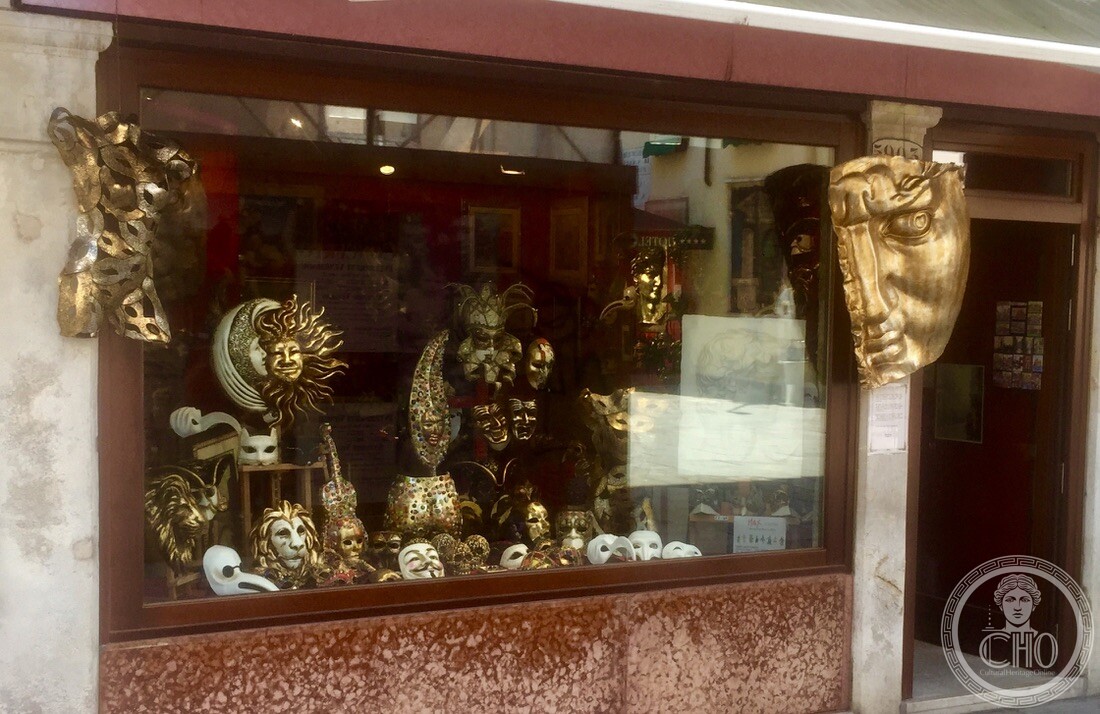
Connecting the commercial pulse of Salizada San Lio with the grand Renaissance elegance of Campo Santa Maria Formosa, Calle Seconda del Cristo preserves two quintessential Venetian signatures: the centuries-old art of handmade papier-mâché masks and intimate domestic laundry fluttering overhead.
At a glance
Quietly nestled in western Castello, Calle Seconda del Cristo is an evocative pedestrian corridor where daily residential rhythm and Venetian decorative craftsmanship exist side by side. Framed by tall historic facades, the narrow calle shelters master mask-making workshops that uphold the Renaissance guild traditions of the mascareri.
Key facts
- Location: Calle Seconda del Cristo (civico 5903), Sestiere di Castello, Venice
- Toponym origin: Named after an antique devotional crucifix (*Cristo*) formerly affixed to a building corner to illuminate the alley
- Featured craft: Traditional handcrafted papier-mâché mask making (*l’arte dei mascareri*)
- Urban feature: Classic residential Venetian alley with overhead clotheslines (*corde da panni*) suspended between historic apartments
- Key nearby hubs: Situated halfway between Campo San Lio and Campo Santa Maria Formosa
- GPS: 45.43816, 12.33943 · Open in Google Maps
The art of the Venetian Mascareri
While mass-market tourist shops across Venice sell imported plastic replicas, genuine Venetian masks are living heirlooms of craft heritage. The guild of mask makers—the mascareri—was formally recognized by the Republic of Venice on April 10, 1436, with its own statutory charter (*mariegola*).
During the Republic’s golden age, masks were not reserved for Carnival alone; citizens wore them for up to six months a year to preserve anonymity in political elections, theaters, gambling houses (*ridotti*), and diplomatic encounters. Authentic workshops, such as the atelier at civico 5903, adhere strictly to the historic multi-stage process:
- Sculpting & Mold Making: An original sculpture is hand-modeled in clay, from which a negative plaster cast is created.
- Layering Papier-Mâché: Soft sheets of absorbent rag paper (*carta pesta*) are soaked in water and pressed by hand into the mold, bonded with natural paste in multiple thin layers.
- Finishing & Decorating: Once dried, the mask is hand-cut, primed with gesso, and decorated with tempera, antique glazes, craquelure varnish, macramé lace, and genuine gold or silver leaf.
The shop displays legendary archetypes: the traditional white Bauta (designed to allow eating and speaking while disguising the voice), the hooked-beak Medico della Peste (plague doctor mask), dramatic sun-and-moon celestial faces, and gilded sculptural busts of the Lion of Saint Mark.
Living domestic Venice
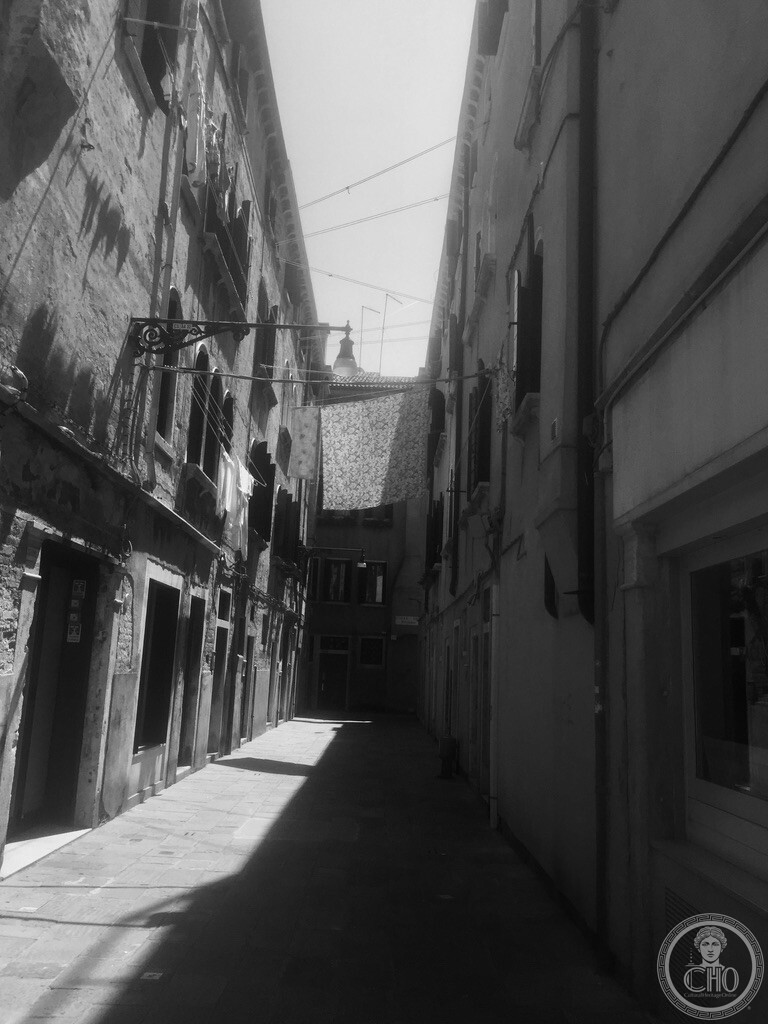
Beyond the workshop windows, the alleyway exemplifies the domestic texture of residential Castello. Overhead, lines of freshly laundered linens hang from window-mounted pulleys (*corde da panni*), billowing gently in the breeze between centuries-old stucco walls. This visual emblem of daily Venetian life provides a striking black-and-white counterpoint to the gilded theatrical masks below, offering visitors an unvarnished glimpse into the living city.
Practical information
- Access: Public pedestrian alley open freely 24/7
- Atelier visits: Artisan workshops along the calle generally observe standard boutique hours (10:00–19:00 daily); visitors are welcome to admire the craft
- Authenticity check: Genuine Venetian masks are lightweight, flexible, lined with soft backing paper, and stamped with the artisan atelier’s trademark
Getting there
Walk east from the Rialto Bridge along Salizada San Lio for approximately 4 minutes. Just before reaching Campo Santa Maria Formosa, turn into Calle Seconda del Cristo. Alternatively, from the San Zaccaria waterfront, walk north past Campo Santa Maria Formosa (approx. 6 minutes).
Nearby
- Campo Santa Maria Formosa — One of Venice’s grandest Renaissance squares, 70 m east
- Libreria Acqua Alta — Famed waterfront bookstore with books piled in gondolas, 180 m northeast
- Chiesa di San Lio — Historic parish church housing Titian’s Apostle Saint James, 90 m west
Sources
- Tassini, Giuseppe. Curiosità Veneziane. Toponymy and history of Calle del Cristo in Castello.
- Mariegola dei Mascareri (1436), State Archives of Venice (Archivio di Stato di Venezia).
- Geographical coordinates: 45.43816, 12.33943.
Find it on the map
See this place and what’s around it →Record researched and written by Carla Szathvary for Cultural Heritage Online, 2026.
📷 Become a Cultural Heritage Online photographer
Share your photos of places: they stay published under your name as the author. The more they're seen, the more you get noticed — and soon a contest will reward the most appreciated photos.
Log in or sign up free to add a photo