
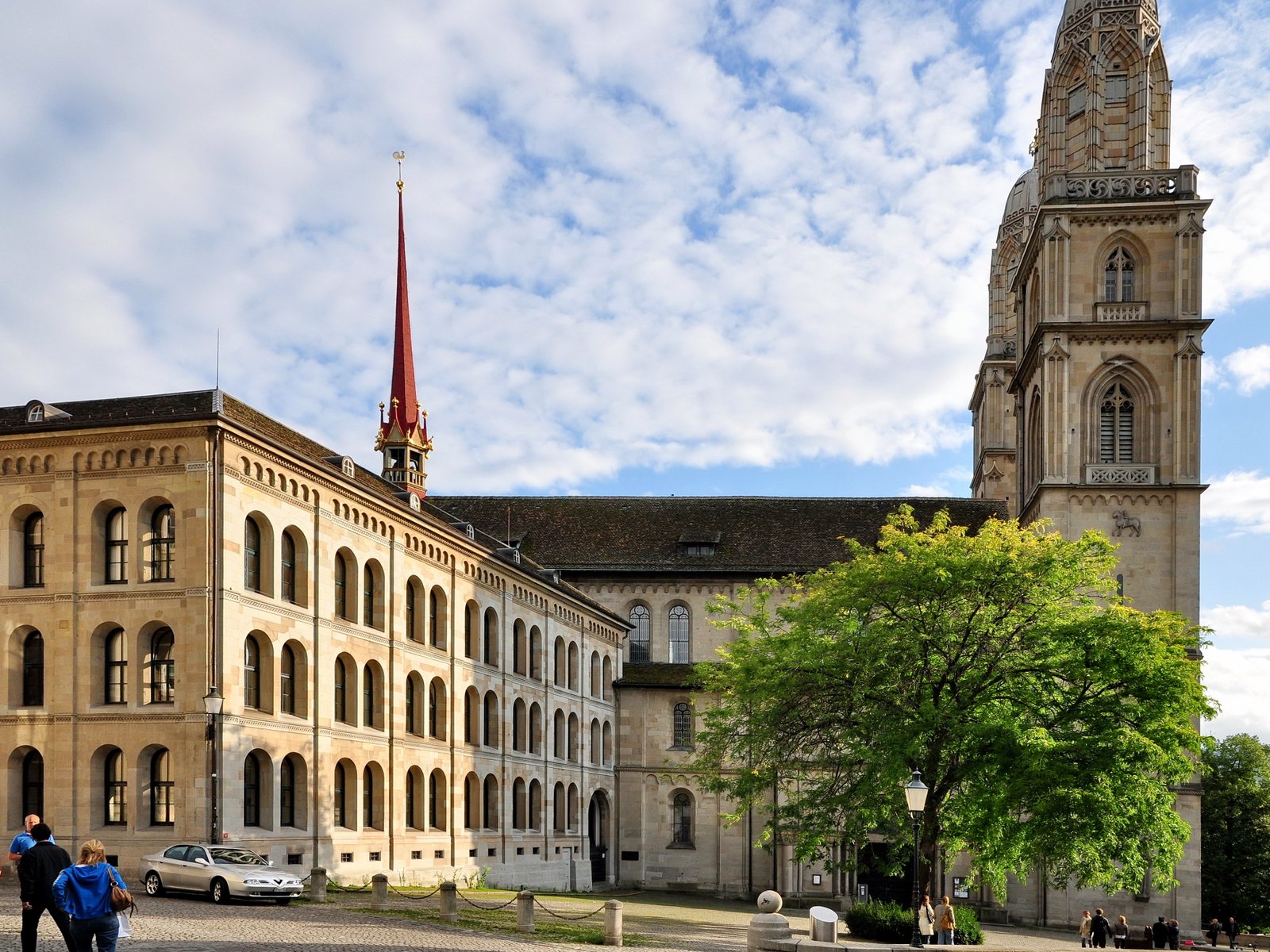
The predecessor to the University of Zurich’s theological faculty, the Carolinum emerged from a former monastery cloister and shaped Swiss Protestant education for centuries.
At a glance
The Carolinum occupies part of the cloister complex of the Grossmünster Chorherrenstift, a canonical foundation in central Zurich. Established in 1525, it represents a pivotal moment when ecclesiastical spaces were repurposed for secular learning in the Protestant Reformation.
History
Founded in 1525, the Carolinum served as the founding institution of what would become the University of Zurich’s theological faculty. It emerged during the Reformation, when Protestant leaders sought to establish centers of learning independent of Rome. The institution was housed within the existing cloister buildings of the Grossmünster Chorherrenstift, transforming monastic space into an academy.
What you see
The building complex retains the structure and character of its monastic origins. The cloister buildings maintain medieval proportions and articulation, their simple architectural language reflecting both their ecclesiastical past and institutional purpose. Stone arcades and courtyards define the spaces where theology and reformed doctrine were debated and taught.
Cultural significance
The Carolinum embodies the intellectual ferment of the Swiss Reformation. It bridges two worlds: the Catholic monastic tradition and Protestant educational reform. As the ancestor of modern theological study in Zurich, it remains a symbol of how religious upheaval catalyzed institutional change across Europe.
Key facts
- Country: Switzerland
- City: Zurich
- Coordinates: 47.37°N, 8.54°E
- Founded: 1525
- Status: Listed in the Swiss inventory of cultural property of national and regional significance (Class A)
Practical information & getting there
The Carolinum is located in Zurich’s old town near the Grossmünster basilica. It remains part of the University of Zurich’s heritage landscape. Visit the University of Zurich website for current opening hours and access information.
Sources & resources
Find it on the map
See this place and what’s around it →📷 Become a Cultural Heritage Online photographer
Share your photos of places: they stay published under your name as the author. The more they're seen, the more you get noticed — and soon a contest will reward the most appreciated photos.
Log in or sign up free to add a photoIs this page about you?
This page is read by travellers and heritage enthusiasts who find it on Google. Tell us how you are connected to this place and we will take it from there.