
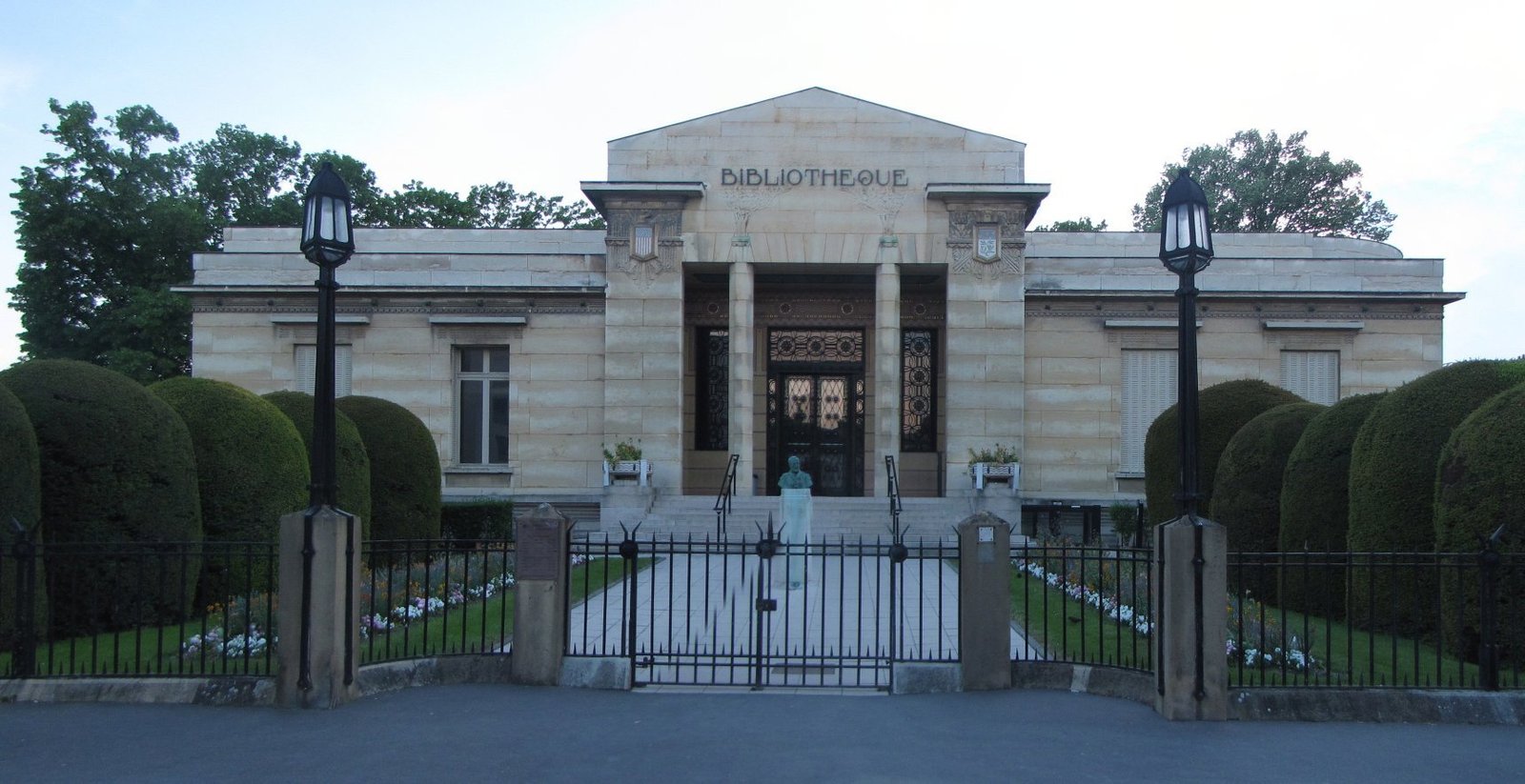
A modernist public library built with Andrew Carnegie’s philanthropy in the aftermath of World War I, combining heritage conservation with democratic access to reading.
At a glance
This Art Deco library was constructed in the 1920s as one of only three Carnegie libraries established in Europe’s post-war “front-line” cities. Its elegant proportions and architectural harmony earned it recognition as a French Monument historique.
History
After World War I devastated northern France, American businessman and philanthropist Andrew Carnegie donated funds to rebuild cultural institutions in three strategically important European cities: Reims, Leuven, and Belgrade. The Reims library was built in the 1920s as part of this post-war reconstruction effort.
It served as the city’s principal library until 2003, when a newer facility assumed that role. Today it remains a landmark of early twentieth-century library design.
What you see
The building exemplifies Art Deco design through its proportions, decorative program, and architectural refinement. Clean lines and elegant detailing define the exterior and interior spaces, reflecting the period’s commitment to modernism and functionality.
Cultural significance
The Carnegie Library represents the transatlantic philanthropic vision that sought to rebuild European culture after devastating conflict. Its dual mission—preserving heritage while serving the reading public—reflects early twentieth-century ideals of democratic access to knowledge.
Key facts
- Country: France
- City: Reims
- Built: 1920s
- Coordinates: 49.253, 4.0355
- Status: Listed as French Monument historique
- Served as main library of Reims until 2003
Practical information & getting there
The Carnegie Library is located in central Reims, accessible by public transport and regional rail connections. Reims is approximately 130 kilometres north-east of Paris. Contact the library or local tourism office for current hours and access information.
Sources & resources
Find it on the map
See this place and what’s around it →📷 Become a Cultural Heritage Online photographer
Share your photos of places: they stay published under your name as the author. The more they're seen, the more you get noticed — and soon a contest will reward the most appreciated photos.
Log in or sign up free to add a photoIs this page about you?
This page is read by travellers and heritage enthusiasts who find it on Google. Tell us how you are connected to this place and we will take it from there.