

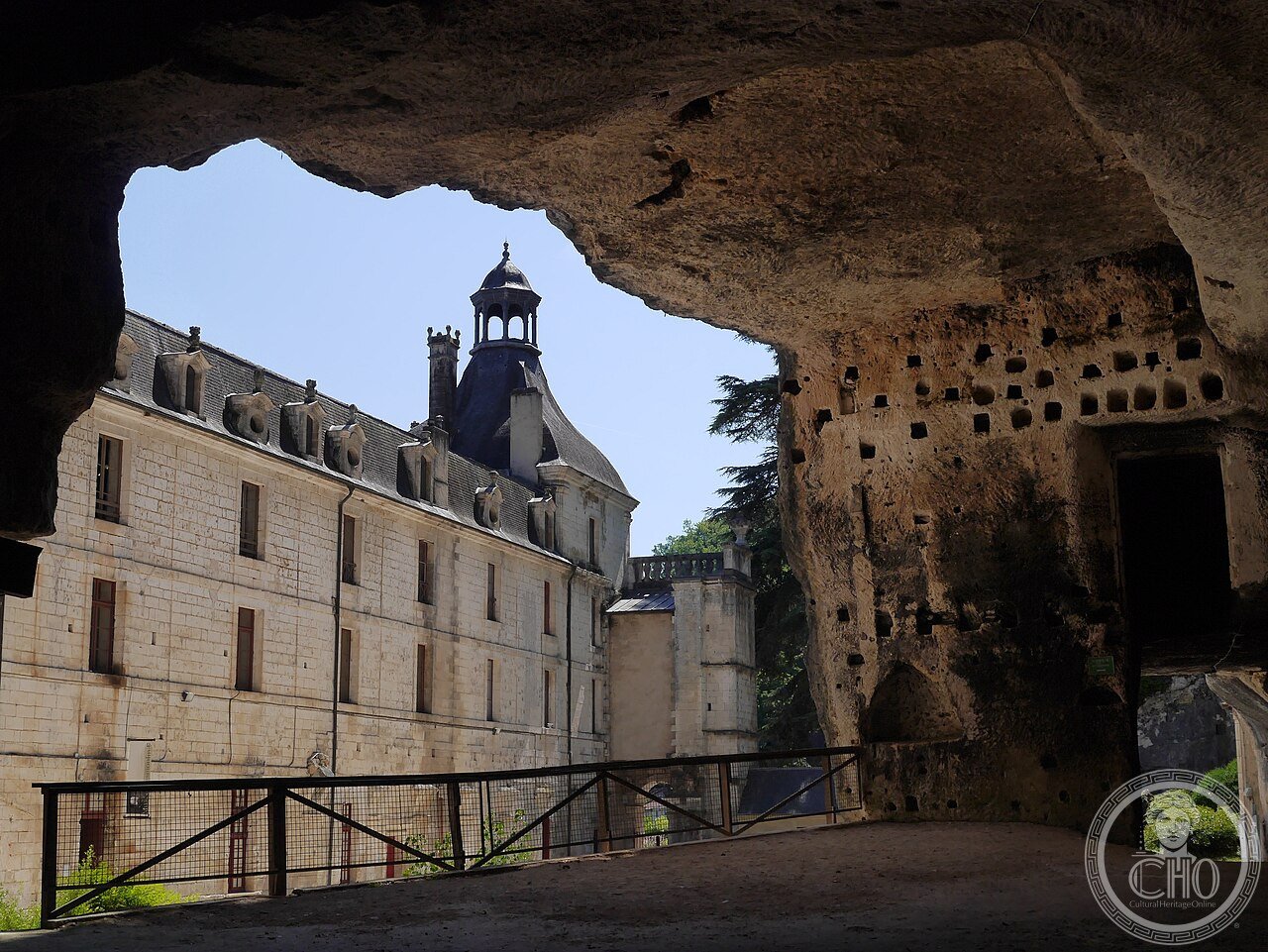
The site was already inhabited in the fifth century by monks who dug troglodyte shelters along the banks of the Dronne, sheltered by the cliffs and sustained by the river water. By legend it was Charlemagne himself who endowed the abbey in 769, depositing there the relics of one of the Holy Innocents, Saint Sicarius. The four-storey Romanesque bell tower of the church of Saint Peter, which dates from the eleventh century, is considered the oldest in France: a free-standing building, raised on a rock spur twelve metres high against which the church leans.
About Brantôme Abbey
Brantôme Abbey, in the heart of the Périgord Vert region and the gateway to the Périgord-Limousin Regional Natural Park, was first inhabited in the 5th century by monks who carved troglodyte shelters directly into the cliffs along the banks of the Dronne river, protected by the overhanging rock and sustained by river water for both drinking and agriculture. According to tradition, the abbey was founded — or at least substantially endowed — by Charlemagne himself in 769, who is said to have deposited there the relics of one of the Holy Innocents, Saint Sicaire; some historians suggest the foundation may actually date to the reign of Pepin the Short, Charlemagne’s father, with the more famous emperor’s name attached to the legend later. The abbey was originally built directly into the troglodyte rock before gradually extending and freeing itself from the cliff face over subsequent centuries. One of the site’s large troglodyte caves, known as the Grotte du Jugement Dernier (Cave of the Last Judgement), contains two monumental bas-reliefs carved directly into the rock. The Church of Saint-Pierre’s four-storey Romanesque bell tower, dating from the 11th century, is considered the oldest bell tower in all of France — an independent structure, built not upon the church itself but on a rocky overhang some 12 metres high, against which the church is built, its architecture characteristic of the Romanesque style then flourishing in the neighbouring Limousin region, with gables crowning the bays and four recessed storeys capped by a stone pyramid.
Key facts
- Earliest occupation: 5th century, monks carving troglodyte shelters into the Dronne riverside cliffs
- Traditional foundation/endowment: 769, attributed to Charlemagne, with relics of Saint Sicaire
- Alternative theory: possibly founded under Pepin the Short
- Grotte du Jugement Dernier: a troglodyte cave with two monumental carved bas-reliefs
- Bell tower: 11th century, four-storey Romanesque, the oldest bell tower in France
- Bell tower structure: independent building on a 12-metre rocky overhang, against which the church is built
- Setting: the Périgord Vert, gateway to the Périgord-Limousin Regional Natural Park
History
Brantôme’s origin as a troglodyte hermitage, its earliest monks carving shelters directly from the riverside cliffs rather than constructing conventional buildings, reflects the same broader early medieval eremitic tradition visible at other cliff-and-cave monastic sites across Western Europe, where natural rock formations offered both practical shelter and a specific ascetic symbolism of withdrawal from worldly comfort. The abbey’s traditional association with Charlemagne, whether historically precise or a later legendary attribution properly belonging to his father Pepin the Short, situates Brantôme within the broader pattern of Carolingian-era monastic foundation legends that frequently attached the most historically prestigious possible royal name to a community’s origin story, regardless of the underlying historical precision.
The bell tower’s genuinely unusual structural independence — built as its own free-standing edifice upon the rocky outcrop rather than integrated into the church building itself — represents a distinctive regional architectural solution reflecting Limousin Romanesque building tradition’s specific engineering response to Brantôme’s dramatic cliffside topography. Its status as the oldest surviving bell tower in France gives Brantôme genuine architectural-historical priority within the broader development of Romanesque campanile design across the country, a claim resting on its precisely dated 11th-century construction against a rock outcrop whose stability has preserved the structure for nearly a millennium.
What you see
The 11th-century bell tower, the oldest in France and famously built as an independent structure atop its own rocky spur, is the abbey’s essential single destination, its four recessed Romanesque storeys and stone pyramid cap rewarding close architectural study. The Grotte du Jugement Dernier, with its monumental carved bas-reliefs, extends the site’s significance into its original troglodyte cave origins. Brantôme’s riverside setting on the Dronne, often nicknamed the “Venice of Périgord,” gives the abbey a picturesque wider townscape context.
Practical information
- Opening hours: generally open daily during the visitor season, check current hours before visiting; admission fee for the caves and museum
- Address: Boulevard Charlemagne, 24310 Brantôme en Périgord, France
Getting there
Brantôme is reachable by car from Périgueux (approximately 30 minutes) in the Dordogne department, Nouvelle-Aquitaine. GPS: 45.3646° N, 0.6473° E.
Nearby
- Brantôme old town — the “Venice of Périgord,” surrounded by the Dronne river
- Périgueux — approximately 30 minutes away; the Dordogne’s historic capital
- Périgord-Limousin Regional Natural Park — the surrounding nature park, of which Brantôme is the gateway
Sources
- Périgord Dronne Belle Tourisme — “Brantôme Abbey” (perigord-dronne-belle.fr)
- Périgord-Limousin Regional Natural Park — “Brantôme Abbey” (pnr-perigord-limousin.fr)
- Guide du Périgord — “L’abbaye de Brantôme” (guide-du-perigord.com)
Find it on the map
See this place and what’s around it →📷 Become a Cultural Heritage Online photographer
Share your photos of places: they stay published under your name as the author. The more they're seen, the more you get noticed — and soon a contest will reward the most appreciated photos.
Log in or sign up free to add a photo