
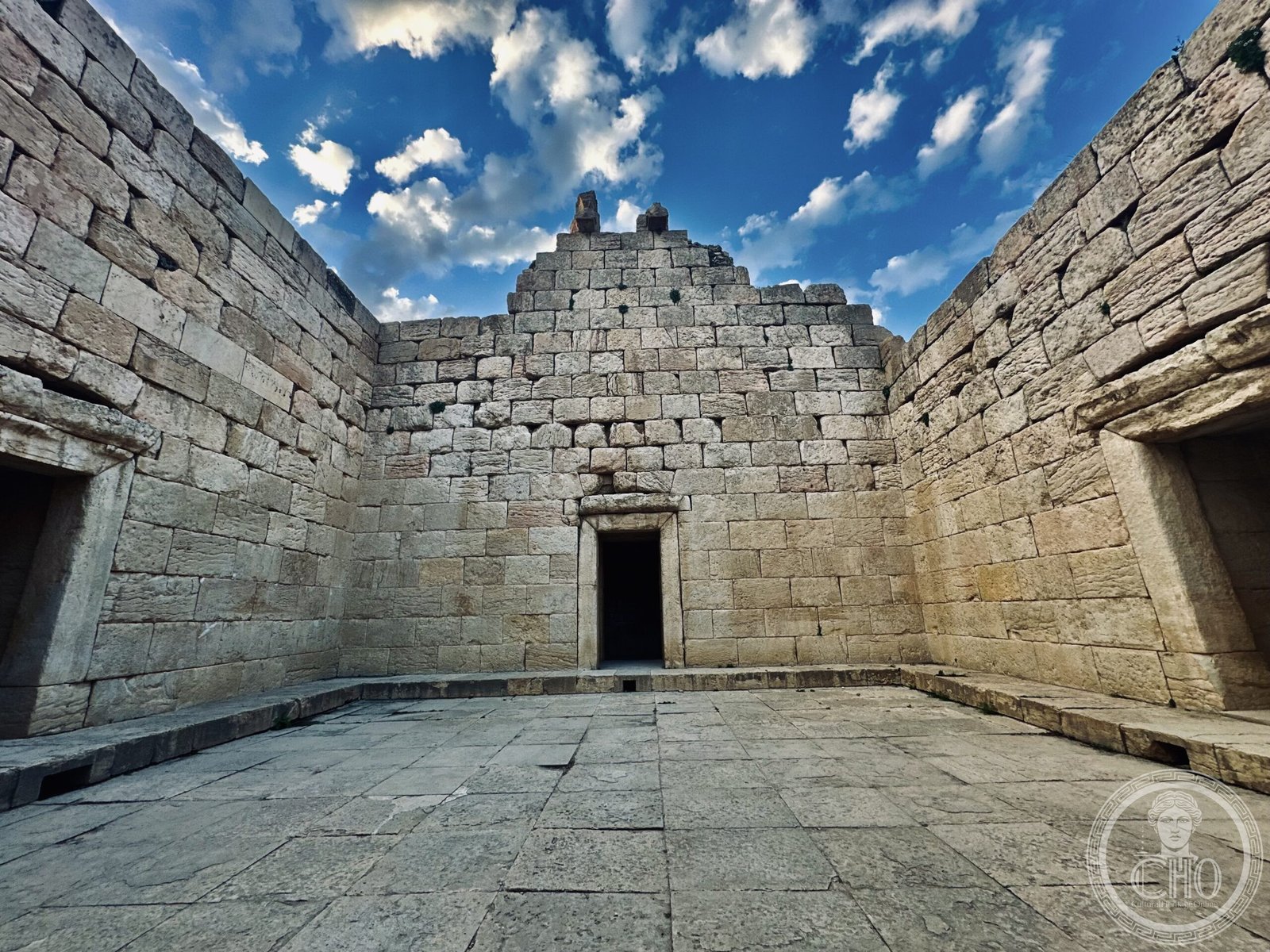
A Sasanian capital built to commemorate Persian victory over Rome, Bishapur stands as a rare example of Greco-Persian urban planning in the ancient world.
At a glance
Founded in AD 266 by Shapur I, Bishapur was one of the most important cities of the Sasanian Empire until the Islamic conquest. The site spans roughly 200 hectares near modern Kazerun, preserving a rectangular grid of royal palaces, temples, and fortified gates across its 2-by-1-kilometre layout.
History
Shapur I commissioned Bishapur to commemorate a decisive Sasanian triumph over the Roman Empire. The city thrived as a rival to Eastern Roman centers like Antioch and Byzantium, remaining prosperous throughout the Sasanian period. Following the Muslim conquest of Persia, the city entered gradual decline; warfare and destruction prompted most residents to relocate to Kazerun, leaving Bishapur abandoned.
What you see
The city follows a Greek-inspired rectangular plan, with two primary streets running north–south and east–west intersecting at the center. Royal palaces adorned with stucco reliefs and mosaic-decorated iwans line these axes alongside richly decorated audience halls, temples, and structures featuring elaborate carved capitals. Four gates—Hormoz, Mehr, Bahram, and Shahr—controlled access through the surrounding fortifications. Two fire temples, Sasan and Gonbad-e Golshan, served the Zoroastrian population.
Cultural significance
Bishapur represents a rare synthesis of Hellenistic urbanism and Persian imperial power. Its layout and architectural grandeur reflect both the cosmopolitan ambitions of the Sasanian court and the empire’s role as a major Mediterranean-facing civilization. The site documents a crucial moment when Persia challenged Roman dominance in the eastern world.
Key facts
- Country: Iran
- Coordinates: 29.78°N, 51.57°E
- Founded: AD 266 by order of Shapur I
- Area: Approximately 200 hectares
- UNESCO World Heritage Site
- Layout: 2 kilometres (north–south) × 1 kilometre (east–west)
Practical information & getting there
Bishapur is located in the Kazerun region of southwestern Iran, accessible from the city of Kazerun itself. The site remains one of the principal archaeological zones in the area. For current visiting hours, conditions, and guided-tour availability, consult local heritage authorities or your accommodation near Kazerun.
Sources & resources
Find it on the map
See this place and what’s around it →📷 Become a Cultural Heritage Online photographer
Share your photos of places: they stay published under your name as the author. The more they're seen, the more you get noticed — and soon a contest will reward the most appreciated photos.
Log in or sign up free to add a photoIs this page about you?
This page is read by travellers and heritage enthusiasts who find it on Google. Tell us how you are connected to this place and we will take it from there.