
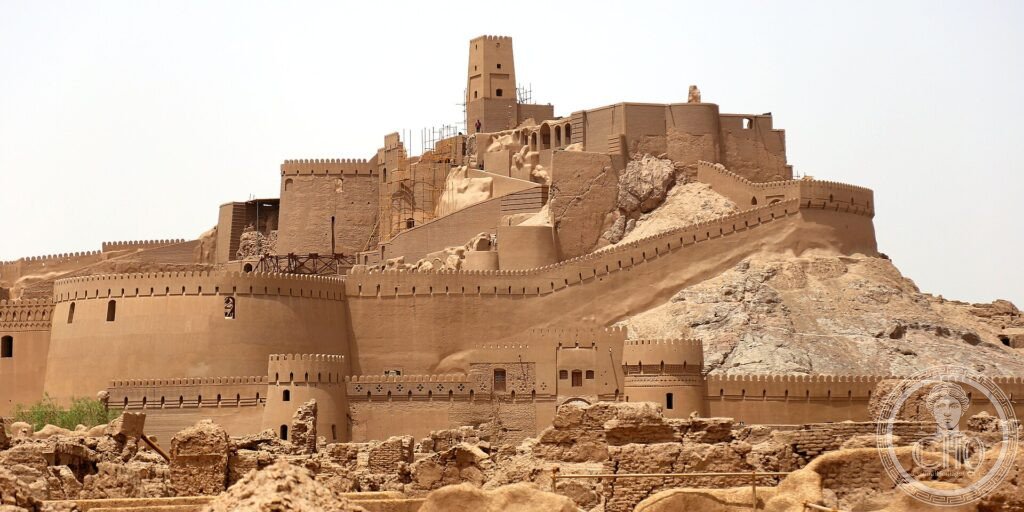
Ai margini del deserto iraniano sorge Arg-e Bam, la più grande costruzione di terra cruda del mondo: una città-cittadella interamente di mattoni di fango, cresciuta per duemila anni come crocevia carovaniero sulla Via della Seta. Devastata da un terremoto nel 2003, è rinata grazie a un grande restauro internazionale.
At a glance
Bam, in south-eastern Iran, grew up at an oasis on the Silk Road, and its citadel, the Arg-e Bam, is the largest adobe (mudbrick) building in the world. A whole walled city of towers, houses, bazaar, mosque and a fortress on a rock, all of sun-dried earth, it flourished for some two thousand years on the caravan trade. A devastating earthquake in 2003 reduced much of it to rubble; an international effort has since restored it. Bam and its cultural landscape were inscribed by UNESCO in 2004.
Key facts
- UNESCO: World Heritage since 2004 (Bam and its Cultural Landscape)
- Arg-e Bam: the largest adobe (mudbrick) structure in the world
- Silk Road: an oasis city on the caravan routes
- Qanats: watered by ancient underground irrigation channels
- 2003 earthquake: devastated the city; restoration followed
- A whole city in earth: walls, houses, bazaar, mosque and citadel
History
Bam was founded in antiquity and prospered for two millennia as an oasis on the Silk Road, its wealth based on trade and on the cultivation made possible by qanats, the ancient underground channels that carry water across the desert. The city was built almost entirely of mud brick, rising in the great walled citadel of the Arg with its towers, the governor’s fortress and the dwellings, bazaar and mosques of the town within.
In December 2003 a catastrophic earthquake struck Bam, killing tens of thousands and collapsing much of the citadel. The disaster drew worldwide attention; the site was inscribed by UNESCO in 2004 and a long international campaign began to stabilise and restore the great earthen city.
What you see
The Arg-e Bam rises from the plain as a tawny mass of walls and towers, climbing to the fortress on its rock at the summit. Within the walls run the lanes of the old city: the bazaar, the caravanserai, the mosque, the bathhouse and the courtyard houses, all moulded from earth and being painstakingly rebuilt.
From the citadel’s heights the oasis of date palms and the desert beyond spread out below.
Practical information
- Citadel: open to visitors; restoration work continues across the site
- Time needed: 2–3 hours
- Note: best visited in cooler months; the desert is very hot
- Setting: in Kerman province, south-eastern Iran
Getting there
Bam is in Kerman province, south-eastern Iran, on the road toward Zahedan and Pakistan. It is reached by road or domestic flights via Kerman. GPS: 29.114° N, 58.3686° E.
Nearby
- Kerman — the provincial city with bazaar and gardens
- Rayen Castle — another adobe citadel nearby
- Lut Desert — the UNESCO desert of the Dasht-e Lut
Sources
- UNESCO World Heritage Centre — “Bam and its Cultural Landscape” (ref. 1208)
- Iranian Cultural Heritage Organisation — official body
- Encyclopaedia Britannica — Bam, Iran
Find it on the map
See this place and what’s around it →📷 Become a Cultural Heritage Online photographer
Share your photos of places: they stay published under your name as the author. The more they're seen, the more you get noticed — and soon a contest will reward the most appreciated photos.
Log in or sign up free to add a photoIs this page about you?
This page is read by travellers and heritage enthusiasts who find it on Google. Tell us how you are connected to this place and we will take it from there.