
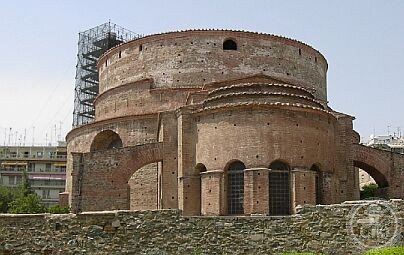
Two neighbouring monuments from the reign of the Roman Emperor Galerius showcase the artistic transition from pagan Rome to early Christian Byzantium in one of the empire’s most important cities.
At a glance
The Arch of Galerius and the Rotunda stand as paired early fourth-century structures in Thessaloniki’s Central Macedonia region. Together they represent an outstanding fusion of imperial Roman and early Byzantine architectural traditions, earning joint UNESCO World Heritage status.
History
Built during the reign of Roman Emperor Galerius in the early fourth century AD, these monuments mark a pivotal moment in the Eastern Roman Empire. The Rotunda holds particular significance as one of the earliest Christian monuments in the Eastern Roman Empire, reflecting the gradual shift from traditional pagan imperial imagery to Christian worship and symbolism during this transformative period.
What you see
The Arch of Galerius, known locally as Kamara, displays the triumphal architectural language of Roman imperial power. The Rotunda showcases early Byzantine engineering and decoration, with later Christian modifications. Both structures employ the grand scale and refined craftsmanship characteristic of fourth-century imperial construction.
Cultural significance
These monuments represent a critical juncture in Mediterranean cultural history—the visual and architectural expression of Rome’s religious transformation. The Rotunda’s early adoption for Christian worship makes it invaluable for understanding how pagan structures were repurposed during Christianity’s rise. Together, they document the artistic vocabulary of late imperial Rome and proto-Byzantine styles.
Key facts
- Country: Greece
- City: Thessaloniki
- Coordinates: 40.63224, 22.9517
- Date: Early 4th century AD
- UNESCO World Heritage status: Inscribed 1988 as part of Paleochristian and Byzantine monuments of Thessaloniki
Practical information & getting there
The Arch and Rotunda are located in central Thessaloniki. Both monuments remain accessible to visitors. Current visiting hours, admission fees, and detailed access information should be verified with local tourism resources before planning a visit.
Sources & resources
Find it on the map
See this place and what’s around it →📷 Become a Cultural Heritage Online photographer
Share your photos of places: they stay published under your name as the author. The more they're seen, the more you get noticed — and soon a contest will reward the most appreciated photos.
Log in or sign up free to add a photoIs this page about you?
This page is read by travellers and heritage enthusiasts who find it on Google. Tell us how you are connected to this place and we will take it from there.