

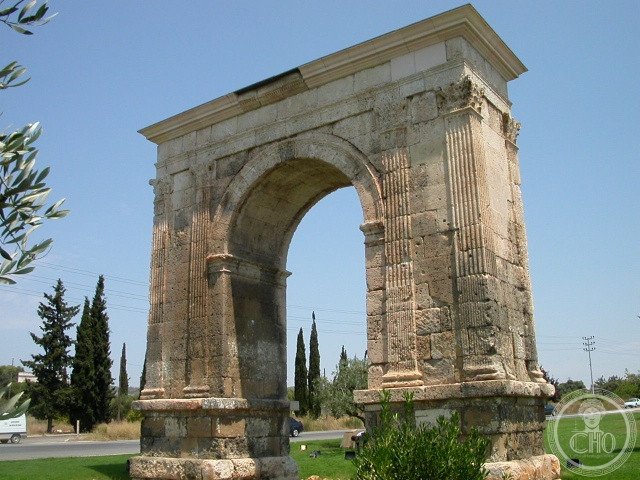
A single-arched Roman triumphal monument erected under Augustus along the Via Augusta, now restored and standing as part of Tarragona’s UNESCO-listed archaeological ensemble.
At a glance
The Arc de Berà is a Roman triumphal arch located approximately 20 km north-east of Tarragona in northeastern Spain. Built under Augustus around 13 BCE, it marks one of the few surviving arches of its period and represents the architectural ambitions of the early Roman imperial age. The monument stands on the former line of the Via Augusta, the principal Roman road connecting Rome to the Iberian Peninsula.
History
The arch was erected during the reign of Augustus, around 13 BCE. Its name derives from the count Berà. It is thought to have been dedicated to Augustus or to his genius, and likely marked the boundary of the district of Tarraco. Early in the 2nd century CE, the monument underwent substantial restoration—an act recorded in an inscription on the entablature that references the will of Lucius Licinius Sura, a prominent Roman figure. The restoration testifies to the arch’s enduring significance within the region.
What you see
The arch displays a single opening set within a central body that rises from a podium base. The design employs fluted pilasters crowned by Corinthian capitals, the classical order lending an air of refinement and authority. Above rises an entablature composed of architrave, frieze, and cornice—the traditional tripartite upper structure of Roman monumental architecture. The stone is probably sourced from local quarries, reflecting practical Roman building practices adapted to regional materials.
Cultural significance
The Arc de Berà forms part of the Archaeological Ensemble of Tarraco, designated a UNESCO World Heritage Site in 2000. As a surviving Roman triumphal arch of the Augustan period, it represents both the engineering achievements and the political assertions of Rome’s early imperial government. The monument’s 2nd-century restoration demonstrates the continuity of its importance and the esteem in which it was held across centuries.
Key facts
- Country: Spain
- Location: Approximately 20 km north-east of Tarragona, near Roda de Berà
- Date: Erected around 13 BCE; restored early 2nd century CE
- Coordinates: 41.173°N, 1.469°E
- UNESCO status: Part of the Archaeological Ensemble of Tarraco (World Heritage Site, 2000)
- Type: Single-arched triumphal arch
Practical information & getting there
The Arc de Berà stands along the modern N-340 road, which follows the route of the ancient Via Augusta. Access is straightforward from Tarragona; follow directions toward Roda de Berà. The monument is located outdoors in an archaeological landscape. For visiting hours, facilities, and guided tour availability, consult the Tarragona tourist office or the Archaeological Ensemble of Tarraco website.
Sources & resources
Find it on the map
See this place and what’s around it →📷 Become a Cultural Heritage Online photographer
Share your photos of places: they stay published under your name as the author. The more they're seen, the more you get noticed — and soon a contest will reward the most appreciated photos.
Log in or sign up free to add a photoIs this page about you?
This page is read by travellers and heritage enthusiasts who find it on Google. Tell us how you are connected to this place and we will take it from there.