
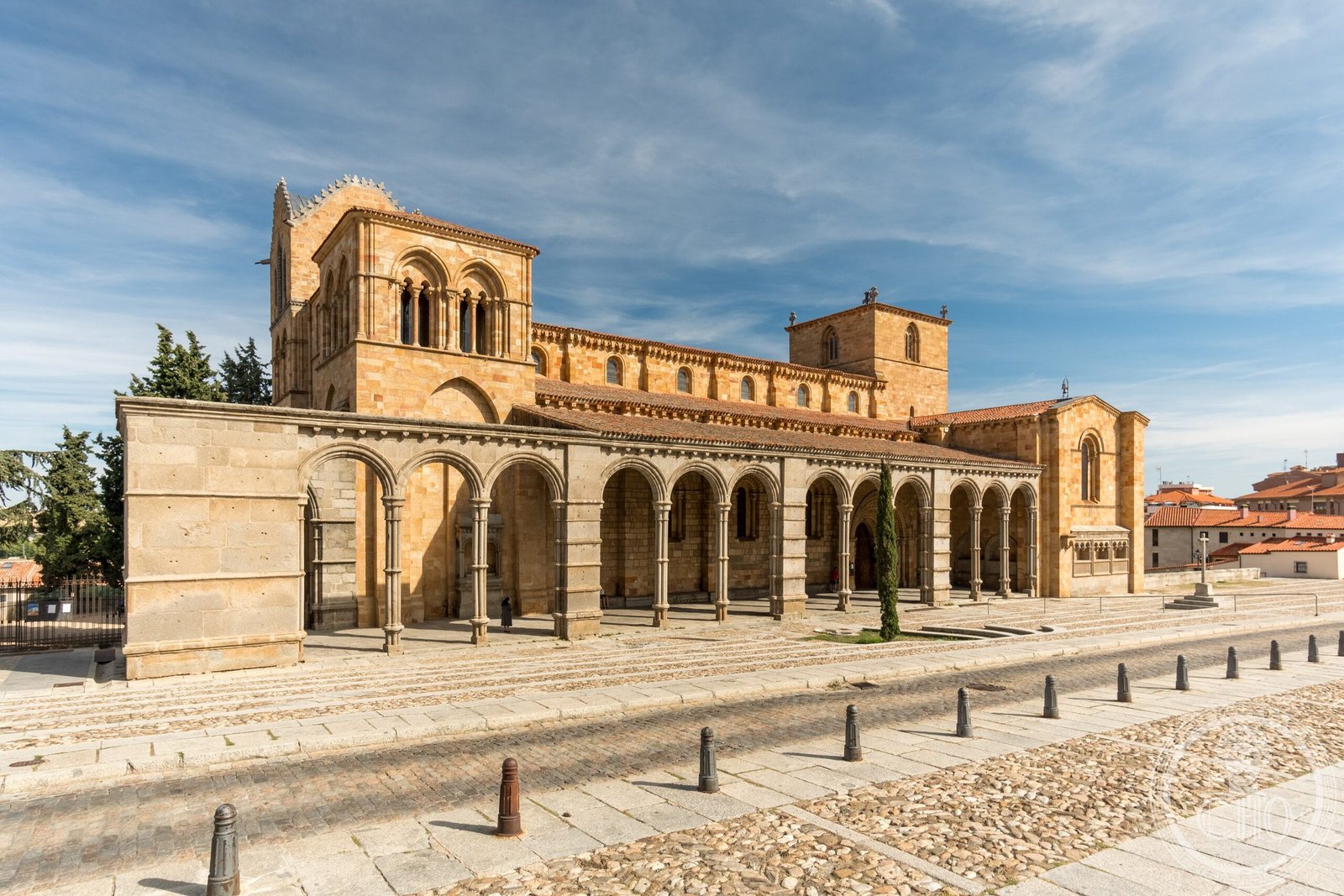
A masterpiece of Spanish Romanesque architecture, this basilica honors the martyr saints Vincent, Sabina, and Cristeta.
At a glance
The Basilica of San Vicente stands as one of Spain’s finest expressions of Romanesque design. Its distinctive architectural language—marked by characteristic rounded arches, sculptural detail, and robust stone construction—makes it a landmark of medieval religious building in the Iberian Peninsula.
History
The basilica is dedicated to three Christian martyrs: Vicente, Sabina, and Cristeta. The exact dates of its construction are not documented in available sources, though its style places it within the broader Romanesque movement that flourished across medieval Spain.
What you see
The building exemplifies core Romanesque principles through its stone masonry, arched openings, and sculptural ornamentation. Its proportions and detailing reflect the regional architectural traditions of Castile during the medieval period.
Cultural significance
As one of the best examples of Romanesque architecture in Spain, the basilica represents an important moment in medieval religious and artistic expression. It remains a testament to the skill of medieval stonemasons and the devotional priorities of its era.
Key facts
- Country: Spain
- City: Ávila
- Coordinates: 40.6578, -4.6969
- Dedicated to martyrs Vicente, Sabina, and Cristeta
Practical information & getting there
The basilica is located in Ávila, a walled medieval city in central Spain easily reached by rail and road from Madrid. You can find opening hours and current visiting information through local tourism services in Ávila.
Sources & resources
Find it on the map
See this place and what’s around it →📷 Become a Cultural Heritage Online photographer
Share your photos of places: they stay published under your name as the author. The more they're seen, the more you get noticed — and soon a contest will reward the most appreciated photos.
Log in or sign up free to add a photoIs this page about you?
This page is read by travellers and heritage enthusiasts who find it on Google. Tell us how you are connected to this place and we will take it from there.