
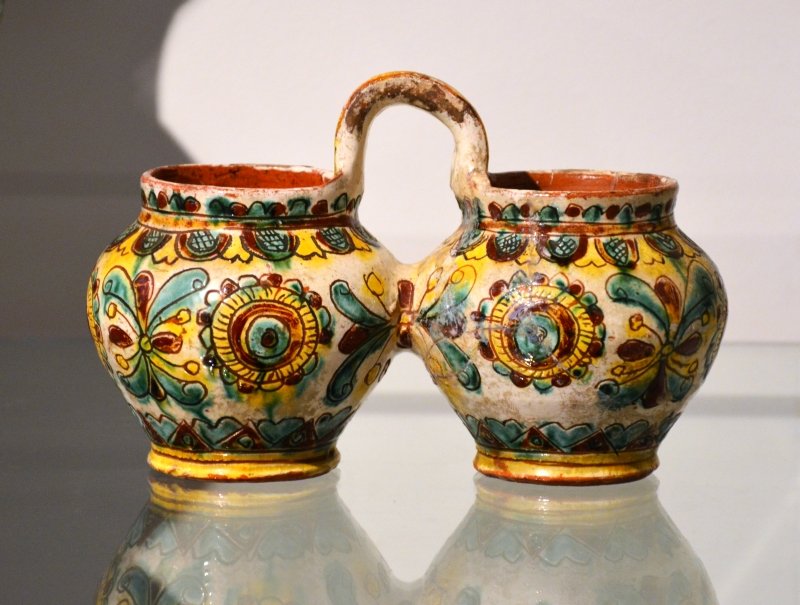
A Hutsul pottery tradition distinguished by intricate hand-painted designs and complex firing techniques, producing functional tableware, decorative tiles, toys and souvenirs.
In UNESCO’s words
The tradition of Kosiv painted ceramics – which include dishes, ceremonial items, toys and tiles – arose in the 18th century, reaching its golden age in the mid-19th century. The products are made using local grey clay, watered with a white clay of creamy texture; when dried, they are painted using a metal stick scratching technique to form a graphical contour drawing. They are then fired and painted with metal oxides to produce the traditional green and yellow colors, an indispensable feature of the ceramics. Sometimes, masters add a little cobalt, but not so much as to lose the traditional colouring. During the firing, the green dye spreads to create the watercolour effect, usually called ‘tears’. The main feature of Kosiv ceramics is the figurative design of the ornament. The plot motif expresses the history, life, folklore, beliefs and customs of the Hutsuls, and surrounding flora and fauna. The ceramics are used in everyday life and have a practical and artistic value. Masters work in family workshops and small craft workshops and the practice constitutes an identity marker and sign of affiliation with the community. The Department of Art Ceramics of Kosiv College ensures the continuity of generations of masters and bearers and has a special responsibility for sustaining the tradition, preserving the traditional technological cycle (potter’s wheels, clay, tools and pottery kilns).
Official description, UNESCO Intangible Cultural Heritage List — Tradition of Kosiv painted ceramics
At a glance
Kosiv painted ceramics are functional and decorative objects—dishes, toys, ceremonial items and tiles—made from local grey clay and finished with distinctive green and yellow painted designs. The figurative ornaments depict Hutsul history, folklore, beliefs, customs and the surrounding natural world, giving each piece both practical and artistic value.
Origins & history
The tradition emerged in the 18th century and reached its golden age in the mid-19th century. The ceramics are shaped from local grey clay combined with a creamy white clay, then fired and painted with metal oxides to achieve the characteristic green and yellow colours.
The practice
Masters work in family and small craft workshops, shaping clay on potter's wheels and using traditional tools and kilns. After drying, they scratch graphical contours with a metal stick, then fire the pieces. Painted metal oxides create the traditional colours; during firing, the green dye spreads to produce a watercolour effect known as 'tears'. Occasionally cobalt is added while maintaining the traditional palette.
Cultural significance
The ceramics serve as an identity marker and sign of community affiliation for the Hutsuls. The Department of Art Ceramics of Kosiv College sustains the tradition by ensuring knowledge passes between generations of masters and bearers, preserving the complete technological cycle of production.
Key facts
- Country: Ukraine
- Inscribed: 2019
- UNESCO list: Representative List of the Intangible Cultural Heritage of Humanity
- UNESCO reference: 01456
- UNESCO vocabulary: Ceramic art; Painting; Technical skills
- Map: Kosiv — the locality named in UNESCO’s official description of this element
Where to experience it
In Kosiv, the tradition of painted ceramics remains alive through family workshops and small craft enterprises where masters continue their craft across generations. The Department of Art Ceramics of Kosiv College plays a vital role in preserving the traditional techniques and ensuring the practice passes to new bearers. Visitors can witness potters at work using traditional methods—local grey clay, metal stick scratching, and the characteristic firing process that creates the distinctive green and yellow colors. The ceramics themselves, whether functional dishes or decorative tiles, reflect Hutsul history, folklore and the natural world surrounding the region.
Sources & resources
- UNESCO — official element page: Tradition of Kosiv painted ceramics
- UNESCO — open data record: Intangible Heritage List, reference 01456
- UNESCO — official photograph: Creation of pottery, master Mykola Chorny — Svitlana Pakhlova
- Reference — Wikipedia (secondary): Kosiv painted ceramics — consulted as a secondary reference, not as confirmation
- Cultural Heritage Online: Our archive and city guides

Find it on the map
See this place and what’s around it →📷 Become a Cultural Heritage Online photographer
Share your photos of places: they stay published under your name as the author. The more they're seen, the more you get noticed — and soon a contest will reward the most appreciated photos.
Log in or sign up free to add a photo