

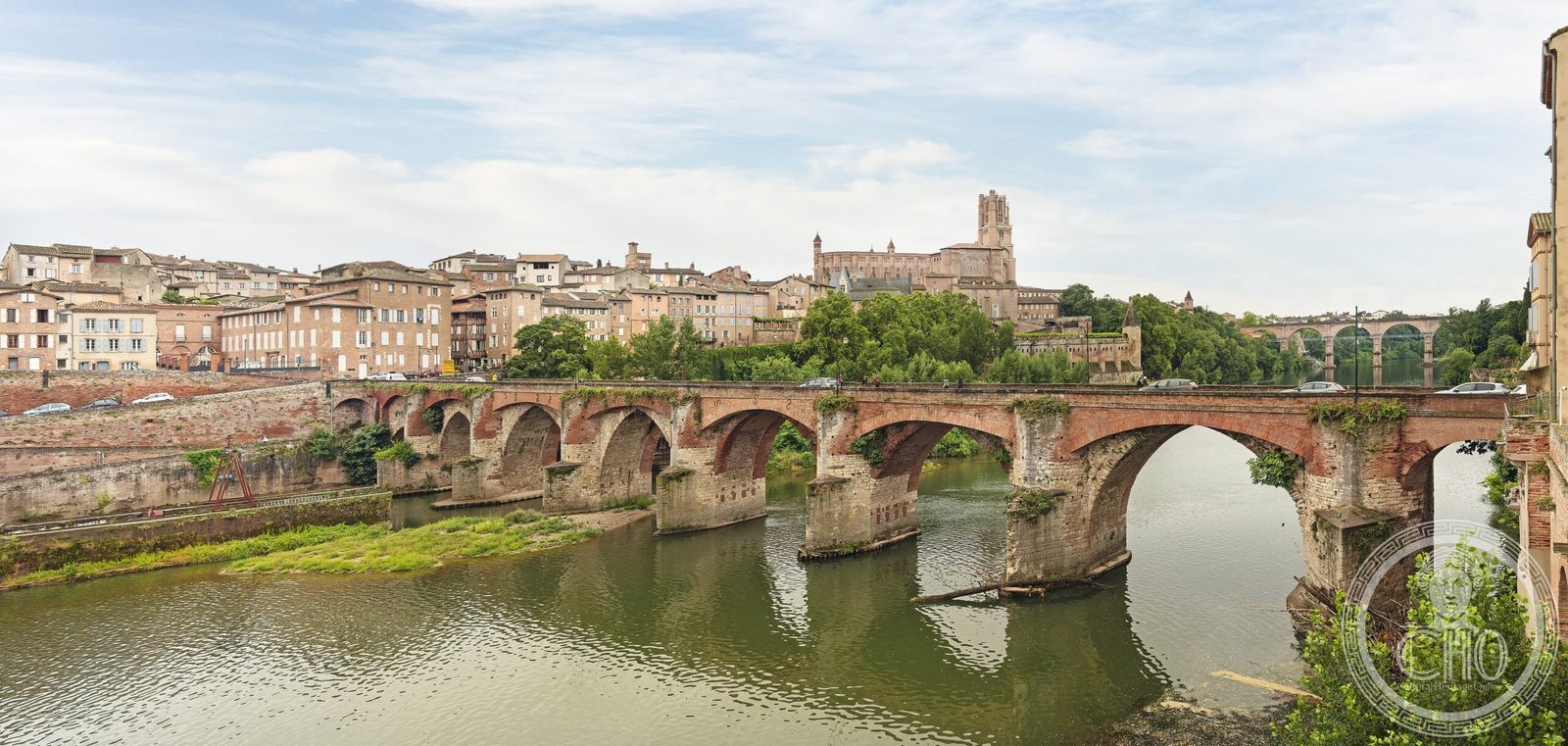
A medieval episcopal city in southern France, Albi centres on the striking Cathedral Sainte-Cécile and holds the world’s finest collection of works by painter Henri de Toulouse-Lautrec, who was born here.
At a glance
Albi stands on the river Tarn, 85 kilometres northeast of Toulouse, as both the prefecture of the Tarn department and seat of the Archbishop of Albi. The entire episcopal city was recognised as a UNESCO World Heritage Site in 2010 for its distinctive architecture and urban character.
History
Albi evolved as an ecclesiastical centre under the authority of its archbishops, who shaped the city’s physical form and spiritual life over centuries. The cathedral’s construction reflects the Church’s power and ambition during the medieval period. The city became closely linked to the Cathars, a heretical movement that prompted Pope Innocent III to launch the Albigensian Crusade in the early 13th century—a conflict that defined the region’s history.
What you see
The Cathedral Sainte-Cécile dominates Albi’s skyline with its fortress-like red-brick form, a distinctive regional expression of Gothic architecture. Its interior contains intricate Renaissance frescoes and an ornate choir screen. The episcopal city radiates from this monumental centre, with narrow streets and period buildings creating a cohesive medieval townscape that reflects centuries of architectural continuity.
Cultural significance
Albi exemplifies the intersection of religious authority, artistic expression, and regional identity. The Musée Toulouse-Lautrec, housed within the episcopal precinct, celebrates the Post-Impressionist master born in the city and preserves the world’s largest collection of his works—paintings, prints, and posters that revolutionised modern art.
Key facts
- Country: France
- Location: Tarn department, 85 km northeast of Toulouse
- Coordinates: 43.9289, 2.1464
- UNESCO World Heritage Site: 2010
- Notable feature: Cathedral Sainte-Cécile
- Museum: Musée Toulouse-Lautrec
Practical information & getting there
Albi is accessible by train and road from Toulouse. The medieval city centre is best explored on foot. The Cathedral Sainte-Cécile and the Musée Toulouse-Lautrec are the primary destinations. For current opening hours, admission prices, and visitor services, consult local tourism websites.
Sources & resources
Find it on the map
See this place and what’s around it →📷 Become a Cultural Heritage Online photographer
Share your photos of places: they stay published under your name as the author. The more they're seen, the more you get noticed — and soon a contest will reward the most appreciated photos.
Log in or sign up free to add a photo