
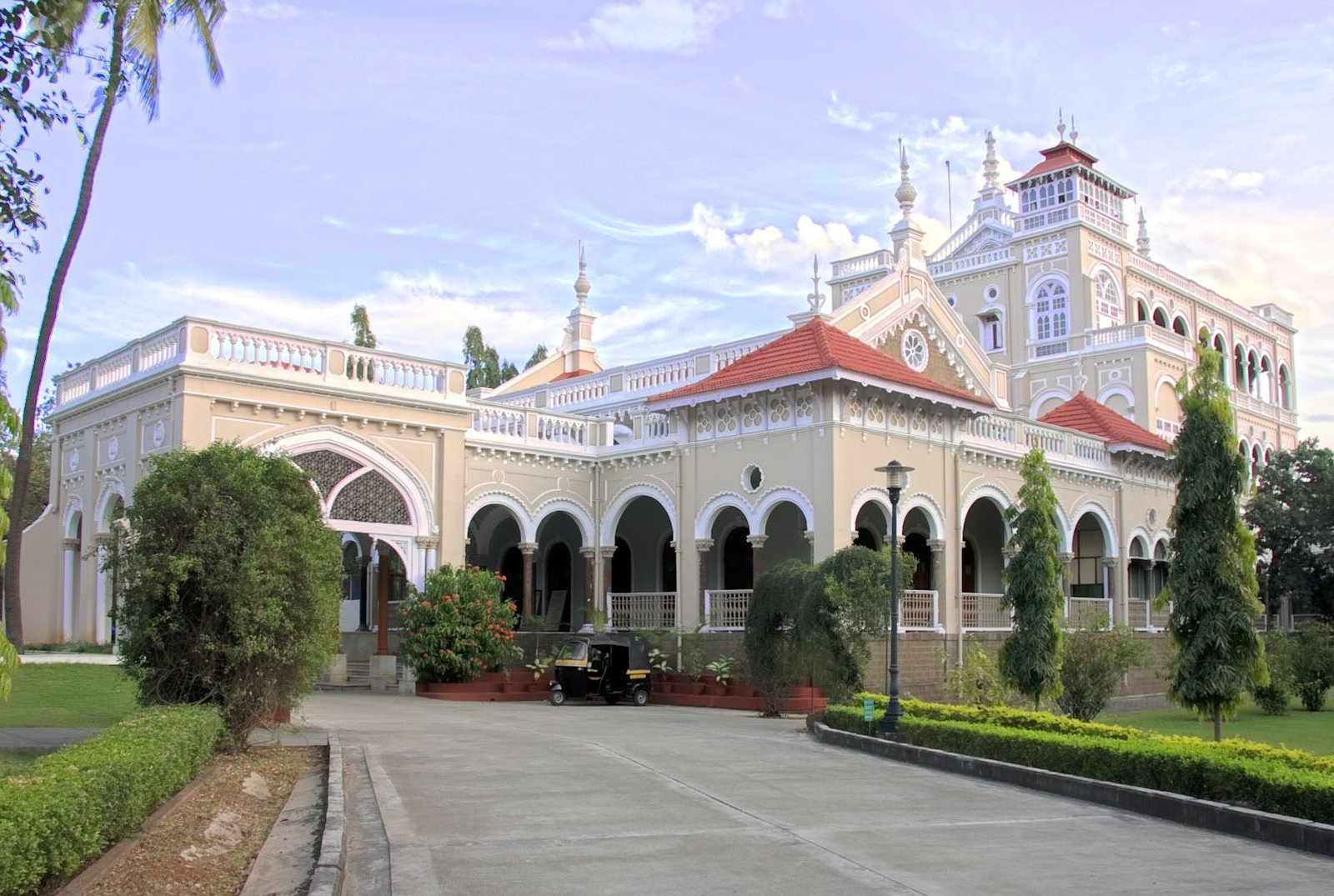
A palatial monument built as an act of charity, transformed into a prison that held India’s freedom fighters during the struggle for independence.
At a glance
Aga Khan Palace stands as a powerful symbol of India’s independence movement. Commissioned by Sultan Muhammed Shah Aga Khan III, the spiritual leader of the Nizari Ismaili Muslims, it was constructed as a charitable enterprise to provide employment during a devastating famine. The palace later became a detention centre for Mahatma Gandhi and other nationalist leaders during the Quit India Movement, cementing its place in modern Indian history.
History
Sultan Muhammed Shah Aga Khan III conceived the palace as an act of charity to aid Pune’s impoverished residents suffering from famine. Construction spanned five years and engaged one hundred thousand workers, costing approximately 1.2 million rupees—a substantial investment in both labour and community welfare.
The palace’s significance shifted dramatically during the Quit India Movement. Mahatma Gandhi, his wife Kasturba Gandhi, and his secretary Mahadev Desai were imprisoned within its walls. Sarojini Naidu and several other freedom activists were also detained there. Tragically, the palace became the place of death for both Kasturba Gandhi and Mahadev Desai during their captivity.
In 2003, the Archaeological Survey of India designated Aga Khan Palace as a monument of national importance, recognizing its historical and cultural value.
What you see
The palace commands attention through its distinctive architecture and verdant gardens. Its design and setting attract photographers and visitors drawn to both its historical resonance and visual qualities, particularly the interplay of structure, landscaping, and natural light across the grounds.
Cultural significance
Aga Khan Palace embodies the intersection of philanthropy and political resistance in twentieth-century India. As the imprisonment site of Gandhi and his contemporaries, it represents a crucial chapter in the Indian independence struggle. The palace also illustrates the Nizari Ismaili Muslim community’s commitment to social welfare, transforming architecture into a vessel for both charity and historical memory.
Key facts
- Country: India
- City: Pune
- Coordinates: 18.5523°N, 73.9015°E
- Designated monument of national importance by ASI in 2003
Practical information & getting there
Located in Pune, Aga Khan Palace is accessible to visitors interested in India’s independence movement and architectural heritage. For current visiting hours, entry requirements, and detailed directions, consult official tourism resources or the palace’s administrative office.
Sources & resources
Find it on the map
See this place and what’s around it →📷 Become a Cultural Heritage Online photographer
Share your photos of places: they stay published under your name as the author. The more they're seen, the more you get noticed — and soon a contest will reward the most appreciated photos.
Log in or sign up free to add a photoIs this page about you?
This page is read by travellers and heritage enthusiasts who find it on Google. Tell us how you are connected to this place and we will take it from there.