

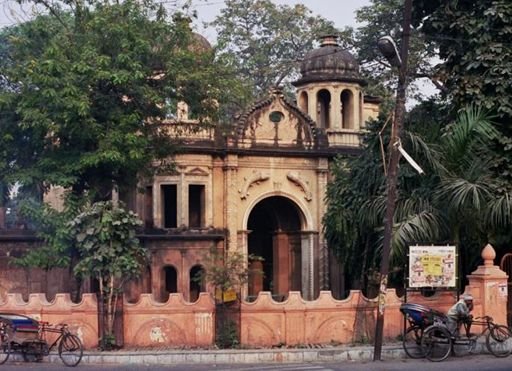
A fortified villa and garden built by the last Nawab of Oudh, Sikandar Bagh became the site of fierce combat during the Indian Rebellion and now houses India’s premier botanical research institute.
At a glance
Sikandar Bagh is a walled villa and garden complex of approximately 4.5 acres, enclosed by fortifications featuring loopholes, a gateway, and corner bastions. Built in the mid-19th century as a summer residence, it represents both the refinement of Oudh’s aristocracy and the turbulence of India’s colonial period.
History
The villa was commissioned by Wajid Ali Shah (1822–1887), the last Nawab of Oudh, as a personal retreat. Named after Sikandar Mahal Begum, his favourite wife, the garden embodied the Nawab’s cultural aspirations. In 1857, during the Indian Rebellion, sepoy mutineers occupied the fortified compound, transforming it into a military stronghold during the Siege of Lucknow. British forces stormed the site that year, and approximately 2,200 sepoys were killed within its walls—a pivotal moment in the rebellion’s suppression.
What you see
The complex comprises a villa set within a walled garden roughly 150 yards square. Fortifications include loopholes for defensive fire, a formal gateway, and bastions at the corners—architectural features that conflate the aesthetics of a princely garden with military functionality. The layout reflects Mughal garden traditions adapted for 19th-century practicalities.
Cultural significance
Sikandar Bagh embodies a pivotal moment in Indian history. It represents both the final flourish of Oudh’s independent nobility and the violent rupture of 1857. The site’s transformation from pleasure garden to battlefield to research facility traces India’s journey from princely state to colonial subject to independent nation.
Key facts
- Location: Lucknow, Uttar Pradesh, India
- Coordinates: 26.85557778°N, 80.95241389°E
- Built by: Wajid Ali Shah, last Nawab of Oudh
- Date: Mid-19th century
- Area: Approximately 4.5 acres (1.8 hectares)
- Current use: National Botanical Research Institute of India
Practical information & getting there
The site is now occupied by the National Botanical Research Institute. Visit their facilities in Lucknow, a city in Uttar Pradesh well served by road, rail and air connections. Check opening hours and access policies with the institute before planning your visit.
Sources & resources
Find it on the map
See this place and what’s around it →📷 Become a Cultural Heritage Online photographer
Share your photos of places: they stay published under your name as the author. The more they're seen, the more you get noticed — and soon a contest will reward the most appreciated photos.
Log in or sign up free to add a photoIs this page about you?
This page is read by travellers and heritage enthusiasts who find it on Google. Tell us how you are connected to this place and we will take it from there.