
The Sápara people of the Amazon rainforest preserve an intricate oral tradition spanning knowledge of the forest, ritual practice, and language—a living memory system sustained by elders and community bearers across Ecuador and Peru.
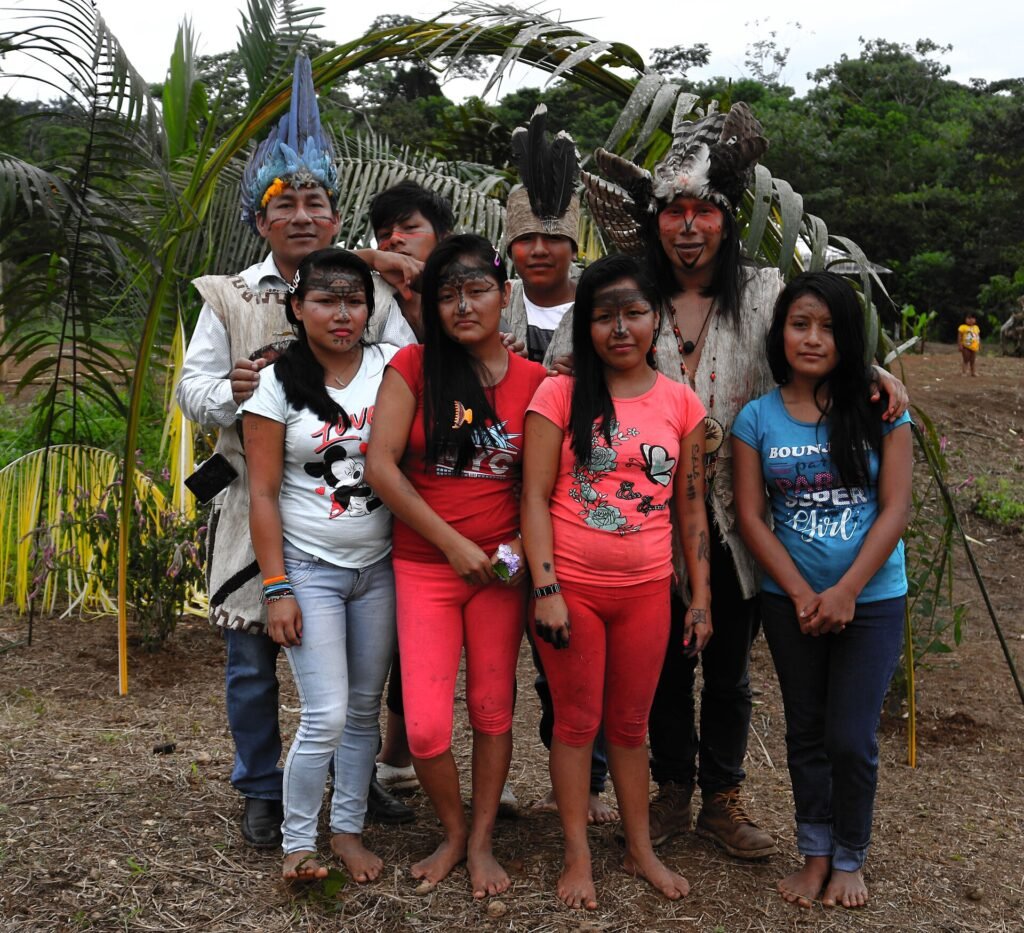
In UNESCO’s words
The Zápara people live in a part of the Amazon jungle straddling Ecuador and Peru. The Zápara developed in what is one of the most bio-diverse areas in the world and are the last representatives of an ethno-linguistic group that included many other populations before the Spanish conquest. In the heart of Amazonia, they have elaborated an oral culture that is particularly rich as regards their understanding of the natural environment. This is demonstrated by the abundance of their vocabulary for the flora and fauna and by their medicinal practices and knowledge of the medicinal plants of the forest. This cultural heritage is expressed through their myths,rituals, artistic practices and language. Their language is the depository of traditional knowledge and of oral tradition and constitutes the memory of the people and the region. Four centuries of history, marked by the Spanish conquest, slavery, epidemics, forced conversions, wars and deforestation, have driven the Zápara people to near extinction. Despite these numerous threats, they have managed to preserve their ancestral knowledge. Intermarriage with Mestizos and other indigenous peoples (Quechua) has been especially instrumental in enabling the people to survive. But this dispersion has also resulted in a partial loss of their identity. The current situation of the Zápara people is critical, and today they are in very serious danger of disappearing altogether. In 2001, their population numbered no more than 300 (200 in Ecuador and 100 in Peru), of whom only five, all aged over 70, still speak the Zápara language.
Official description, UNESCO Intangible Cultural Heritage List — Oral heritage and cultural manifestations of the Zápara people
At a glance
The Zápara oral heritage is the spoken knowledge, narratives, and cultural practices of an indigenous Amazonian people living in the region straddling Ecuador and Peru. Expressed through myths, rituals, artistic practices, and language, this tradition reflects a particularly rich understanding of the natural environment, evident in their extensive vocabulary for forest flora and fauna and their knowledge of medicinal plants. The language itself serves as the depository of traditional knowledge and the memory of the people and region.
Origins & history
The Zápara were part of a larger ethno-linguistic group before the Spanish conquest reduced them to the last representatives of their kind. Over four centuries, the community faced Spanish conquest, slavery, epidemics, forced conversions, wars, and deforestation that brought them near extinction. Intermarriage with Mestizos and other indigenous peoples, particularly Quechua, enabled their survival but also resulted in partial loss of identity and dispersion. By 2001, only around 300 Zápara remained across Ecuador and Peru, with fewer than five fluent speakers of the language, all over 70 years old.
The practice
Zápara oral heritage is transmitted through spoken narrative, song, and ritual knowledge shared in homes, gatherings, and ceremonial contexts. Elders recount histories of ancestors, forest ecology, hunting and fishing practices, and spiritual encounters. The tradition includes detailed knowledge of plants and animals—their names, properties, and medicinal uses—as well as ritual speech connected to healing and community occasions. Fluency in the Zápara language is essential to participation in this living practice.
Cultural significance
This heritage encodes Zápara identity, territory, and survival. As fluent speakers and population have declined critically, the oral tradition has become an urgent marker of cultural continuity. The community's ancestral knowledge represents their resistance to erasure after centuries of threats. Preserving and revitalizing transmission to younger generations remains vital to the survival of both the language and the cultural memory it carries.
Key facts
- Country: Ecuador, Peru
- Inscribed: 2008
- UNESCO list: Representative List of the Intangible Cultural Heritage of Humanity
- UNESCO reference: 00007
- UNESCO vocabulary: Cultural space; Oral tradition
- Map: not shown — UNESCO’s official description of this element names no locality, and a living tradition is practised across a community, not at one address.
Where to experience it
The Zápara people live in the Amazon jungle straddling Ecuador and Peru, where their oral culture remains anchored in deep knowledge of the forest's flora, fauna, and medicinal plants. Today, with fewer than 300 community members—only five fluent speakers of the Zápara language, all over seventy—the tradition survives in the hands of those who have maintained it through centuries of upheaval. Visitors seeking to encounter this heritage should engage directly with Zápara communities and their cultural organizations, approaching with respect for their autonomy and their ongoing efforts to document and transmit their ancestral knowledge to younger generations.
Sources & resources
- UNESCO — official element page: Oral heritage and cultural manifestations of the Zápara people
- UNESCO — open data record: Intangible Heritage List, reference 00007
- UNESCO — official video: UNESCO film on this element — embedded on this page
- UNESCO — official photograph: Photograph of this element — Anne-Gael Bilhaut/UNESCO
- Reference — Wikipedia (secondary): S%C3%A1para — consulted as a secondary reference, not as confirmation
- Cultural Heritage Online: Our archive and city guides
Sources
- S1 — Descola, Philippe. In the Society of Nature: A Native Ecology in Amazonia. Cambridge University Press, 1996. ISBN 978-0-521-41103-5.
- S2 — Reeve, Mary-Elizabeth. Experience and Environment among the Amazonian Kichwa. University of Arizona Press, 2014. ISBN 978-0-8165-3056-4.
Spotted an error? Write to editorial@culturalheritageonline.com and we correct it the same day.