
In the forested mountains of Madagascar’s southern central highlands, the Zafimaniry people preserve an ancient woodcarving tradition passed through generations, transforming timber into vessels, tools, and ritual objects that embody centuries of applied craft knowledge.
In UNESCO’s words
The Zafimaniry community is the sole remaining repository of a unique woodcraft culture previously widespread on the island. In the eighteenth century, the Zafimaniry settled in the remote wooded region of south-east Madagascar, seeking refuge from the deforestation that was ravaging much of Madagascar at that time. Today, approximately 25,000 Zafimaniry live in some one hundred villages and hamlets scattered in the highlands of this region. For generations, Zafimaniry foresters, carpenters and craftworkers have developed a body of practical knowledge and skills revolving around wood. This craft tradition bears witness to the central role of this material in all aspects of life and death. Zafimaniry proficiency in forestry and wood sculpting can be seen in constructions and everyday objects. Practically all wooden surfaces – walls, window frames, posts, beams, stools, chests, tools – display elaborate ornamentation. The Zafimaniry use twenty different endemic species of tree, each adapted to a specific type of construction or decorative function. Houses and tombs are assembled entirely with traditional mortise and tenon joints, without the use of nails, hinges or other metal hardware. The traditional granaries, perched on round piles, are a distinctive feature of the mountain landscape. The geometric patterns are highly codified and reflect not only the community’s austronesian origins but also the Arab influences in Malagasy culture. Although the number of motifs is limited, the creativity of the craftworkers means that no two pieces are identical. These motifs carry rich symbolic significance related to Zafimaniry beliefs and values. For example, the tanamparoratra (spider’s web) symbolizes family ties, while the papintantely (honeycomb) represents community life. The ornamentation also informs about roles and social standing within the community. For several decades, the Zafimaniry have sold statuettes, decorative pieces and everyday objects in nearby towns to ensure their survival. However, this fragile community risks becoming relegated to the role of mere suppliers of handicrafts to the tourist industry. Moreover, the process of deforestation threatens the Zafimaniry’s principal source of income.
Official description, UNESCO Intangible Cultural Heritage List — Woodcrafting knowledge of the Zafimaniry
At a glance
The Zafimaniry are a community of approximately 25,000 people living in around one hundred villages scattered across the remote wooded highlands of south-east Madagascar. They are the sole remaining keepers of a woodcraft tradition that was once widespread across the island. Their distinctive practice centres on the use of wood in virtually every aspect of life and death, from houses and tombs to everyday objects and tools, with elaborate ornamentation on practically all wooden surfaces.
Origins & history
In the eighteenth century, the Zafimaniry settled in their remote wooded region, seeking refuge from the deforestation that was devastating much of Madagascar at that time. Over generations, foresters, carpenters and craftworkers developed a sophisticated body of practical knowledge and skills working with wood. The geometric patterns found in their work reflect both the community's Austronesian origins and Arab influences in Malagasy culture, creating a distinctive visual language that has endured through the centuries.
The practice
Zafimaniry craftspeople work with twenty different endemic tree species, each selected for specific construction or decorative purposes. Houses and tombs are assembled entirely using traditional mortise and tenon joints, without nails, hinges or metal hardware. Walls, window frames, posts, beams, stools, chests and tools all display elaborate geometric ornamentation. Traditional granaries, raised on round piles, remain distinctive features of the landscape. Although the motifs are limited in number, individual craftworkers create pieces where no two are identical.
Cultural significance
The ornamentation carries rich symbolic meaning reflecting Zafimaniry beliefs and values—for example, the tanamparoratra pattern symbolizes family ties, while papintantely represents community life. The patterns also communicate social roles and standing within the community. For several decades, the Zafimaniry have sold statuettes, decorative pieces and everyday objects to survive economically. However, deforestation threatens both their principal source of income and the forests themselves, putting this fragile community at risk of becoming merely suppliers to the tourist industry rather than living practitioners of their tradition.
Key facts
- Country: Madagascar
- Inscribed: 2008
- UNESCO list: Representative List of the Intangible Cultural Heritage of Humanity
- UNESCO reference: 00080
- UNESCO vocabulary: Architecture; Wood carving; Woodworking
- Map: not shown — UNESCO’s official description of this element names no locality, and a living tradition is practised across a community, not at one address.
Where to experience it
The Zafimaniry craft tradition survives in approximately one hundred villages and hamlets scattered throughout the remote wooded highlands of south-east Madagascar, where the community settled in the eighteenth century. Visitors can encounter craftspeople at work in family workshops, observing the selection and carving of wood and learning about the symbolic meanings embedded in geometric patterns. Traditional houses and tombs assembled without nails—along with distinctive granaries perched on round piles—remain visible features of the mountain landscape. The Zafimaniry also sell statuettes, decorative pieces, and everyday objects in nearby towns, offering another point of contact for those interested in this living woodcraft heritage.
Sources & resources
- UNESCO — official element page: Woodcrafting knowledge of the Zafimaniry
- UNESCO — open data record: Intangible Heritage List, reference 00080
- UNESCO — official video: UNESCO film on this element — embedded on this page
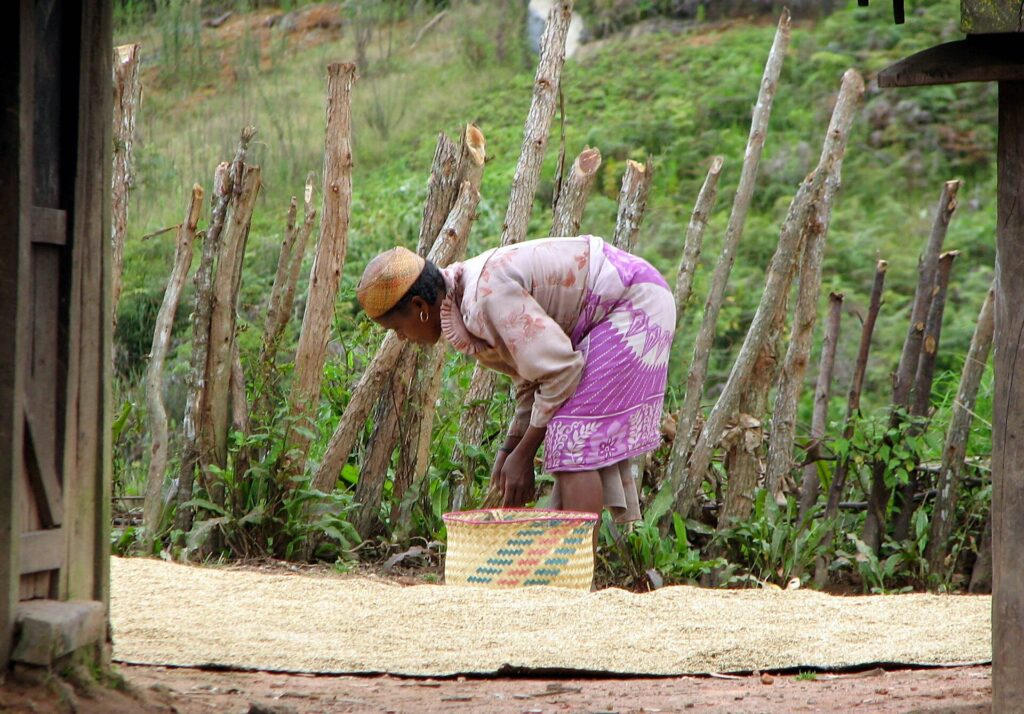
- UNESCO — official photograph: The Zafimaniry community of about 25,000 people practices a unique wood crafting culture. Most wooden surfaces in their villages – from utensils to houses – are delicately crafted, displaying elaborate ornamentation. These motifs carry rich symbolic significance related to Zafimaniry cosmovision and values — J. Ségur/ZED
- Reference — Wikipedia (secondary): Zafimaniry — consulted as a secondary reference, not as confirmation
- Cultural Heritage Online: Our archive and city guides

Sources
- S1 — Bloch, Maurice. From Blessing to Violence: History and Ideology in the Circumcision Ritual of the Merina of Madagascar. Cambridge University Press, 1986. ISBN 978-0-521-31404-6.
- S2 — Brown, Mervyn. A History of Madagascar. Markus Wiener Publishers, 2000. ISBN 978-1-55876-292-3.
Spotted an error? Write to editorial@culturalheritageonline.com and we correct it the same day.