
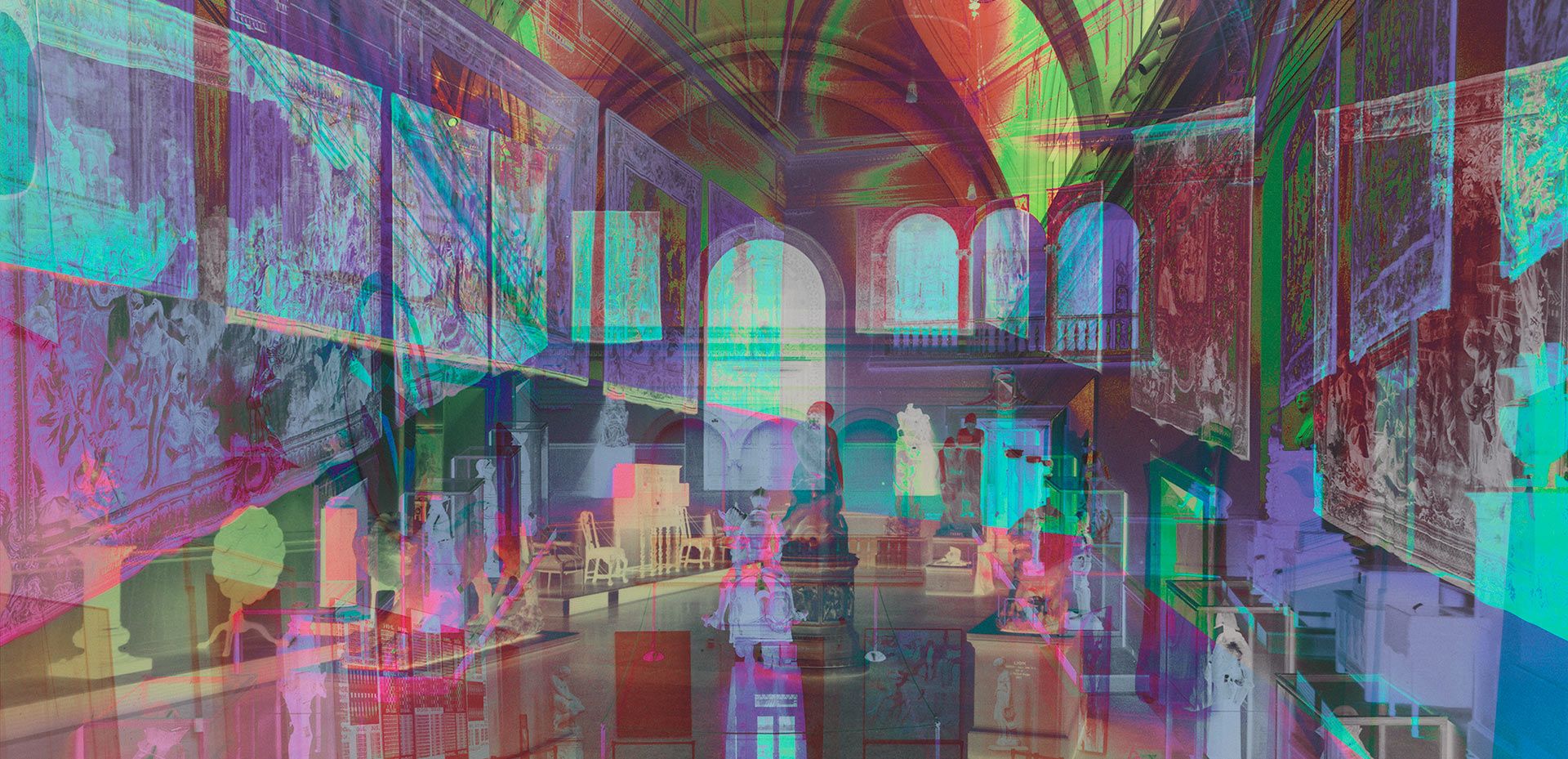
Digital art, discussed widely in contemporary culture, uses the computer as a creative tool—functioning as a virtual brush and canvas. These works are generated through digital image processing and can draw from various artistic traditions, begin from photographs or from scratch, utilize the computer screen as a canvas, and incorporate interaction with different environments and virtual reality simulations, combining movement and sound.
Historical Development
Digital art advanced significantly in the 1950s, though widespread adoption occurred from the 1980s onward. The field emerged from experiments by two mathematicians and programmers—Ben Laposky in the United States and Manfred Frank in Germany—who were artists themselves. They reinterpreted concepts from constructivism and Bauhaus rationalism. The discipline explored optical art and its investigations of two-dimensional illusions during the 1960s and 1970s, and developed mail art, which connected users worldwide through virtual networks via email. Pixel art emerged in the 1980s, followed by numerous evolutions and experiments.
Contemporary Recognition
Despite enabling exploration of new horizons in perception and vision, digital art remains undervalued in many contexts, possibly because computer technology makes it seem reductive compared to traditional art. In Italy, recognition of these artistic innovations occurs through street art, exemplified by MURo.City Museum, an open-air museum in Rome. In the United States, institutions like the Los Angeles Center for Digital Art (LACDA) actively promote all forms of digital art—from video art to digital sculpture, network art, and interactive works that unite technology and creativity. These venues provide spaces where digital artists can exhibit and promote their work alongside traditional artists, reflecting how this combination has become central to contemporary artistic practice.
On video
Frequently asked questions
What techniques does digital art use?
Digital art generates works through digital image processing, using the computer screen as a canvas. It can work from photographs or create entirely original pieces, and often incorporates movement, sound, and interaction with virtual environments.
Who pioneered digital art?
Ben Laposky in the United States and Manfred Frank in Germany, both mathematicians and programmers with artistic interests, developed digital art in the 1950s by reinterpreting Bauhaus and constructivism concepts.
Where can digital artists exhibit their work?
Institutions like the Los Angeles Center for Digital Art (LACDA) in Los Angeles and MURo.City Museum in Rome actively showcase digital art forms and provide exhibition spaces for digital artists alongside traditional artists.
Sources
- S1 — Paul, Christiane. Digital Art. 3rd ed., Thames & Hudson, 2015. ISBN 978-0-500-20423-8.
- S2 — Chalmers, David J. Reality+: Virtual Worlds and the Problems of Philosophy. W. W. Norton, 2022. ISBN 978-0-393-63580-5.
Spotted an error? Write to editorial@culturalheritageonline.com and we correct it the same day.


