

Ecuador packs two of the world’s most significant UNESCO World Heritage Sites within reach of its capital: a colonial city frozen at 2,850 metres above sea level and an archipelago that rewired humanity’s understanding of life on Earth. From Cultural Heritage Online.
City of Quito Within the city — no travel required
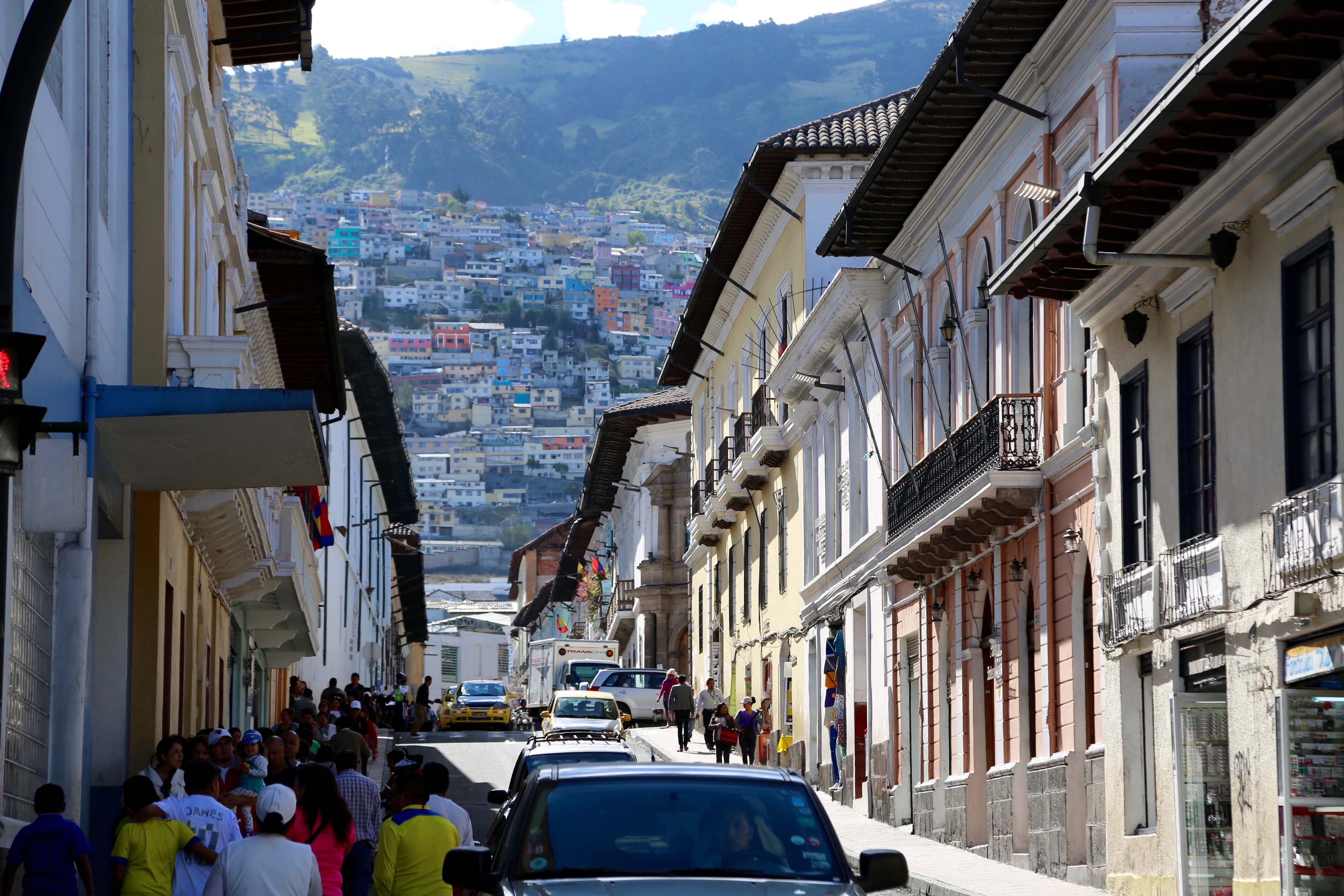
In 1978, UNESCO inscribed two cities simultaneously onto its inaugural World Heritage List. One was Kraków. The other was Quito — a recognition that the Ecuadorian capital holds the best-preserved historic colonial centre in Latin America. Sitting at 2,850 metres in the Andes, the old city unfolds across a grid laid down by Spanish colonists in the sixteenth century over the ruins of an Inca settlement, a palimpsest legible in stone and plaster at every turn.
The gravitational centre of the historic zone is the Plaza Grande, where the Government Palace and the Metropolitan Cathedral — begun in 1562 — face each other across a square that has witnessed independence movements, coups, and ordinary Tuesday mornings in roughly equal measure. Two blocks south, the Convento de San Francisco fills an entire city block. Construction ran from 1534 to 1605, making it the largest sixteenth-century religious complex in the Americas; seven internal courtyards give the complex a scale that photographs consistently fail to convey. The carved Moorish-style ceiling inside the church draws the eye upward through a geometry that belongs as much to Andalusia as to the New World.
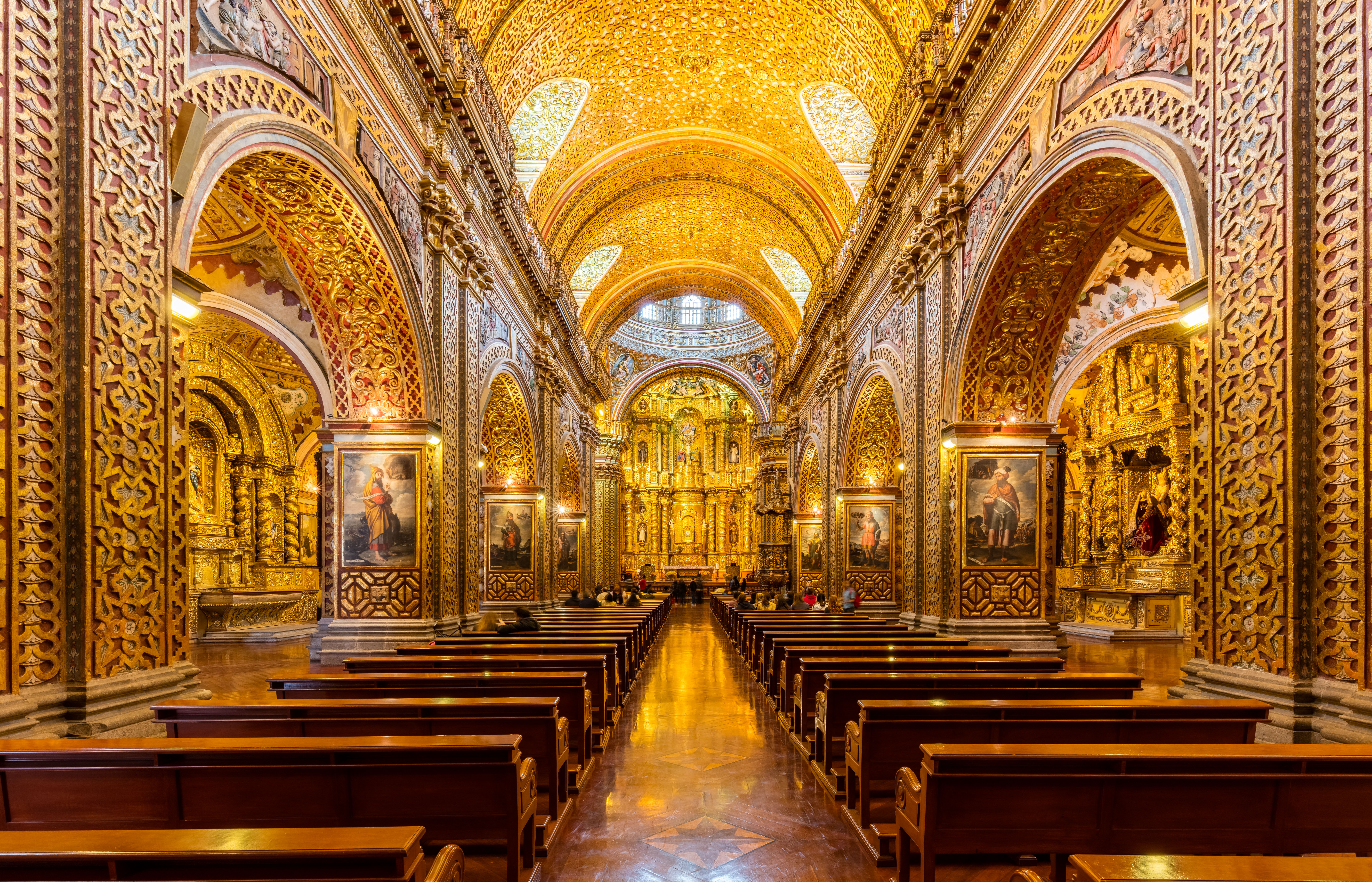
The Iglesia de la Compañía de Jesús, completed in 1765 after 160 years of construction, is the counterpoint: extravagance concentrated into a single facade and a single nave. Seven tonnes of gold leaf coat the interior — retablos, columns, ceiling — leaving almost no surface unadorned. It is the most ornate Spanish Baroque church in South America, and standing inside it at midday, when light filters through the lateral windows, the effect is less spiritual than geological, as though the walls themselves are a seam of ore.
Getting there: The historic centre is walkable from most Quito hotels; taxis from the modern city (La Mariscal district) take around 20 minutes depending on traffic. Allow: A full day minimum; two days to do it without rushing. Best for: Architecture and history travellers, photographers, anyone wanting to understand the Spanish colonial urban model at its most complete.
Galápagos Islands ~1,000 km west — 2 hr by domestic flight
When HMS Beagle anchored off the Galápagos in September 1835, Charles Darwin spent five weeks moving between islands, collecting specimens and noticing something that would take him two more decades to articulate: the same species, separated across islands with different food sources and terrain, had taken different shapes. The finches, the tortoises, the iguanas — each island had tuned them slightly differently. The Galápagos became the laboratory of natural selection, and they were inscribed on the World Heritage List in the same year as Quito, 1978. The marine boundary was extended in 2001 to protect one of the most biodiverse ocean zones on the planet.
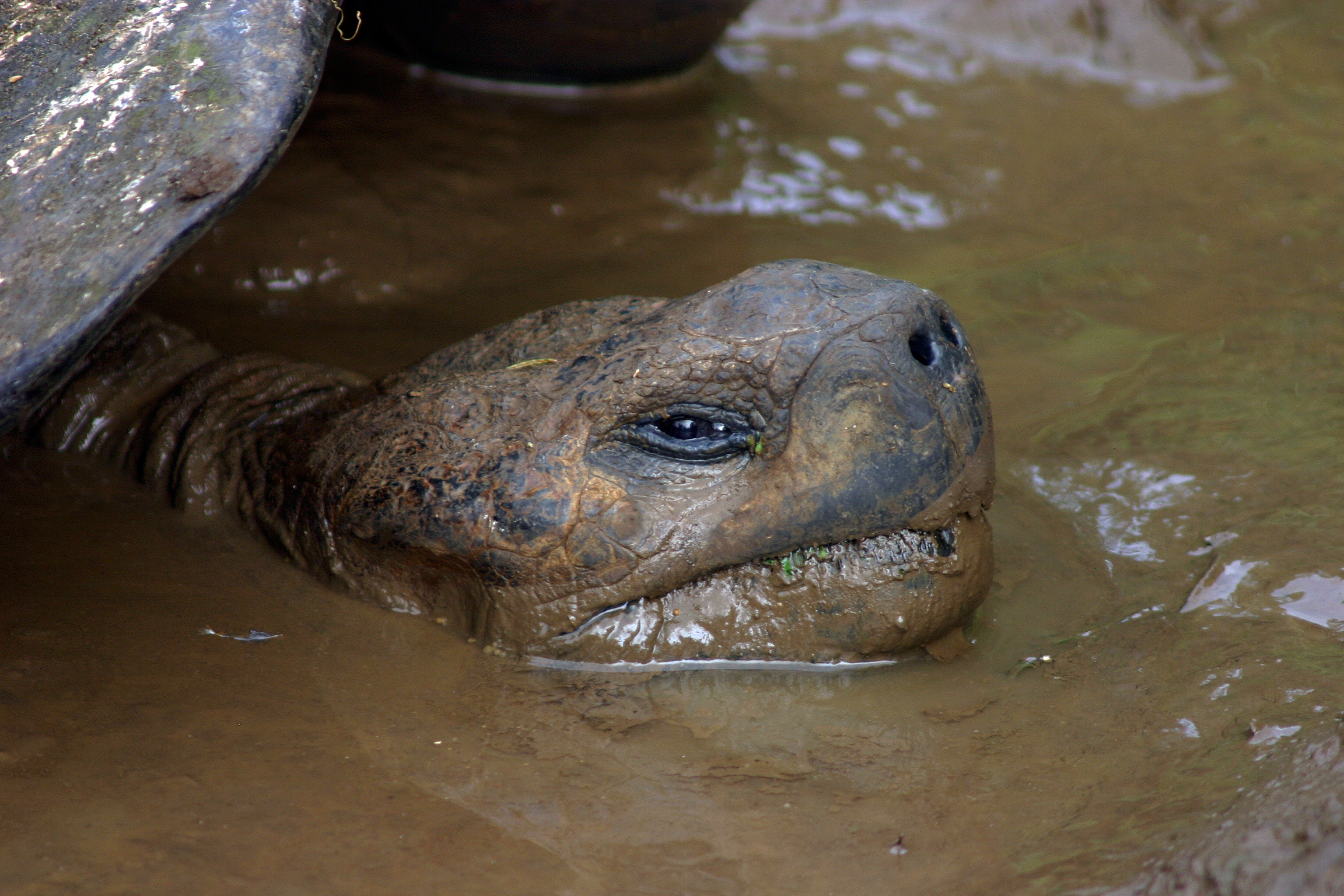
The archipelago consists of 19 islands scattered across the equatorial Pacific, roughly 1,000 kilometres west of the Ecuadorian mainland. Ninety-seven percent of the land area falls within the Galápagos National Park, and the effect of this long-term protection shows in the behaviour of the wildlife: the animals here have not learned to fear humans. Marine iguanas — the world’s only sea-going lizards — bask on lava rocks and ignore you entirely. Giant Chelonoidis tortoises move at geological speed through highland vegetation. Blue-footed boobies perform their courtship display three metres from the nearest observer. Waved albatrosses, flightless cormorants, sea lions: the list of creatures that treat visitors as irrelevant continues.
Access is via domestic flight from Quito’s Mariscal Sucre Airport to either Baltra Island or San Cristóbal Island, both roughly two hours in the air. Most visitors travel as part of a liveaboard cruise — the standard way to reach the outer islands — or on day trips from Santa Cruz, which has the widest range of accommodation. Entry to the national park requires a fee paid on arrival; regulations on independent movement within the park are strict and designed around conservation.
Getting there: Domestic flights from Quito to Baltra (SEYMOUR) or San Cristóbal, 2 hr; multiple airlines operate daily. A transit control card is required before boarding. Allow: Minimum 5 nights; 8–10 nights to cover several distinct island habitats. Best for: Wildlife and natural history travellers, divers, anyone for whom the theory of evolution is more than an abstraction.
Frequently Asked Questions
How many UNESCO World Heritage Sites are near Quito?
Two UNESCO World Heritage Sites are accessible from Quito: the City of Quito itself, inscribed in 1978 as one of the first two cities ever placed on the World Heritage List, and the Galápagos Islands, also inscribed in 1978 (with the marine zone extended in 2001), reached by a two-hour domestic flight.
How do you get from Quito to the Galápagos Islands?
The standard route is a direct domestic flight from Quito’s Mariscal Sucre International Airport to either Baltra Island or San Cristóbal Island. Flight time is approximately two hours. Airlines including LATAM Ecuador and Avianca operate multiple daily departures. Visitors must purchase a Galápagos Transit Control Card before boarding and pay a national park entrance fee on arrival. There is no passenger ferry service from the mainland.
When is the best time to visit Quito and the Galápagos together?
Quito is a year-round destination at altitude; the dry season (June–September) brings clear skies and cooler temperatures, while the wet season (October–May) sees afternoon rains but lusher vegetation. The Galápagos has two distinct seasons: the warm, wetter season (December–May) brings calmer seas, better snorkelling visibility, and hatching sea turtles; the cooler garúa season (June–November) brings rougher water but excellent whale shark and hammerhead sightings around the northern islands. Many visitors combine a week in Quito and the historic highlands with a five- to eight-night Galápagos cruise in either season.
Why was the City of Quito inscribed as a UNESCO World Heritage Site?
Quito was inscribed in 1978 because its historic centre contains the largest, least-altered collection of colonial-era religious and civic architecture in Latin America. Unlike many comparable cities, Quito was never significantly damaged by earthquake, fire, or demolition for modernisation: the convents, churches, plazas, and street grid built between the 1530s and the eighteenth century survive largely intact. The Convento de San Francisco — the largest sixteenth-century religious complex in the Americas — and the gold-leaf interior of the Iglesia de la Compañía de Jesús are the most cited examples, but the inscription covers the entire historic urban fabric, not individual monuments.
Sources
- S1 — Webster, Susan Verdi. Quito, 1534–1693: Architecture, Culture, and Urban Space. Yale University Press, 2012. ISBN 978-0-300-17983-5.
- S2 — Jackson, Michael H. Galápagos: A Natural History. University of Calgary Press, 1993. ISBN 978-1-895176-07-0.
Spotted an error? Write to editorial@culturalheritageonline.com and we correct it the same day.
.jpg)

_in_water.jpg)