The Lenggong Valley in Hulu Perak, Malaysia, contains four archaeological sites that together document continuous human presence spanning 1.83 million years — from the earliest known stone tools in Southeast Asia to graves, metalwork, and ceramics from the early historical period. The valley’s oldest layer was preserved by a specific geological event: tools from the Kota Tampan site were buried directly beneath ash from the Toba supervolcano eruption of 74,000 BCE, creating a datable stratigraphic marker that places human activity in this valley before one of the largest volcanic catastrophes of the past two million years. From a cave at Gua Gunung Runtuh, excavators recovered the most complete prehistoric human skeleton found in Southeast Asia — a 10,000-year-old Homo sapiens individual known as Perak Man.
Two Million Years of Occupation: Kota Tampan, Toba, and Perak Man Lenggong Valley, Hulu Perak, Peninsular Malaysia
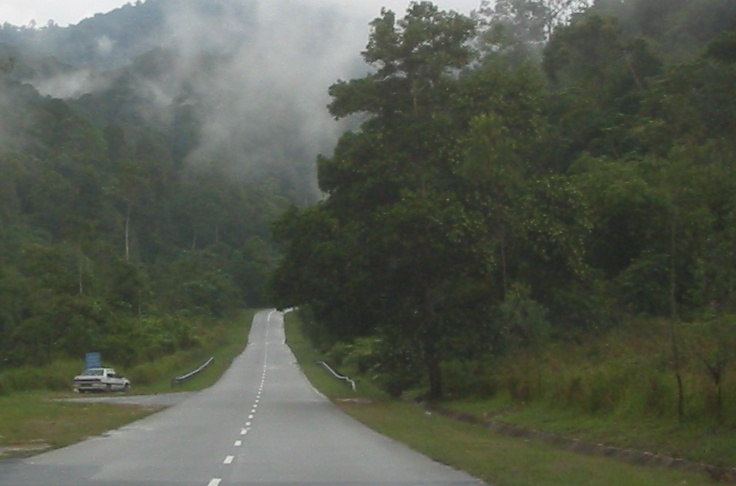
The Lenggong Valley sits in the upper Perak River basin, enclosed by the Titiwangsa mountain range to the east and the Bintang mountain range to the west — a sheltered inland corridor of tropical forest that has remained geographically stable, without major glaciation or dramatic sea-level exposure-and-flooding cycles, through the entire period of documented human activity. This stability is one of the reasons the site is exceptional: Southeast Asian prehistoric archaeology is difficult because coastal sites were inundated when sea levels rose at the end of the last Ice Age, and many interior sites were disturbed by the intense biological activity of tropical soils. The Lenggong Valley’s sedimentary accumulation, augmented by volcanic ash deposits, created conditions for preservation that are unusual for the region.
The Kota Tampan site, at the southern end of the valley, contains the oldest material in the Lenggong sequence. Stone tools recovered here — primarily large flakes and chopping tools made from locally available quartzite and other river cobbles — have been dated by reference to their stratigraphic position directly beneath a layer of ash from the Toba supervolcano eruption. The Toba eruption, which occurred approximately 74,000 years ago in what is now Lake Toba in Sumatra, was among the largest volcanic events of the past two million years, ejecting an estimated 2,800 cubic kilometres of material and causing a volcanic winter that may have lasted several years. The ash layer is identifiable across South and Southeast Asia and provides a reliable chronological marker wherever it is found undisturbed: anything below the ash layer predates 74,000 BCE, anything above it postdates the eruption. The Kota Tampan tools below the ash thus prove that human (or hominin) activity in this specific valley survived into and through one of the most catastrophic environmental events in geological memory.
However, the attribution of the Kota Tampan tools to a 1.83-million-year-old date requires clarification of its basis. This figure derives from a separate feature of the Bukit Bunuh site, also in the Lenggong Valley, where geologists identified evidence of a meteorite impact event dated to approximately 1.83 million years ago. Stone tools were recovered from suevite (impact rock) associated with this event, suggesting hominin presence at the time of the impact. If the dating is confirmed, these are the oldest known artefacts in Southeast Asia by a substantial margin — the next-oldest Southeast Asian stone tool sites date to roughly 700,000 to 1.6 million years ago. The meteorite impact and coexistent tool-bearing layer at Bukit Bunuh remain under investigation, and the dating methodology has been subject to peer review since publication.
Perak Man, recovered from Gua Gunung Runtuh (meaning “the cave of the collapsed mountain”) in 1991, dates to approximately 10,000 to 11,000 years before the present. He is a complete Homo sapiens skeleton — the most complete prehistoric human skeleton recovered from any site in Southeast Asia — and was found in a flexed burial position with grave goods that included stone tools, animal bones, and traces of ochre. Physical analysis of the skeleton indicates the individual was a mature male, probably in his 40s, with a physical condition that has been interpreted as a congenital fusion of one shoulder joint that would have significantly restricted the use of his right arm. The presence of this apparent disability alongside grave goods suggests his community provided for individuals who could not fully participate in hunting or tool manufacture — evidence of social care within the Hoabinhian hunter-gatherer culture of the period. The Hoabinhian culture (named for a site in Vietnam) is a widespread Mesolithic tradition found across mainland and peninsular Southeast Asia, characterised by specific unifacial pebble tools and by cave burial practices.
George Town and the Regional Heritage Context 130km south of Lenggong via Ipoh and the North-South Expressway
The Archaeological Heritage of the Lenggong Valley was listed by UNESCO in 2012 under criteria (iii) and (iv): it bears exceptional testimony to cultural traditions of the prehistoric period (criterion iii) and is an outstanding example of a type of site illustrating significant stages in human history (criterion iv). The four sites within the inscribed property are Kota Tampan, Bukit Jawa, Gua Gunung Runtuh, and Gua Harimau — the latter two being cave sites in the limestone karst hills north of Lenggong town. Together they span the Lower Palaeolithic through to the Neolithic and early Metal Age, making Lenggong one of the most temporally comprehensive archaeological sequences in Asia from a single continuous geographic location.
The nearest UNESCO World Heritage Site to Lenggong is George Town, listed jointly with Melaka in 2008 under the title “Historic Cities of the Straits of Malacca.” George Town lies approximately 130 kilometres south and west of Lenggong, reachable via Ipoh and the Perak state highway network connecting to the North-South Expressway and then northwest to Penang island. The two sites could scarcely be more different in character: where Lenggong documents lithic technology from before the anatomically modern human period, George Town preserves a dense urban fabric of late 18th-to-20th century shophouses, clan associations, temples, mosques, and colonial administrative buildings that reflect the successive layering of British, Chinese, Indian, Malay, and Peranakan (Straits Chinese) cultures in a port city that handled a substantial fraction of the region’s rubber, tin, and later electronics export trade.
George Town was established by Francis Light of the British East India Company in 1786, making it the first British settlement in Southeast Asia — predating Raffles’ Singapore by thirty-three years. The historic core, centred on the area around Fort Cornwallis and the Esplanade, retains its colonial-era street grid and a preponderance of two-storey shophouses built to a standardised formula adapted from the southern Chinese vernacular: a covered walkway (the “five-foot way”) on the ground floor, commercial or light-industrial use on the ground and first floors, and residential use above. The clan associations (kongsi) of the major Chinese communities — Hokkien, Cantonese, Hakka, Teochew — funded elaborately decorated assembly halls and temples that remain in active use. The Sri Mahamariamman and Sri Aruloli Thirumurugan temples, the Kapitan Keling Mosque, and the Dharmikarama Burmese Buddhist temple sit within a few hundred metres of each other in the inner city, reflecting the organised pluralism that characterised British Straits Settlements policy.
The Ipoh city area, approximately 65 kilometres south of Lenggong on the same road north toward the valley, is not itself a UNESCO site but provides the nearest major transport hub. Ipoh’s own heritage district — centred on the colonial railway station and the old town shophouse streets across the Kinta River — has become a significant domestic and regional tourism destination in the decade since George Town’s listing raised awareness of Perak’s heritage assets. The Ipoh railway station, completed in 1935, is a Moorish Revival building often described (along with Kuala Lumpur’s old station) as one of the most architecturally ambitious railway buildings in Southeast Asia. From Ipoh, both Lenggong (north) and Penang/George Town (northwest) are within two hours by road.
Practical information Ipoh — 65km south; Lenggong town — gateway to the archaeological sites
Lenggong town is the access point for all four archaeological sites in the UNESCO inscribed area. The town is approximately 65 kilometres north of Ipoh by road (Route A1 north from Gerik junction) and approximately 170 kilometres north of Penang island by the North-South Expressway and then inland road. There is no direct public transport from Ipoh to Lenggong; the practical option is a rental car or a day tour from Ipoh or Penang. Ipoh is served by frequent train services from Kuala Lumpur (approximately 2 hours by ETS express) and from Penang (approximately 2.5 hours). The Lenggong Archaeological Museum in the town centre holds the Perak Man skeleton replica, associated grave goods, and Hoabinhian stone tool collections; the original Perak Man skeleton is held at the Muzium Negara in Kuala Lumpur. Entry to the museum is free or subject to a small charge; the museum was partially funded by the state of Perak as part of the UNESCO listing process. The cave sites and Kota Tampan open-air site are accessible with a local guide (recommended, as signage is limited). The best visiting season is May to July and December to February, avoiding the heavier rainfall months of October-November on the east-facing slopes. Allow a full day for Lenggong valley sites; combine with Ipoh’s heritage district for a two-day Perak itinerary.
Frequently Asked Questions
Who was Perak Man, and what does the skeleton tell us about prehistoric society in the Lenggong Valley?
Perak Man is the name given to the individual represented by a near-complete Homo sapiens skeleton excavated in 1991 from Gua Gunung Runtuh (Collapsed Mountain Cave) in the northern part of the Lenggong Valley. Radiocarbon dating of associated organic material places the burial at approximately 10,000 to 11,000 years before the present, making Perak Man the oldest human skeleton recovered in Malaysia and the most complete prehistoric skeleton found anywhere in Southeast Asia. The individual was male, estimated to have been in his late thirties to mid-forties at the time of death, and was buried in a flexed position — knees drawn toward the chest — which is the standard burial posture for the Hoabinhian culture of this period across mainland and peninsular Southeast Asia. He was buried with stone tools, animal bones interpreted as food offerings, and traces of red ochre, indicating intentional burial with grave goods rather than simple disposal. Physical anthropological examination of the skeleton found evidence of a congenital condition affecting one shoulder joint — interpreted by some researchers as Klippel-Feil syndrome or a related fusion of cervical vertebrae — that would have caused significant pain and limited movement in his right arm throughout his life. A person with this level of physical impairment surviving to his late thirties or forties in a hunter-gatherer community could not have done so without sustained support from others in the group: he would have been dependent for hunting, for heavy carrying, and probably for certain food preparation tasks. His burial with grave goods suggests he was valued by his community regardless of his physical limitations. Perak Man is on display as a replica at the Lenggong Archaeological Museum; the original is at the Muzium Negara in Kuala Lumpur.
What was the Toba supervolcano eruption, and how did it affect human populations in the Lenggong Valley?
The Toba supervolcano eruption occurred approximately 74,000 years ago from the caldera that is now Lake Toba in North Sumatra, Indonesia — Lake Toba today is a 100-kilometre-long caldera lake, one of the largest in the world, the direct result of the eruption’s collapse. The eruption ejected an estimated 2,800 cubic kilometres of volcanic material (for comparison, the 1980 Mount St. Helens eruption ejected roughly 1 cubic kilometre), making Toba one of the largest volcanic eruptions in the past two million years. The ejecta spread across South Asia, Southeast Asia, and into the Indian Ocean; the ash layer is detectable in sediment cores from the Bay of Bengal to the Arabian Sea. The climatic aftermath is debated: some researchers have proposed that the aerosols and particulates injected into the stratosphere caused a “volcanic winter” lasting several years, potentially reducing global temperatures by 3 to 5 degrees Celsius and drastically reducing plant productivity in affected regions. A more radical hypothesis — the “genetic bottleneck” theory — proposed that Toba caused such a severe population collapse among early Homo sapiens in Africa and South Asia that human genetic diversity was severely narrowed. More recent genetic research has cast doubt on the severity of the bottleneck hypothesis, finding evidence that human populations survived the eruption without the scale of collapse originally proposed. The Lenggong Valley evidence is directly relevant to this debate: the stone tools found below the Toba ash layer at Kota Tampan, and the subsequent continuous occupation of the valley detectable in the overlying stratigraphy, demonstrate that at least one human population in the Sundaland region (the now-submerged land mass connecting the Malay Peninsula to Sumatra, Borneo, and Java during periods of lower sea level) survived the eruption and maintained occupation of the valley afterward.
How does Lenggong Valley fit into the broader prehistory of Southeast Asia?
The Lenggong Valley occupies an important position in Southeast Asian prehistory because it provides a rare long continuous sequence in a region where the dominant evidence for early human presence has been fragmentary. Most of the Sundaland shelf — the continental platform that connected mainland Southeast Asia to Borneo, Java, and Sumatra during the Last Glacial Maximum (approximately 20,000 years ago, when sea levels were 100 to 120 metres lower than today) — is now submerged under the South China Sea and the Java Sea, making coastal and lowland sites from the key periods of early modern human dispersal inaccessible. The inland valley of Lenggong, elevated above both the ancient shorelines and the destructive cycles of fluvial erosion affecting lower-lying sites, preserved a sequence that runs from the Lower Palaeolithic (the Bukit Bunuh meteorite-impact horizon, if the 1.83-million-year date is confirmed) through to the Hoabinhian Mesolithic (Perak Man at 10,000–11,000 BP) and into the Neolithic and early Metal Age at the Bukit Jawa and Gua Harimau sites. The Hoabinhian culture documented at Lenggong — named after a site in northern Vietnam where the tools were first described in 1927 — is broadly distributed across mainland Southeast Asia and the Malay Peninsula, and Lenggong provides some of the most complete skeletal and material culture evidence for the people who made these tools. Current genetic research on ancient DNA from Southeast Asian prehistoric burials (a field that has expanded rapidly since 2018) suggests that the Hoabinhian populations of the peninsula were largely replaced or absorbed by farmers migrating from southern China during the Neolithic, bringing rice cultivation, new pottery traditions, and eventually metal technology — a transition visible in the upper layers of the Lenggong sequence and at sites across Thailand, Vietnam, and Malaysia.
Sources
- S1 — Jabatan Warisan Negara (Department of National Heritage, Malaysia) — Warisan Arkeologi Lembah Lenggong — https://www.heritage.gov.my/ms/warisan-arkeologi-lembah-lenggong-perak.html
- S2 — Tourism Perak Malaysia — Lenggong Valley — https://www.tourismperakmalaysia.com/lenggong-valley/
Spotted an error? Write to the editors and we correct it the same day.