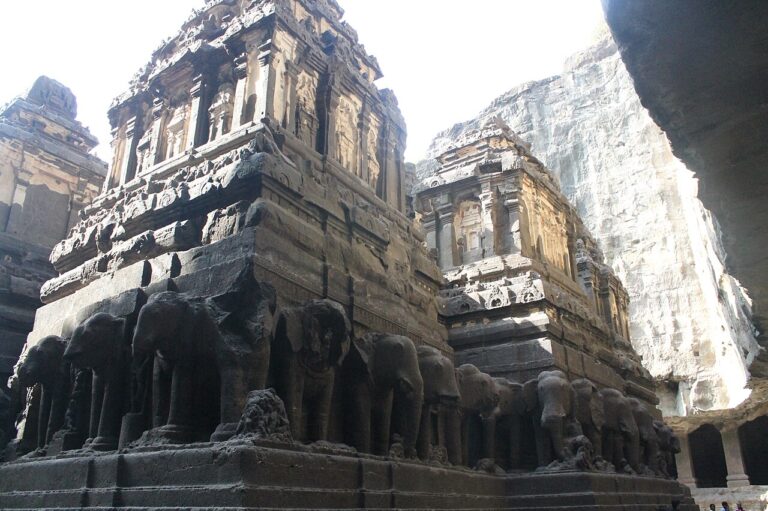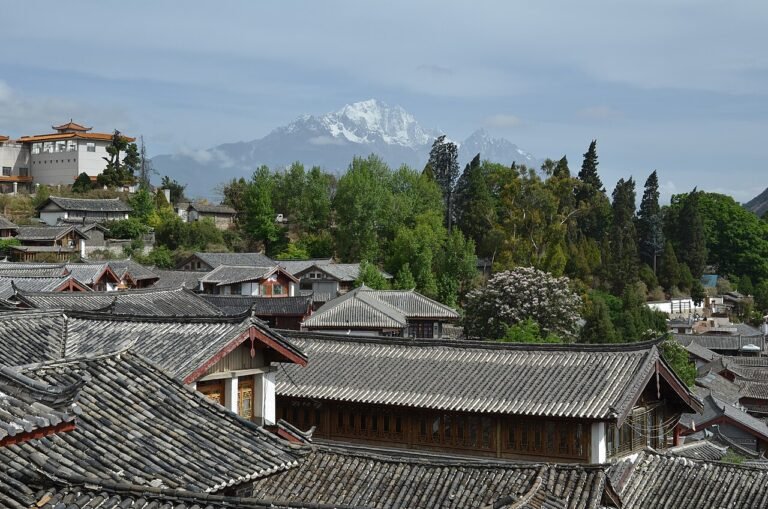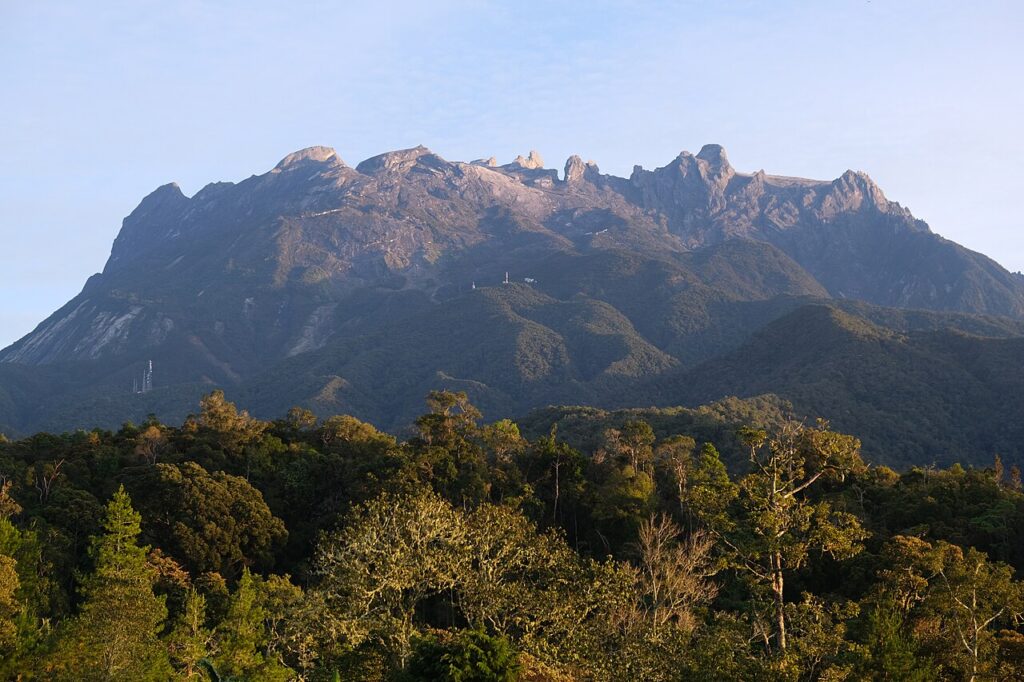
Two World Heritage sites lie within 500 kilometres of Kinabalu Park as the crow flies: Gunung Mulu National Park (293 km) and the Archaeological Heritage of Niah National Park’s Caves Complex (406 km). Kinabalu Park itself was inscribed in 2000. It protects Mount Kinabalu, the highest mountain between the Himalayas and New Guinea, and a remarkable concentration of plant and animal life on the island of Borneo.
The World Heritage sites within reach of Kinabalu Park
The distances below are straight lines between the reference points that UNESCO publishes for each property, measured to the nearest component of a serial site. They tell you what is close. They do not tell you how long the road takes, which depends on the route and the terrain.
| Site | Country | Distance | Inscribed | Type |
|---|---|---|---|---|
| Gunung Mulu National Park | Malaysia | 293 km | 2000 | Natural |
| The Archaeological Heritage of Niah National Park’s Caves Complex | Malaysia | 406 km | 2024 | Cultural |
| Tubbataha Reefs Natural Park | Philippines | 473 km | 1993 | Natural |
| Puerto-Princesa Subterranean River National Park | Philippines | 510 km | 1999 | Natural |
Read together, the closest sites trace different ways of understanding Borneo. Gunung Mulu and Niah, both in Sarawak, preserve the island’s interior: one a vast karst system of caves and forest, the other the longest known record of human interaction with the rainforest. Kinabalu Park sits at the northern end of the same island, where the granite massif creates a different kind of landscape and a different set of habitats. Further north and east, the two Philippine sites mark the transition from terrestrial Borneo to the marine biodiversity of the Sulu Sea and Palawan.
How the granite massif of Mount Kinabalu took shape
Kinabalu is not a volcano. It is a granite body that formed deep underground and was later pushed upward by tectonic forces. UNESCO dates the granite intrusion to 15 million years ago and the main uplift to one million years ago. Those forces have not stopped working: the rugged landscape they produced still shapes the mountain today. The park’s altitudinal span, from 152 m to 4,095 m, creates a long gradient of habitats on a single peak.
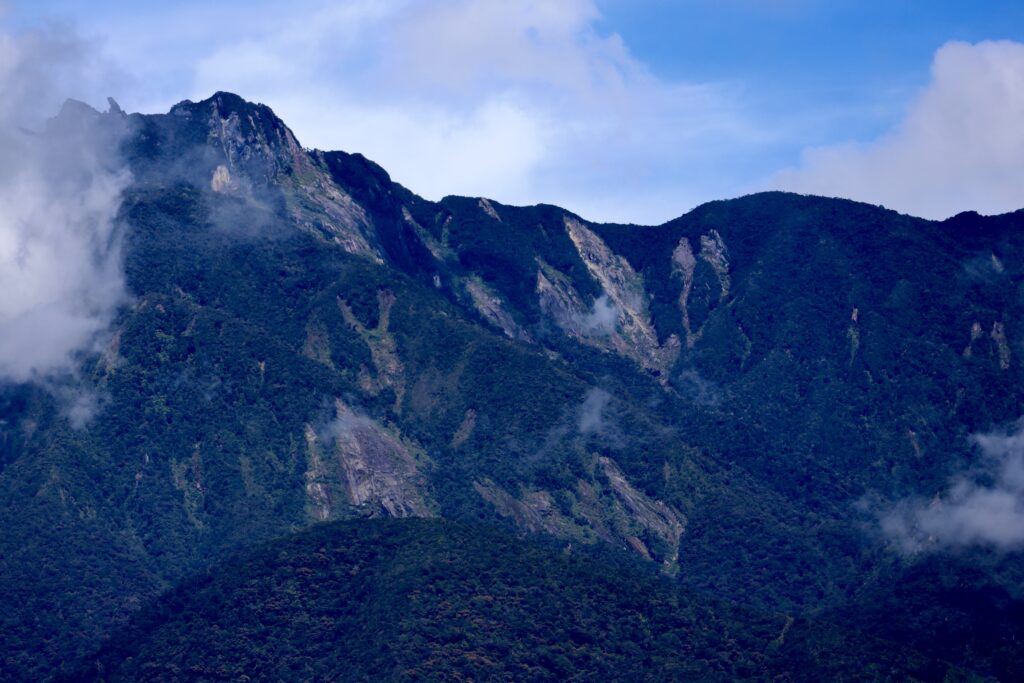
The mountain’s geological youth, in the context of the Malay archipelago, has not prevented it from becoming one of the richest sites for plant life in Southeast Asia. The terrain is steeply dissected, which isolates species over short distances. The geology is diverse, with many localised soil conditions, and the frequent climate oscillations influenced by El Niño events add further variety. These are the processes UNESCO identifies in its criterion (ix) justification.
Why Kinabalu Park is a global centre for plant diversity
Kinabalu Park has been designated a Centre of Plant Diversity for Southeast Asia. More than half of all Borneo’s plant species have representatives here, drawn from the floras of the Himalayas, China, Australia, Malaysia and the tropics more broadly. The park is also a globally important Centre of Plant Endemism. UNESCO records an estimated 5,000-6,000 vascular plant species, including 1,000 orchid species, 78 species of Ficus, and 60 species of ferns.
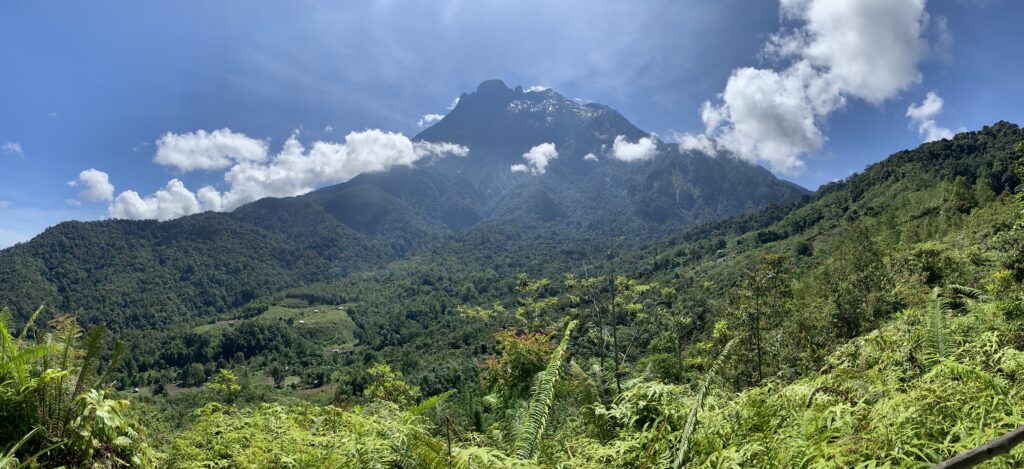
Faunal diversity is equally high. The majority of Borneo’s mammals, birds, amphibians and invertebrates are known to occur in the park. The property covers 75,370 ha, and more than 93% of its area remains natural vegetation. The range from 152 m to 4,095 m presents a wide array of habitats, from tropical lowland and hill rainforest to sub-alpine forest and scrub at the highest elevations.
Frequently Asked Questions
Which UNESCO World Heritage sites are near Kinabalu Park?
Gunung Mulu National Park is 293 km away in a straight line, and the Archaeological Heritage of Niah National Park’s Caves Complex is 406 km away, both in Malaysian Borneo. Further out are Tubbataha Reefs Natural Park (473 km) and Puerto-Princesa Subterranean River National Park (510 km), both in the Philippines.
How high is Mount Kinabalu?
Mount Kinabalu is 4,095 m high. UNESCO describes it as the highest mountain between the Himalayas and New Guinea. The park’s altitudinal range extends from 152 m at its lowest point to 4,095 m at the summit, creating a wide array of habitats from tropical lowland rainforest to alpine scrub.
When was Kinabalu Park inscribed on the UNESCO World Heritage List?
Kinabalu Park was inscribed in 2000 under criteria (ix) and (x): for its exceptional array of naturally functioning ecosystems and for its globally important role as a centre of plant endemism and high faunal diversity.
What makes Kinabalu Park so important for biodiversity?
Kinabalu Park is designated a Centre of Plant Diversity for Southeast Asia. It contains an estimated 5,000-6,000 vascular plant species, including 1,000 orchid species, 78 species of Ficus, and 60 species of ferns. It also contains representatives from at least half of all Borneo’s plant species.
Sources
- UNESCO World Heritage Centre — Kinabalu Park (inscribed 2000). https://whc.unesco.org/en/list/1012/
- UNESCO World Heritage Centre — Gunung Mulu National Park (inscribed 2000). https://whc.unesco.org/en/list/1013/
- UNESCO World Heritage Centre — The Archaeological Heritage of Niah National Park’s Caves Complex (inscribed 2024). https://whc.unesco.org/en/list/1014/
- UNESCO World Heritage Centre — Tubbataha Reefs Natural Park (inscribed 1993). https://whc.unesco.org/en/list/653/
- UNESCO World Heritage Centre — Puerto-Princesa Subterranean River National Park (inscribed 1999). https://whc.unesco.org/en/list/652/
- Sabah Parks — Kinabalu Park official site. https://www.sabahparks.org.my/kinabalu-park
Spotted an error? Write to [email protected] and we correct it the same day.