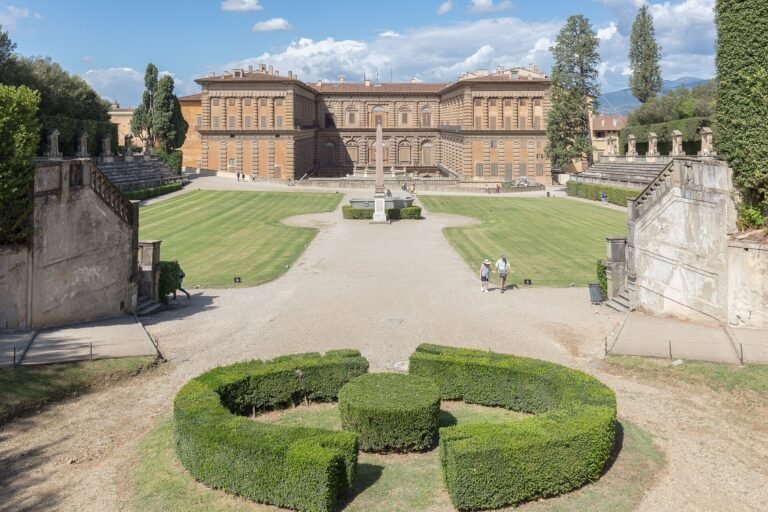
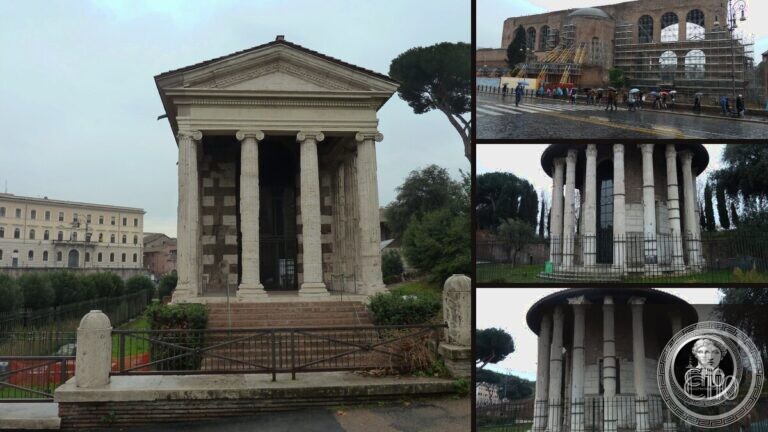
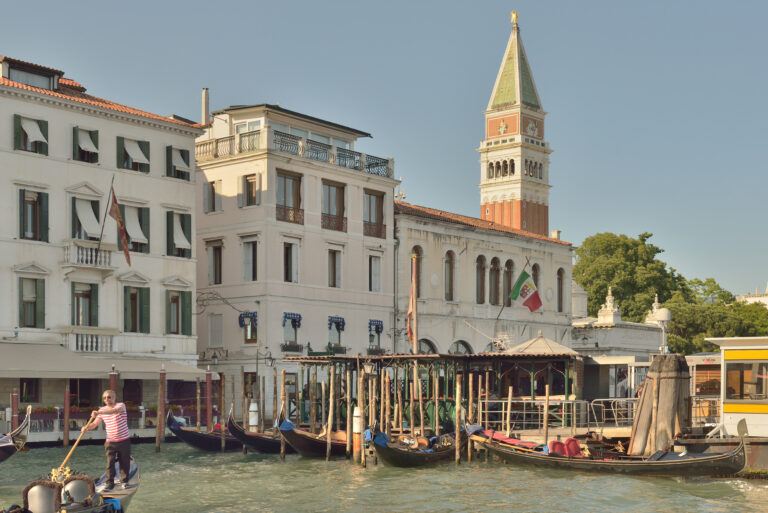
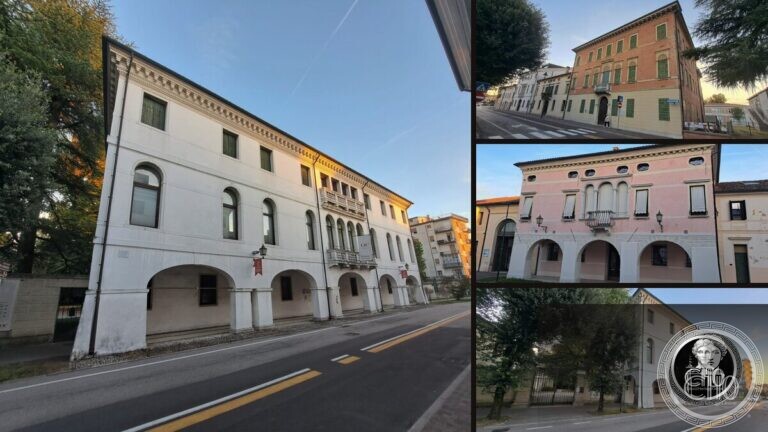
On 26 and 27 September 2026 I guided twenty people across the bridges of Venice, from the station to the Rialto: two hours a day looking at who builds, rebuilds and maintains the crossings a city on water cannot live without.
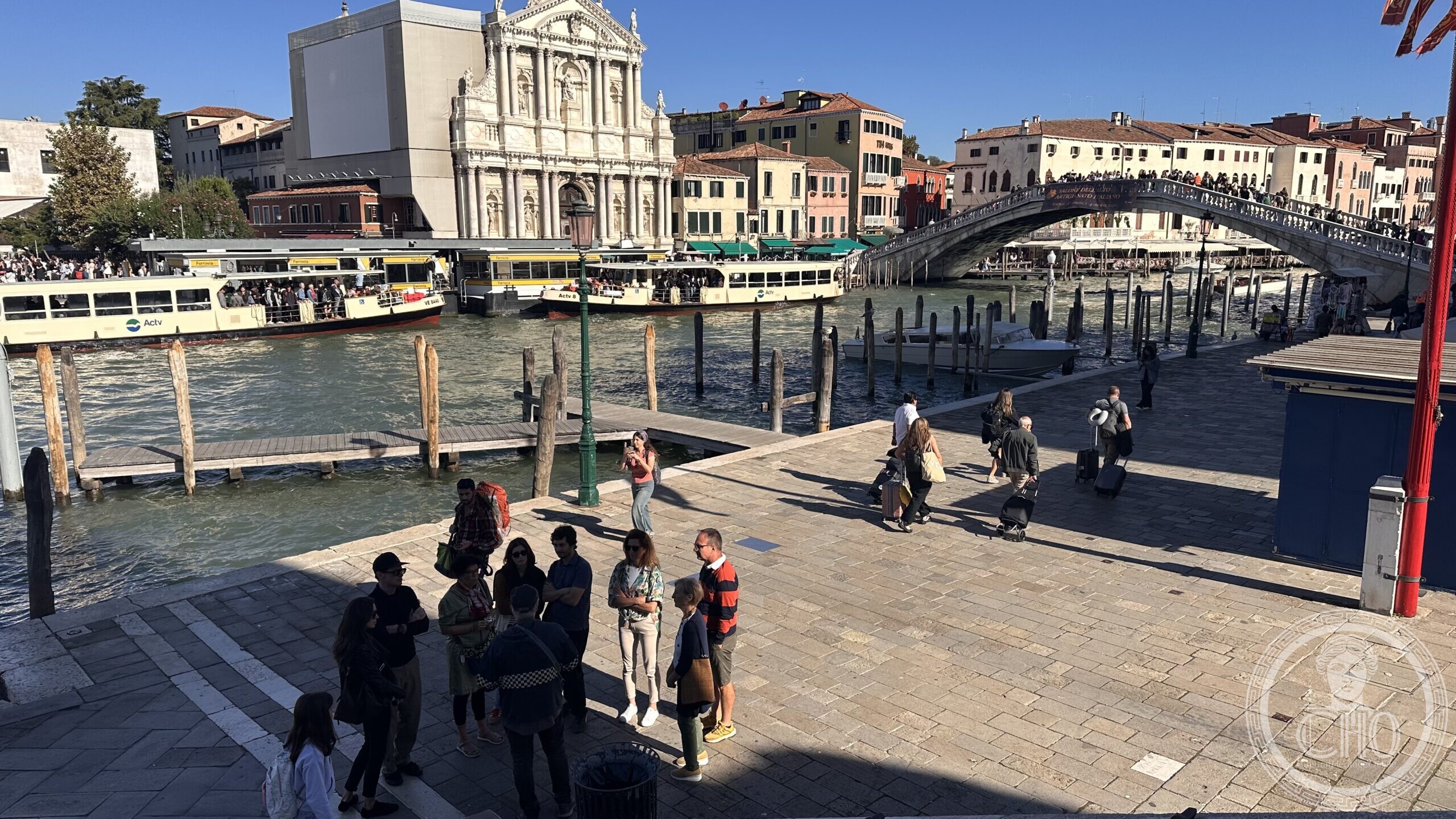
For two mornings at the end of September, twenty people walked across Venice without looking at the postcards. The European Heritage Days 2026 asked, as their theme, not what we have but how we keep it: proteggere il patrimonio — rinnovare, resistere, reinventare. The Associazione Beni Culturali Online APS answered with a walk about bridges — not as monuments, but as a maintenance problem. Who built them, with what, how many times they have been rebuilt, and who keeps them standing under the feet of millions of visitors.
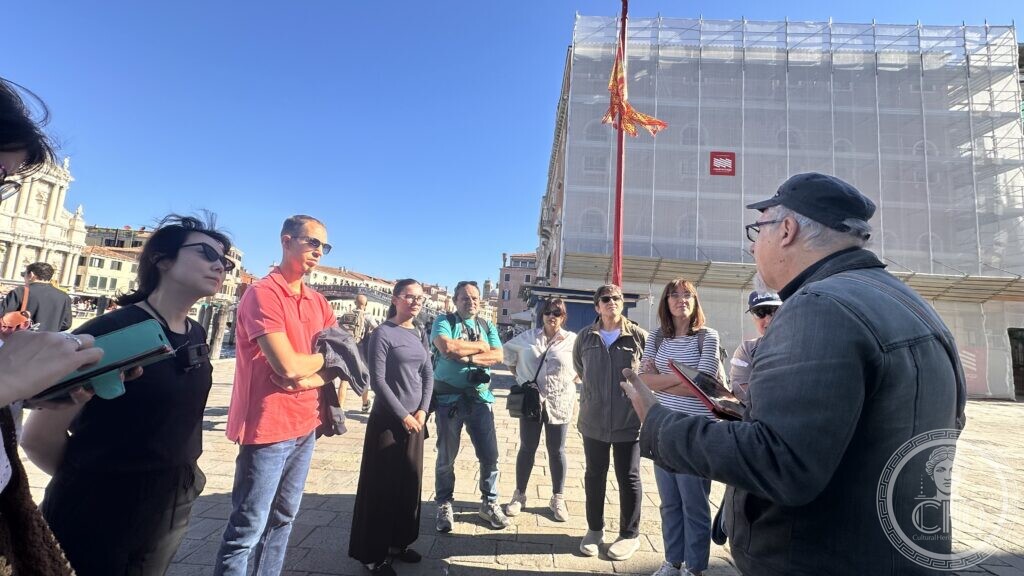
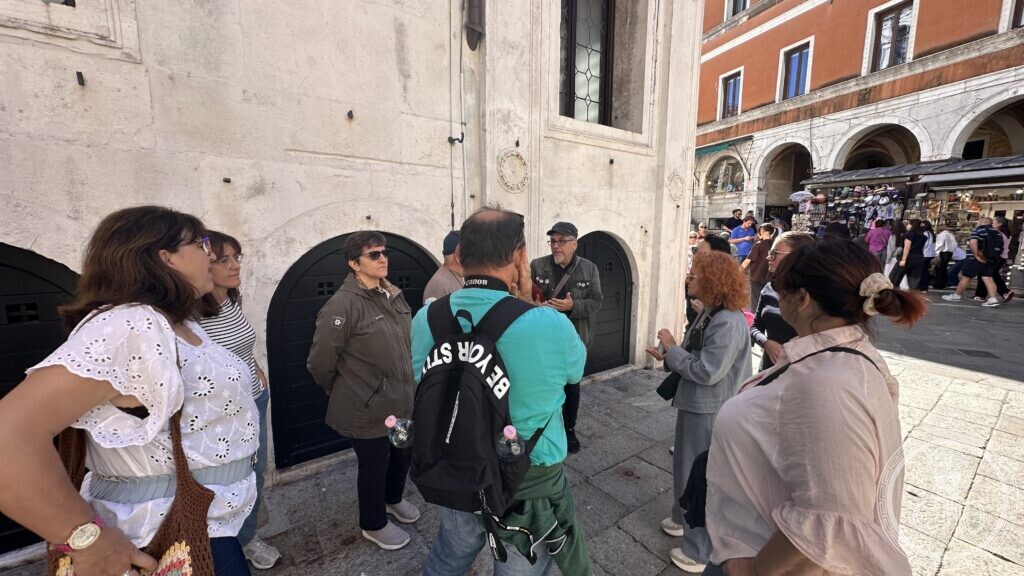
The meeting point was Campo San Simeon Piccolo, on the Santa Croce side opposite the station, at half past ten. Ten places for each of the two days, booked and free of charge — the most the city allows an accompanied group without radio guide systems — and both days were full. I guided both walks — a volunteer of the association, and the author of the route. The walk lasts about two hours and ends at the Rialto. It is the same route as the itinerary What Holds Venice Up: Seven Bridges from the Lagoon Crossing to the Bridge of Sighs, which carries the stop list, the GPS track and a documented card for every crossing.
The rule that shapes the walk
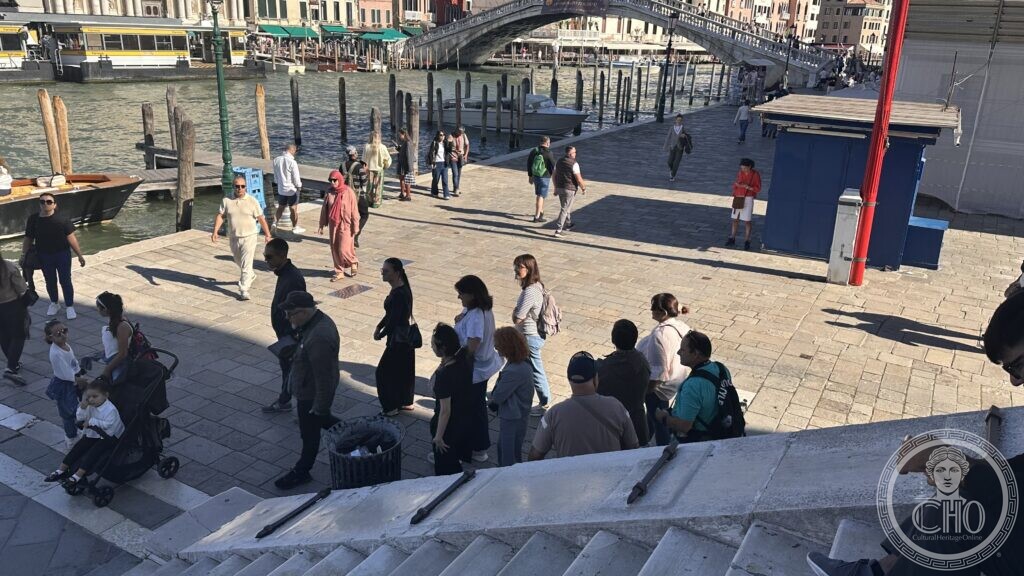
There is a paradox in a walk about bridges in Venice: the city forbids accompanied groups to stop on bridges and on their ramps. It is not an obstacle, it is a design rule for the walk — a bridge is looked at from the fondamenta or from the campo in front of it, which for the Scalzi and for the Rialto is also the better point of view, because you see the whole arch instead of standing on top of it. A flat alternative along the Fondamente is available for anyone who cannot manage the steps.
The two bridges that no guide names
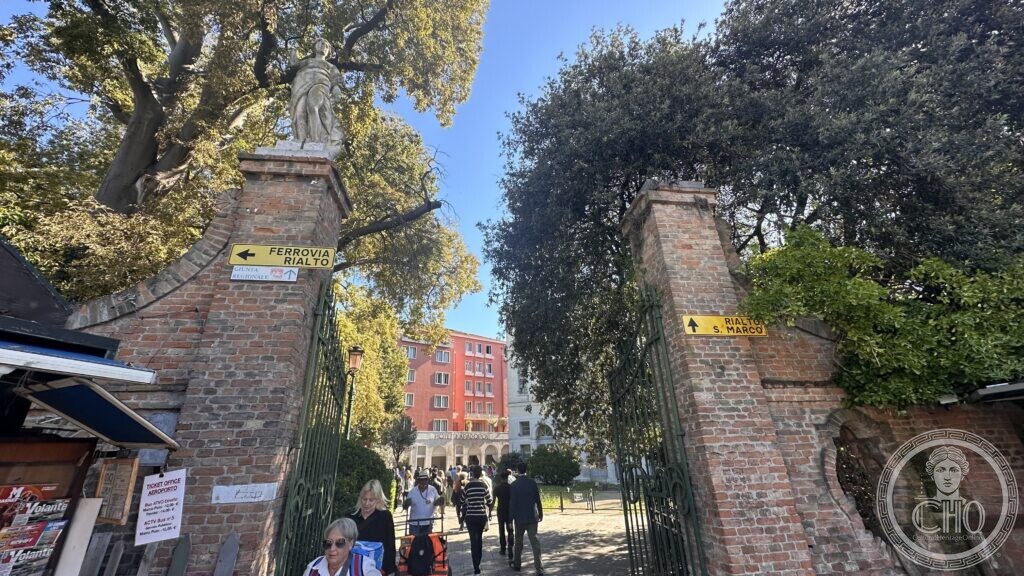
The heart of the walk is ten minutes from the station, where tourists never arrive. In 1933 Venice opened a new water shortcut, the Rio Novo, cut from Piazzale Roma towards the Grand Canal: the first new canal in the city for centuries. Over that cut the engineer Eugenio Miozzi threw two bridges that appear in no guidebook and that few Venetians could date. The Ponte del Pagan is in brick; the Ponte de la Cereria, a few steps away, is in Istrian stone, and takes its name from the candle-makers who once worked this corner of the city. Both are 1933. A little further along the same route stands the Ponte Papadopoli, also by Miozzi, one of the first bridges in Venice built in prestressed concrete.
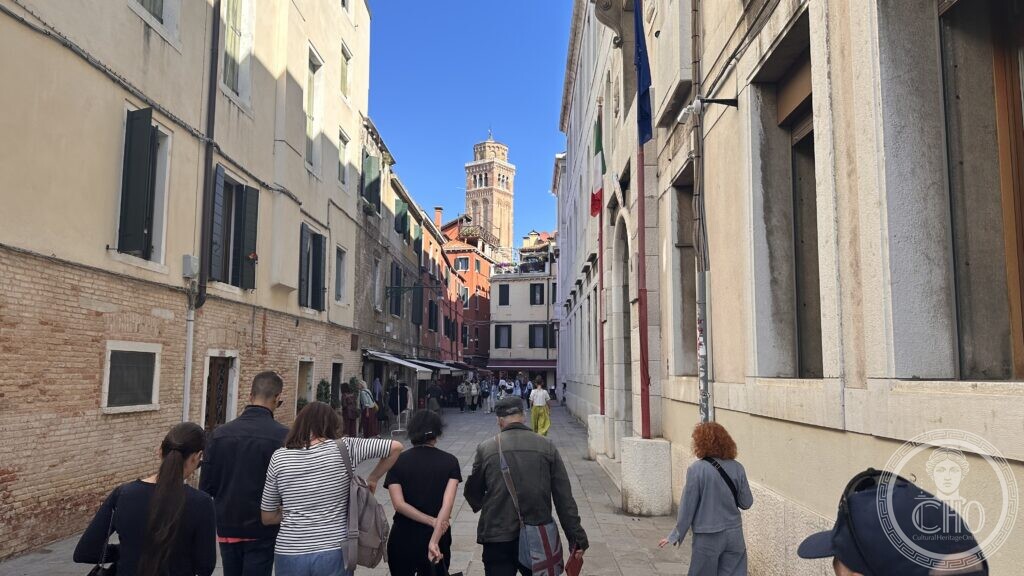
They are the clearest example of what it means, in a city of water, to decide to build: not an ornament but an infrastructure. The Scalzi is the same story told again, a stone arch that replaced an 1858 cast-iron structure and now looks as if it had always been there.
What keeps them up
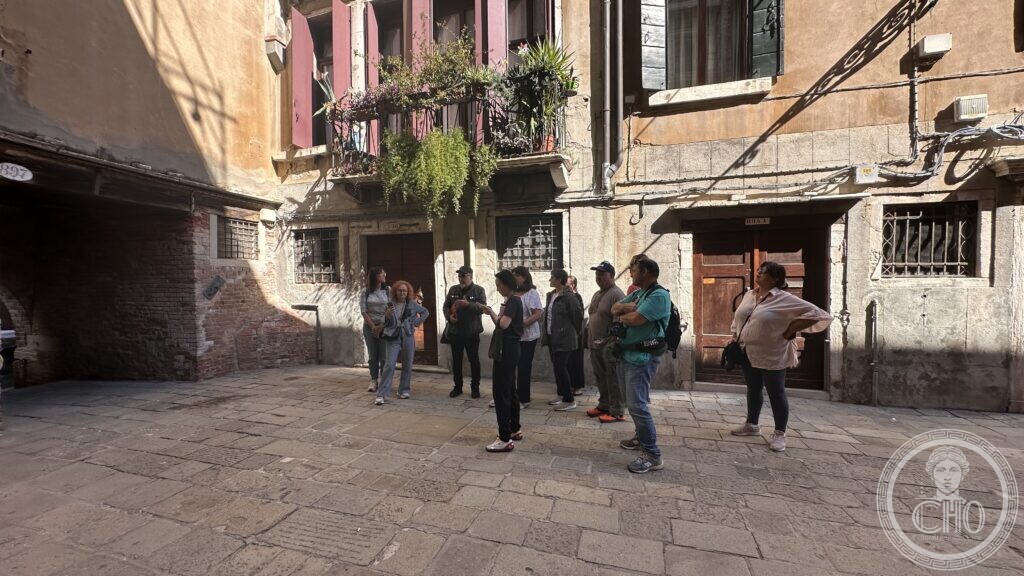
If the bridges are the question, maintenance is the answer the walk keeps returning to. Beside the Rio Novo stands the fire station: a barracks begun in 1928 to a design by the Venetian architect Brenno Del Giudice, seventy-seven metres long over three floors, with boat garages opening straight onto the canal. Venice is the one city where the fire brigade goes to work by water, and this is the building that makes it possible. Nothing on the route is more convincing about the theme of these Heritage Days: heritage is not what is admired, it is what is repaired, dredged, re-laid and painted.
The last stretch goes back to the crossings everyone photographs — the Rialto, completed in 1591 by Antonio da Ponte after a competition that included Michelangelo and Palladio, and the Bridge of Sighs, the Baroque passage of Istrian stone that joins the Doge’s Palace to the New Prisons. For once they are told from the side of the people who keep them in repair, and not from the top of the steps where the photographs are taken.
Walk it yourself
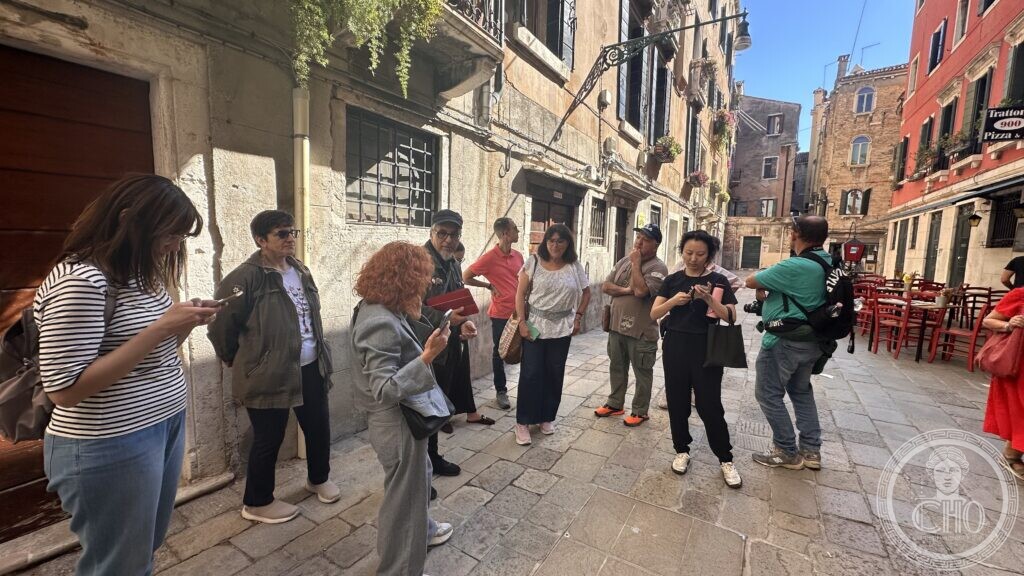
The route is free and open to anyone, any day of the year, with or without a guide: the itinerary carries the nine stops in order, the map, the printable stop list with coordinates, and the GPX and KML files for a phone or a handheld. The cards linked from the itinerary give the documented history of each crossing. The stations on the route are the Ponte della Libertà, the Ponte degli Scalzi, Palazzo Grandi Stazioni, the Ponte Papadopoli, the Ponte de la Cereria, the Ponte del Pagan, the Venice fire station, the Rialto and the Bridge of Sighs.
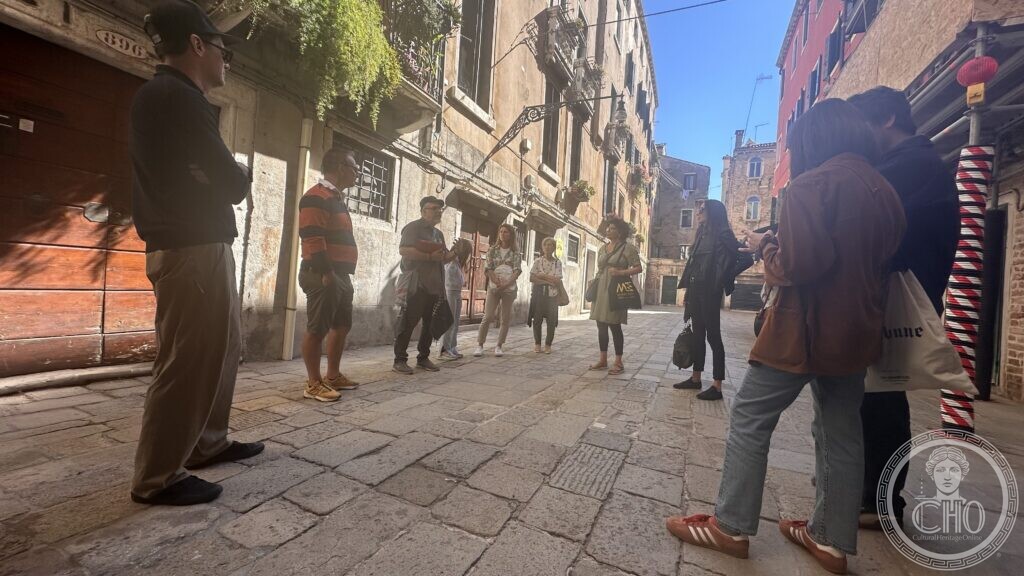
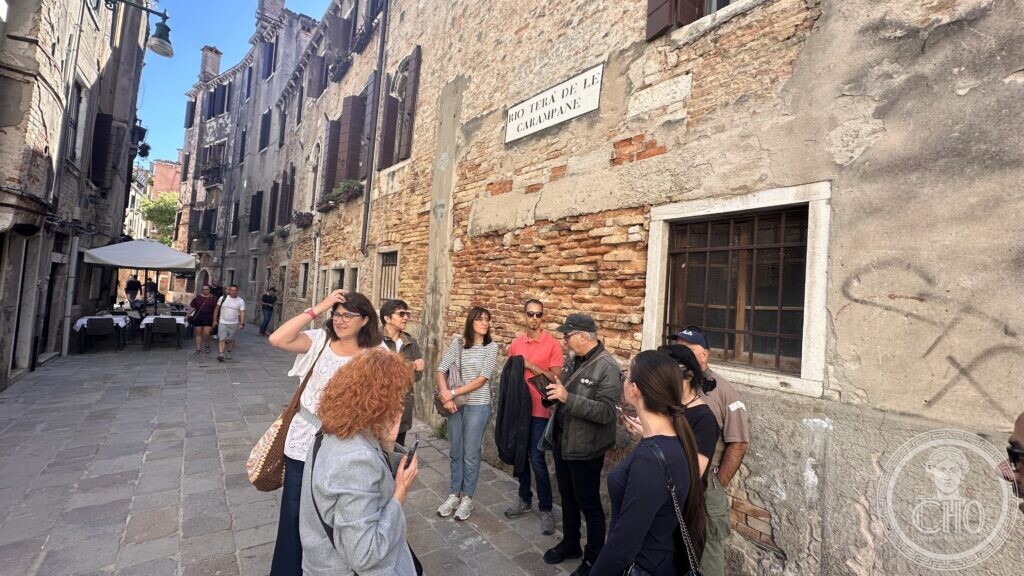
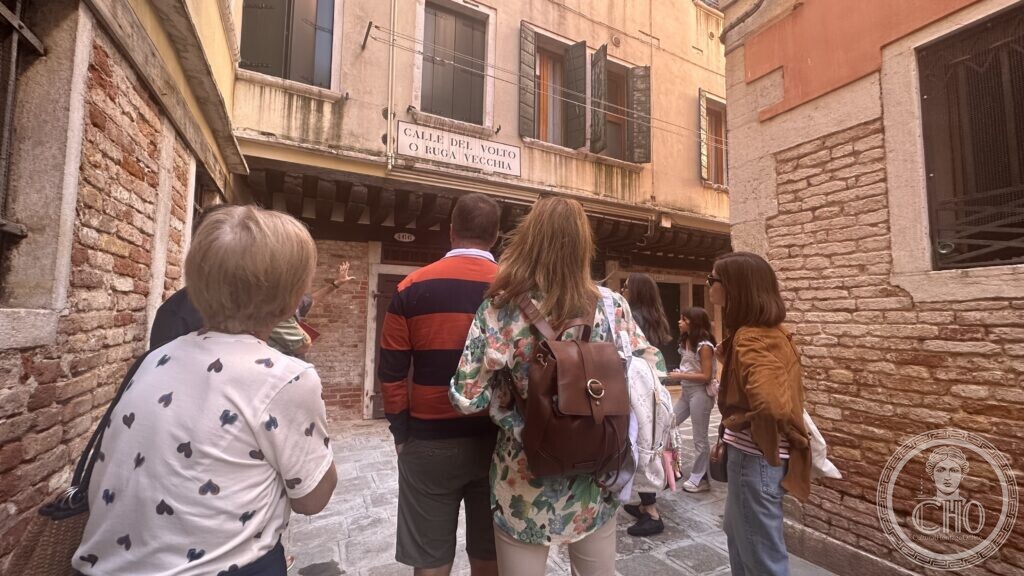
Walking it on the two days of the European Heritage Days means walking it with me, and hearing why each one is there. The rest of the year it is a two-hour walk you can do alone, from the station to the Rialto, with the water on both sides — and, if you look up at the right corner, a street name that explains what the city used to make here.
The documented cards behind every stop rest on the research of Stefano Vigolo, who has worked for more than twenty years on Italian heritage between 1920 and 1945: the dates, the materials and the names of the engineers on this walk come from that archive, checked against the sources cited on each card.
Sources
- S1 — Zucconi, Guido. Venezia tra innovazione e conservazione: l'opera di Eugenio Miozzi. Marsilio, 2002. ISBN 978-88-317-8054-4.
- S2 — Settis, Salvatore. Italia S.p.A.. L'assalto al patrimonio culturale. Einaudi, 2002. ISBN 978-88-06-16973-2.
Correction, 2 October 2026. An earlier version of this article stated that thirty people took part and that there were fifteen places per day. There were ten places per day, the limit the city sets for accompanied groups without radio guide systems, and both mornings were full: twenty people in all.
Spotted an error? Write to editorial@culturalheritageonline.com and we correct it the same day.