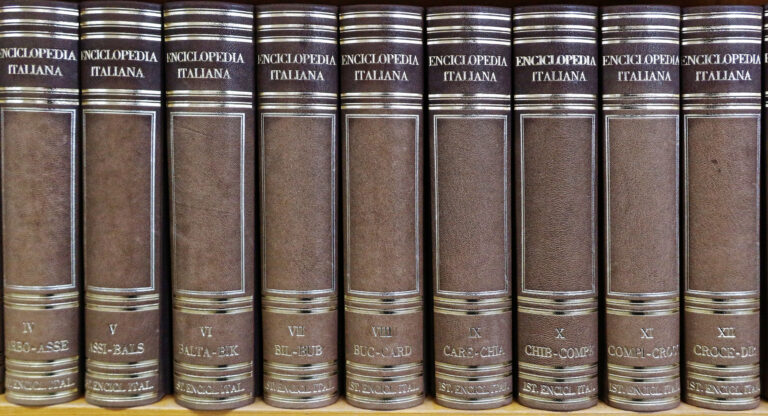
On February 18, 1925, industrialist Giovanni Treccani degli Alfieri and philosopher Giovanni Gentile founded the Istituto dell'Enciclopedia Italiana in Rome. Established in the magnificent renaissance Palazzo Mattei di Paganica, the institution mobilized over three thousand scholars, scientists, and humanists to create the monumental 35-volume Enciclopedia Italiana di Scienze, Lettere ed Arti, erecting a definitive sanctuary of Italian culture and language.
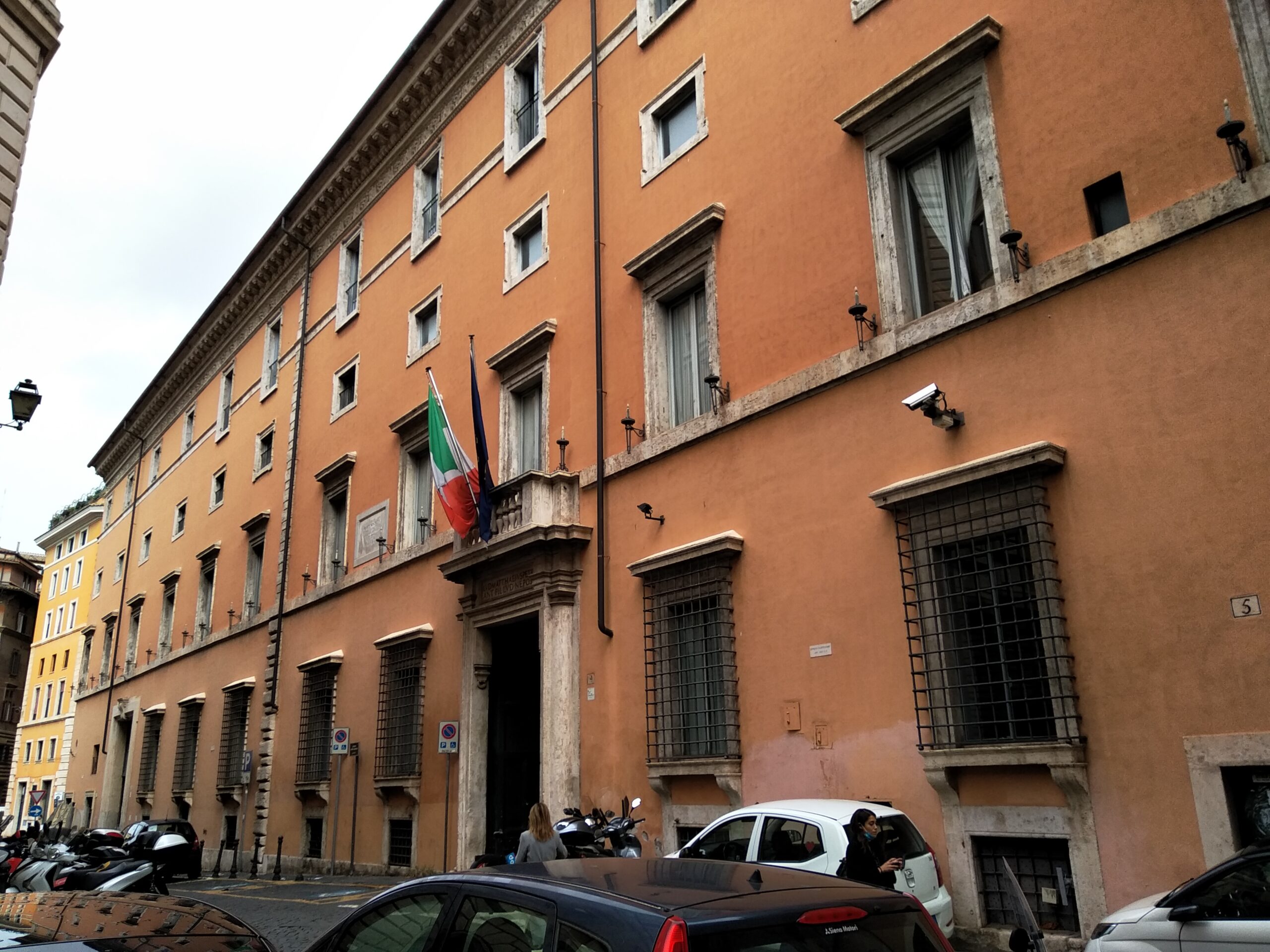
A Monumental Vision in Palazzo Mattei di Paganica
Following the unification of Italy, the country lacked a comprehensive, rigorous national encyclopedic monument comparable to the French *Encyclopédie* or the *Encyclopædia Britannica*. On February 18, 1925, textile magnate Giovanni Treccani degli Alfieri (1877–1961), driven by deep cultural philanthropy, provided substantial personal capital to launch the enterprise. Appointing philosopher Giovanni Gentile (1875–1944) as scientific director, the institute acquired the noble Palazzo Mattei di Paganica in the heart of Rome’s historic center.
Gentile assembled an unparalleled editorial college that transcended contemporary ideological barriers, enlisting leading intellectuals—including Federico Chabod, Roberto Longhi, Enrico Fermi, and Ugo Ojetti. Each entry was commissioned with strict instructions for original scholarly inquiry, illustrated with sumptuous copper photogravures, and printed on bespoke acid-free paper, culminating in the release of the first volume in 1929.
The Living Guardian of the Italian Language
The completion of the original 35 volumes in 1937, followed by appendices and specialized dictionaries, established Treccani as the supreme reference authority in Italian scholarship. The institute endured post-war transition without compromising its mission, adapting to the modern era with biographical dictionaries, art encyclopedias, and pioneering digital humanities platforms.
Today, Palazzo Mattei di Paganica remains the vibrant headquarters of the Istituto della Enciclopedia Italiana. Its library, frescoed salons, and archival collections represent one of Europe’s greatest monuments to collective intellectual endeavor.
L'inaugurazione e lo sviluppo dell'Enciclopedia Italiana a Roma negli anni Venti e Trenta
Cinegiornale storico dell'Istituto Luce che mostra la redazione romana dell'Enciclopedia Italiana, la consultazione dei tomi e la presentazione alle accademie. (Fonte: Archivio Storico Istituto Luce Cinecittà)
Interactive 360° Heritage View: Palazzo Mattei di Paganica — Istituto Treccani Headquarters
Historical Location: Piazza dell'Enciclopedia Italiana 4, 00186 Roma RM, Italy (Coordinates: 41.8944, 12.4782)
Historical Archive Gallery
Sources
- S1 — Cingari, Salvatore. La Treccani: Storia dell'Enciclopedia Italiana. Il Mulino, 2005. ISBN 978-88-15-10702-2.
- S2 — Turi, Gabriele. Il fascismo e il consenso degli intellettuali: L'Enciclopedia Italiana. Il Mulino, 1980. ISBN 978-88-15-08990-8.
Spotted an error? Write to editorial@culturalheritageonline.com and we correct it the same day.