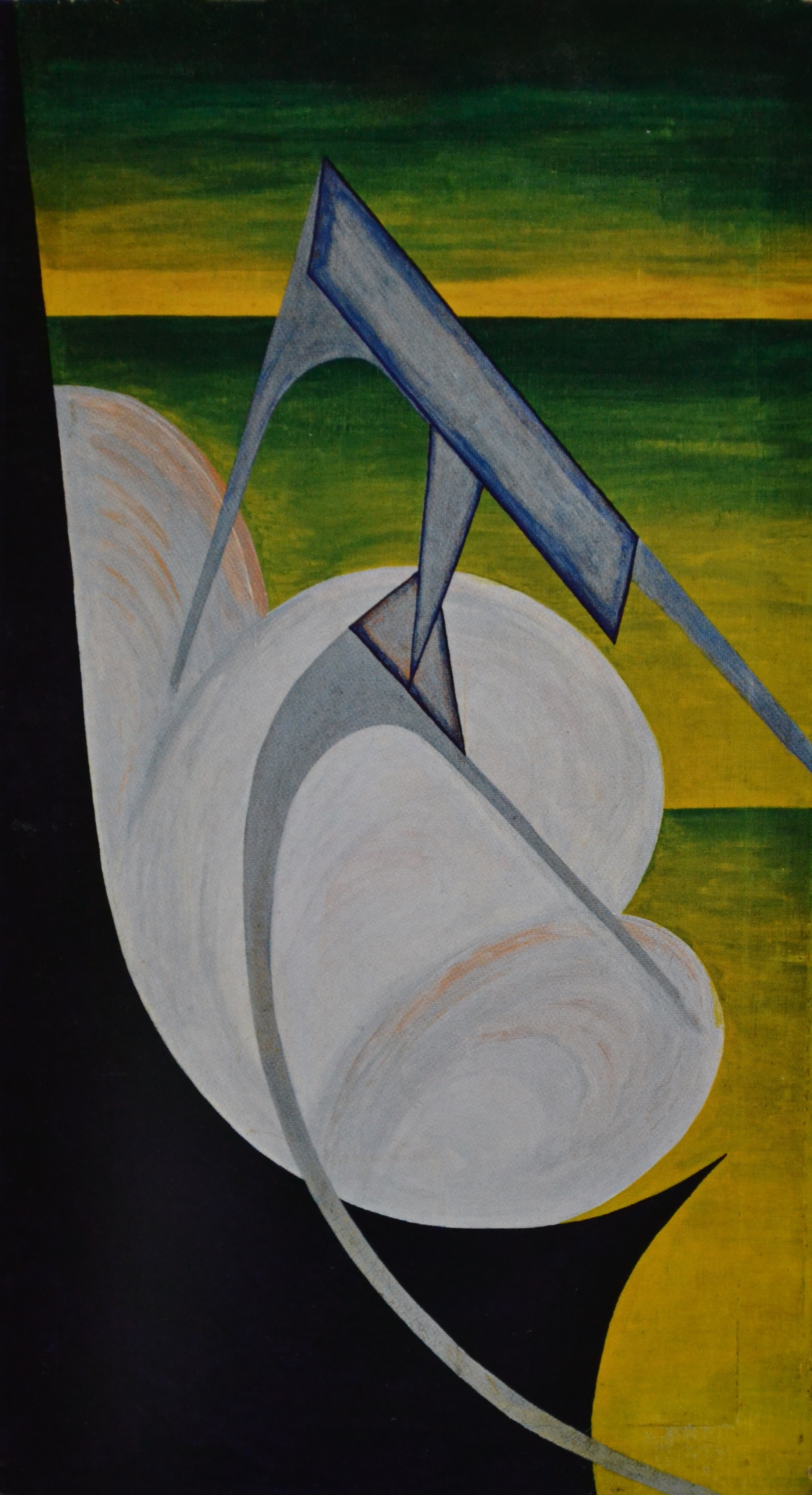
Teatro Aereo Futurista is a Futurist performance concept developed by Fedele Azari between 1922 and 1926. The work emerged from Azari’s convergence of three disciplines: painting, aviation and theatrical innovation.
Azari first articulated the concept in a manifesto written in 1919, which he presented in Milan at the conclusion of the Grande Esposizione Nazionale Futurista, distributing leaflets from the sky. This act of aerial distribution itself became integral to the Teatro Aereo’s philosophy—merging avant-garde performance with modern transportation technology. The project developed further through Azari’s pioneering work in aerial advertising, including campaigns conducted by dirigible over Milan, Turin and Genoa in May 1920. These ventures established both the practical and conceptual foundation for Teatro Aereo as a synthesis of Futurist ideology and aeronautical possibility.
About Fedele Azari
Fedele Azari (1895–1930) was born in Pallanza and became a central figure in Italian Futurism. After moving to Turin for study, he encountered the movement founded by Marinetti and joined it. In 1915 he enlisted in the Aviation Battalion, trained at Busto Arsizio and earned his pilot’s certificate, conducting aerial reconnaissance in Trentino before illness forced him from active military service. He later graduated in Law from the University of Turin.
Details
- Creator: Fedele Azari
- Period: 1922–1926
- Movement: Italian Futurism
- Concept: Aerial theatre merging aviation and performance
- Related work: Manifesto published 1919
Frequently asked questions
Who created Teatro Aereo Futurista?
Fedele Azari, an Italian painter, aviator and publicist born in Pallanze in 1895, developed the concept between 1922 and 1926.
What was the original manifesto for this work?
Azari wrote the Manifesto del Teatro Aereo Futurista in 1919 and presented it in Milan at the Grande Esposizione Nazionale Futurista, distributing copies from the air above the city.
How did Azari’s aviation experience inform the project?
Azari was a licensed pilot who had conducted military reconnaissance flights and pioneered aerial advertising by dirigible in 1920, directly linking his aviation practice to the theatrical and promotional possibilities of aerial performance.
Sources
- S1 — Berghaus, Günter. Italian Futurist Theatre, 1909-1944. Oxford University Press, 1998. ISBN 978-0-19-815898-1.
- S2 — Lista, Giovanni. Futurism. Terrail, 2001. ISBN 978-2-87939-234-9.
Spotted an error? Write to editorial@culturalheritageonline.com and we correct it the same day.